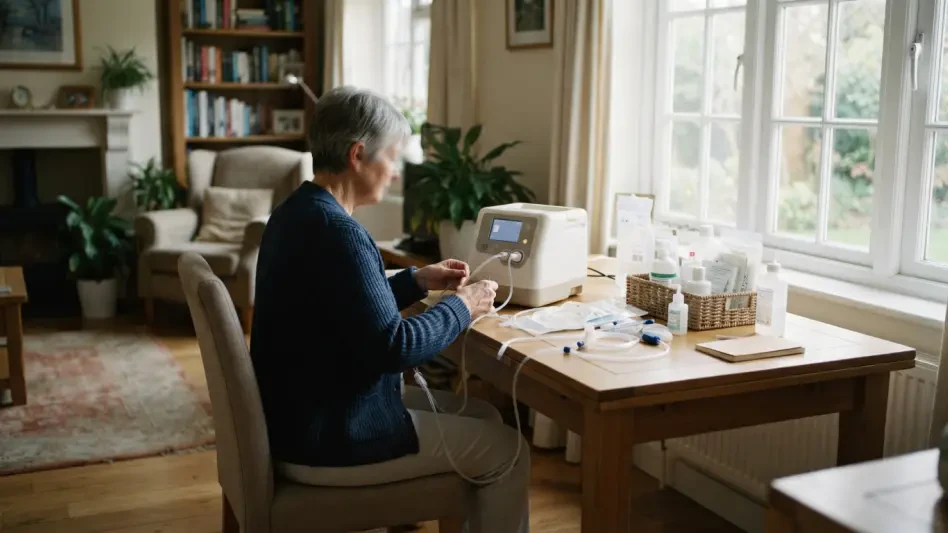

Systemic barriers, such as a lack of patient education and insufficient nursing staff for training, currently prevent the healthcare system from capturing massive economic benefits. A landmark health economic evaluation recently published in PharmacoEconomics – Open has identified a significant opportunity for the National Health Service to improve patient outcomes while simultaneously reducing long-term expenditures. The study, led by Tara Danying Li and a team of researchers, demonstrates that initiating adult patients with kidney failure on peritoneal dialysis rather than in-center hemodialysis serves as a dominant strategy. In the rigorous field of health economics, a dominant strategy is defined as one that provides superior clinical benefits at a lower total cost. By shifting the standard of care toward home-based peritoneal dialysis, the research suggests that the British healthcare system could save millions of dollars over the coming years while enhancing the quality of life for thousands of patients suffering from end-stage renal disease. The evaluation utilized a sophisticated dual-modeling approach, combining a lifetime Markov state-transition cost-utility analysis with a five-year budget impact model to provide a comprehensive look at fiscal and physical health.
The Current State: Landscape of Renal Replacement Therapy
Chronic kidney disease remains a progressive and challenging condition that places an immense burden on both the individual and the state. When the disease reaches Stage 5, often referred to as kidney failure, patients require renal replacement therapy to survive. This is typically achieved through either kidney transplantation or dialysis. For many individuals, a transplant is not immediately available due to donor shortages or medical contraindications, making dialysis the primary life-sustaining intervention for a significant portion of the population. Currently, dialysis is delivered through two primary modalities: in-center hemodialysis and home-based peritoneal dialysis. Despite clinical guidelines from the National Institute for Health and Care Excellence advocating for shared decision-making and a balanced choice of modalities, a stark imbalance exists in British clinical practice. The reliance on hospital-based systems has created a bottleneck that limits patient flexibility and increases the overall cost of care per patient per year.
The historical preference for in-center care is reflected in the statistics, where approximately 75 percent of new patients started dialysis in-center, while only a small fraction began with peritoneal dialysis. This disparity persists despite mounting evidence suggesting that home-based therapy offers better preservation of residual renal function and significantly higher patient satisfaction. In-center hemodialysis involves filtering the blood through an external machine at a hospital or satellite unit, usually requiring patients to travel three times a week for several hours of treatment. In contrast, peritoneal dialysis uses the patient’s own abdominal lining to filter waste and can be performed at home, often while the patient sleeps. The disconnect between clinical evidence and actual practice suggests that institutional inertia and infrastructure limitations are dictating treatment paths more than optimal patient outcomes. Addressing this imbalance is a prerequisite for any meaningful reform in the renal care sector.
The Economic Foundation: Methodology and Framework
To determine the long-term value of these treatments with high precision, researchers constructed a Markov cohort model tracking a hypothetical group of patients from an average starting age of 63.2 years over a lifetime horizon. This model was designed to be highly granular, using four-week cycles to accurately capture the frequent clinical transitions patients experience. These transitions include moving between different forms of dialysis, receiving a transplant, or facing serious medical complications that require hospitalization. By modeling these shifts over nearly four decades, the researchers could account for the full spectrum of costs and health outcomes associated with each initial treatment choice. This longitudinal approach is essential for understanding how early decisions in a patient’s treatment journey ripple through the healthcare system over time, ultimately affecting both the duration and the quality of the life saved.
The research identified nine distinct health states, including various forms of peritoneal dialysis, such as automated and manual versions, as well as in-center hemodialysis and post-transplant care. Transition probabilities, which represent the likelihood of a patient moving from one health state to another, were derived from the UK Renal Registry. These probabilities covered records of patients in England between 2005 and 2020, providing a robust historical dataset for the model. To ensure a conservative and fair comparison, the researchers equalized transplantation rates across both dialysis groups, ensuring the data reflected the inherent efficacy of the dialysis treatments themselves rather than differences in transplant access. This methodological rigor allowed the team to isolate the economic and clinical impact of the dialysis modality, providing a clear picture of how peritoneal dialysis performs against the traditional hospital-centered model.
Fiscal Savings: Quantifying Health and Financial Gains
The primary cost-utility analysis revealed that starting a patient on peritoneal dialysis results in an average lifetime cost of approximately £122,365, compared to £142,093 for in-center hemodialysis. This represents a substantial savings of nearly £20,000 per patient over their lifetime. Simultaneously, patients who began on the home-based method gained an additional 0.15 quality-adjusted life-years. A quality-adjusted life-year is a standard metric in health economics representing one year of life in perfect health; thus, an increase in this metric signifies both a longer lifespan and better health during those years. These findings suggest that the National Health Service is currently paying more for a treatment that results in slightly poorer quality of life outcomes, highlighting a significant area where efficiency and patient care can be improved in tandem through a shift in policy and practice.
These economic benefits are primarily driven by lower delivery costs and more efficient management of medical complications. Peritoneal dialysis is fundamentally less resource-intensive because it is performed at home by the patient, which drastically reduces the need for expensive hospital space, specialized machinery, and constant nursing supervision. While patients face certain infection risks, such as peritonitis, the study found that the bloodstream infections associated with in-center hemodialysis are significantly more expensive to treat. These catheter-related infections often require prolonged hospital stays and intensive antibiotic treatments, contributing heavily to the overall system costs. By avoiding these high-cost inpatient events and reducing the overhead of hospital-based care, the home-based modality presents a clear financial advantage that does not come at the expense of patient safety or treatment efficacy.
Robustness: Validating Results through Sensitivity Testing
To ensure the findings were not dependent on narrow assumptions or specific data points, the research team conducted extensive sensitivity analyses. In one-way sensitivity tests, where individual variables such as treatment costs, infection rates, or utility scores were varied across a wide range, peritoneal dialysis remained the dominant strategy in every single instance. This consistency suggests that the economic argument for home-based care is not a result of “cherry-picking” data but is a fundamental characteristic of the treatment’s cost structure. Furthermore, a probabilistic sensitivity analysis, which involved running over a thousand simulations with randomly varied parameters, confirmed these results with a high degree of certainty. The analysis showed a 100 percent probability that home-based initiation was the most cost-effective option at the standard willingness-to-pay thresholds currently used in the United Kingdom.
The researchers also explored several hypothetical scenarios to test the stability of their conclusions under different clinical assumptions. Even if the model assumed that peritoneal dialysis offered no survival advantage whatsoever over hemodialysis, the home-based option remained dominant due to its significantly lower operational costs. Additionally, the study accounted for the costs of assisted care, where a healthcare worker visits the patient’s home to help with the procedure. Even with these added labor costs, the home-based modality remained more economical than hospital-based care. This level of robustness provides a strong foundation for policymakers, as it demonstrates that the financial benefits of peritoneal dialysis are resilient to changes in patient demographics, labor costs, and minor fluctuations in clinical outcomes, making it a safe bet for long-term fiscal planning.
National Impact: Projected Savings and Opportunity
Beyond individual patient costs, the study projected the impact of these findings on the entire national budget over a five-year period from 2026 to 2030. The researchers modeled an expansion scenario based on national goals which aim for every renal center to maintain at least 20 percent of its dialysis population on home-based therapies. If the healthcare system successfully increases uptake to meet these targets, the study estimates a cumulative net savings of nearly £220 million. These savings are immediate and compounding, meaning the financial benefits grow as more patients are transitioned to or started on home-based care. This potential for massive cost avoidance comes at a critical time when the demand for renal services is rising, allowing the system to expand its capacity without a corresponding explosion in its budgetary requirements.
The budget impact model remained robust across various projections, including scenarios where the uptake of home-based care was slower than anticipated or where the costs for managing complications were higher than the baseline estimates. This highlights a significant opportunity for the healthcare system to redirect hundreds of millions of dollars toward other critical areas of patient care, such as early detection programs for chronic kidney disease or expanding the transplant waitlist infrastructure. The financial flexibility provided by a more efficient dialysis model could effectively fund its own implementation, as the savings generated from the first few cohorts of home-based patients could be reinvested into the training and education necessary to support a larger home-dialysis population. This creates a virtuous cycle of improvement that benefits the entire national health ecosystem over the next five years and beyond.
Barriers: Identifying Systemic Implementation Hurdles
If the economic and clinical evidence for peritoneal dialysis is so overwhelming, it raises the critical question of why the vast majority of patients still receive in-center hemodialysis. The researchers identified several systemic barriers, including significant regional disparities in how dialysis is prescribed across different parts of the country. This variation suggests that local clinical culture and existing infrastructure often play a larger role in treatment selection than patient preference or medical necessity. In some regions, the lack of dedicated home-training facilities or a shortage of specialist nurses makes it difficult for clinicians to offer peritoneal dialysis as a viable first-line option. Without the physical space and personnel to support home-based care, centers naturally default to the more resource-heavy in-center model, perpetuating the high costs the study sought to address.
Education and infrastructure also serve as major hurdles for both patients and clinicians. Many patients do not receive adequate pre-dialysis education early enough in their disease progression to feel confident in choosing a home-based modality. Choosing to perform a medical procedure at home can be daunting, and without proper psychological and technical support, patients often choose the perceived safety of a hospital setting. Furthermore, both clinicians and patients often worry about technique failure—the point at which a patient can no longer sustain peritoneal dialysis and must switch to hemodialysis. However, the study’s findings suggest that even when accounting for these transitions, the initial choice of peritoneal dialysis remains the most beneficial path both economically and clinically. Addressing these fears through better education and robust support systems is essential for changing the current treatment paradigm.
Strategic Imperative: Path Forward for the Healthcare System
The comprehensive health economic evaluation provided a clear mandate for the national healthcare system to reconsider its approach to renal care. The analysis concluded that a strategic shift toward initiating more patients on peritoneal dialysis was not merely a matter of clinical preference but a financial necessity in a resource-constrained environment. By examining the data from 2026 to 2030, the researchers demonstrated that expanding home-based dialysis could serve as a primary tool for balancing quality care with fiscal responsibility. Successful implementation required more than just a change in clinical guidelines; it demanded a fundamental restructuring of how renal services were prioritized and funded at the local level. Decision-makers were encouraged to view the transition to home-based care as a long-term investment in system sustainability that yielded dividends in both patient quality-adjusted life-year gains and direct cost reductions.
Achieving this shift required targeted investment in patient education and the expansion of nursing staff dedicated to home-care training. The evaluation recommended that the National Health Service prioritize the elimination of regional variations in care by standardizing the pre-dialysis education process and providing incentives for centers to meet home-dialysis targets. Furthermore, by accounting for broader societal factors such as reduced patient travel and increased productivity, the case for home-based care became even more compelling. The research ultimately framed the expansion of peritoneal dialysis as a rare opportunity to achieve a win-win scenario: improving the daily lives of those with kidney failure while safeguarding the financial health of the public purse. In an era where healthcare costs continued to rise, these findings offered a concrete, data-driven roadmap for a more efficient and patient-centered future in renal medicine.