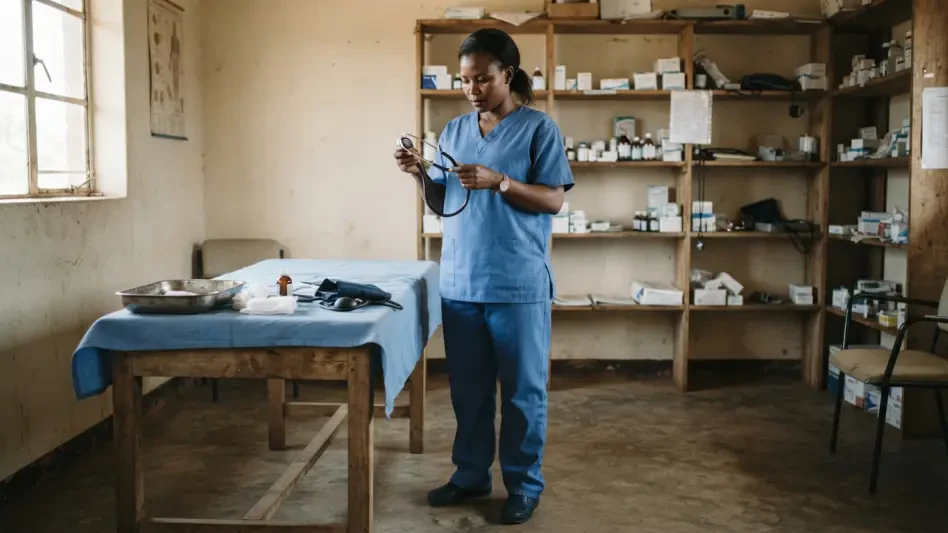

High-level international partnerships between the Imperial Ethiopian government, WHO, and UNICEF were essential in launching the country’s first mid-level clinician training center. This foundational initiative emerged during a period when the nation faced a critical shortage of medical professionals and a nearly nonexistent healthcare infrastructure in its vast rural territories. The creation of the Public Health Officer cadre was not merely a reaction to a crisis but a deliberate, strategic experiment in task shifting that aimed to decentralize medical expertise. By focusing on a professional who could balance clinical intervention with preventive public health strategies, Ethiopia established a unique medical identity that diverged from traditional Western models. As the nation assesses its current progress in 2026, the legacy of these early mid-century collaborations remains visible in the multitiered workforce that now defines the primary healthcare system. This historical trajectory highlights the resilience of a profession that has survived political upheaval and shifted its focus from basic rural service to complex clinical specialization, ultimately providing a blueprint for other developing nations seeking sustainable health solutions through localized educational innovation and international support.
The Foundations of Institutional Growth
Building the Gondar Academic Legacy
The maturation of the Gondar Public Health College and Training Center represented a significant shift in how medical education was conceptualized and delivered within the Ethiopian context. Originally operating under the direct administration of the Ministry of Health, the institution underwent a transformative integration into the formal higher education sector when it became part of Haile Selassie I University in 1961. This move was crucial for professionalizing the workforce, as it allowed the Public Health Officer curriculum to benefit from the academic rigor and resources of a centralized university environment. A major milestone in this institutional journey occurred in 1978 through a strategic international partnership with Karl Marx University in Germany, which facilitated the creation of a formal medical faculty. This collaboration not only enhanced the academic prestige of the college but also introduced advanced pedagogical methods that blended rigorous clinical science with the practical realities of Ethiopian rural medicine. The institutional memory of Gondar has proven exceptionally resilient, as the original “health team approach” was eventually refined into the contemporary Team Training Program. This methodology remains a cornerstone of modern medical training, ensuring that graduates are prepared to lead multidisciplinary teams in resource-limited settings where collaborative leadership is just as vital as clinical proficiency.
Surviving the Period of Discontinuation
The period following the 1974 revolution introduced an era of systemic rupture that nearly erased the Public Health Officer profession from the Ethiopian landscape. During the Primary Health Care Period, national health policy was radically realigned to emphasize short-term vocational cadres and community-level interventions, a shift largely influenced by the global movement toward basic primary care. For seventeen years, the formal matriculation of new Health Officers was entirely suspended, leading to a profound clinical service gap that left many rural health centers without the necessary leadership to manage complex medical cases. Despite this official hiatus, the profession was kept alive through a remarkable display of academic defiance at Jimma University, which continued to offer independent training and maintain the curriculum against the prevailing political grain. This period of stagnation highlighted the dangers of prioritizing short-term vocational training over professionalized clinical education, as the lack of mid-level clinicians eventually led to a deterioration in the quality of rural healthcare delivery. The survival of the group during these years was a testament to the perceived value of the Health Officer role among academic circles, ensuring that when the political landscape finally shifted in the early 1990s, the infrastructure for a rapid and effective revitalization was already in place.
Revitalization and Advanced Clinical Practice
Expanding Modern Undergraduate Education
Beginning in the early 1990s, the Sector-Wide Approach Period marked a dramatic revitalization of the Health Officer program as the government recognized the limitations of community-level workers in addressing the nation’s complex epidemiological profile. The expansion was not limited to a single institution; rather, undergraduate programs were rapidly established across a network of national universities to meet the growing demand for skilled clinicians. The contemporary curriculum reflects a significant evolution from the original three-year diploma model to a rigorous four-to-five-year degree program that integrates advanced clinical medicine, minor surgery, and diagnostics with sophisticated epidemiological surveillance. This academic upgrade was a direct response to the persistent deficit in the physician-to-population ratio, which remains a primary challenge for the Ministry of Health in 2026. By elevating the educational requirements, the government successfully transitioned the Health Officer from a temporary task-shifting solution into a permanent, highly skilled professional. This standardized curriculum ensures that graduates possess the diagnostic depth required to manage primary hospitals while maintaining the leadership skills necessary to coordinate district-level health responses, effectively cementing their status as the clinical and administrative backbone of the Ethiopian healthcare delivery system.
Moving Toward Higher Clinical Specialization
One of the most transformative developments in the evolution of the health workforce has been the successful migration of Health Officers into high-complexity clinical specialties. This shift gained momentum with the 2009 launch of the Master of Science program in Integrated Emergency Obstetric Surgery, an initiative designed to combat high maternal mortality rates by empowering mid-level clinicians to perform life-saving surgical procedures. This move signaled a departure from basic task shifting toward a sophisticated model of advanced clinical practice that allows Health Officers to fill critical gaps in surgical and specialized care. Today, the professional landscape for these clinicians includes a diverse array of postgraduate tracks, including Pediatrics and Child Health, Integrated Clinical and Community Psychiatry, and Family Health. This specialization has not only improved patient outcomes in remote areas but has also provided a clear career ladder that encourages professional growth and retention. Furthermore, recent policy adjustments have moved to align the undergraduate credential with international nomenclature by introducing the “Bachelor of Clinical Medicine and Public Health” designation. This change reflects a broader ambition to standardize Ethiopian health professionals with global physician associate roles, ensuring that the group is recognized both for its curative expertise and its unique ability to manage public health crises at the community level.
Addressing Structural and Systemic Challenges
Overcoming Rural Infrastructure Hurdles
The impressive academic advancements in Health Officer education are frequently undermined by the stark reality of the physical environments where these professionals are deployed. In many rural districts, practitioners are forced to operate in facilities that lack fundamental infrastructure, such as a consistent supply of electricity, clean running water, or even basic diagnostic equipment. These systemic deficiencies create a significant disconnect between the advanced clinical training provided in universities and the practical limitations of the field, often preventing Health Officers from utilizing their full range of surgical and diagnostic skills. For instance, the ability to perform emergency obstetric surgery is rendered moot if a clinic lacks reliable lighting or sterilized instruments, a scenario that remains a persistent obstacle for clinicians working in remote regions. The 2026 assessment of rural health centers suggests that without a parallel investment in physical infrastructure, the professionalization of the health workforce will continue to face diminishing returns. Addressing these hurdles requires a multisectoral approach that prioritizes the modernization of rural clinics and ensures that the tools available to health professionals match the complexity of their training. The sustainability of the healthcare system depends on closing this gap between pedagogical excellence and operational reality, ensuring that clinical knowledge can be translated into actual life-saving interventions.
Strategies for Retention and Attrition
Geographic attrition remains a critical threat to the stability of the Ethiopian healthcare system, as the allure of urban centers and private practice often draws skilled professionals away from the rural areas where they are most needed. Research, including discrete choice experiments conducted in various regions, has consistently demonstrated that salary adjustments alone are insufficient to ensure long-term retention in remote postings. Instead, the most effective strategies involve the “bundling” of professional and personal incentives that address the holistic needs of the clinician. These bundles typically combine financial bonuses with guaranteed access to subsidized housing, improved educational opportunities for children, and a clearly defined path to specialized postgraduate training after a specified period of rural service. By creating these structured career pathways, the government can offer a tangible reward for service in difficult environments, turning a rural assignment into a strategic stepping stone rather than a professional dead end. In 2026, the implementation of these incentive programs has become a priority for regional health bureaus seeking to stabilize their workforce and reduce the “brain drain” that has historically plagued the public sector. Maintaining a consistent presence of experienced Health Officers in rural clinics is essential for building community trust and ensuring that the quality of care remains high across the entire national health network.
Methodological Insights and Documentation
The comprehensive analysis of the Public Health Officer evolution relies on systematic document reviews and archival research, though the process has been hampered by significant historical data gaps. Much of the documentation from the 1974 to 1991 period is fragmented or lost, making it difficult to fully quantify the impact of the service hiatus on rural health outcomes during those decades. Furthermore, the lack of a centralized, real-time national registry for health professionals remains a significant barrier to tracking the exact distribution and attrition rates of clinicians across Ethiopia’s diverse regions. While modern research has utilized PRISMA guidelines and secondary government reports to reconstruct this history, the absence of primary internal archives from certain periods limits the ability to conduct longitudinal studies on the workforce’s long-term socioeconomic impact. Addressing these documentation challenges is vital for future policy planning, as it would allow for a more nuanced understanding of how specific educational reforms correlate with health improvements. The development of a digital, synchronized professional database in 2026 is a necessary step toward improving health workforce management and ensuring that policy decisions are based on accurate, up-to-date information. Strengthening the research infrastructure will not only preserve the historical record of the profession but also provide the evidence base needed to refine the curriculum and deployment strategies for the next generation of clinicians.
Future Outlook for the Health Cadre
Transitioning to Permanent Professionalization
The ongoing trajectory of Public Health Officer education has moved toward a definitive model of permanent professionalization, where the group is no longer viewed as a secondary or temporary substitute for physicians. Instead, the profession has carved out a unique niche that balances the curative precision of clinical medicine with the broad, preventive focus of public health leadership. This maturation is reflected in the specialized roles that Health Officers now occupy, from managing primary hospitals to leading epidemiological surveillance teams during regional health crises. The consensus among policymakers in 2026 is that the Health Officer represents a distinct clinical identity that is essential for achieving universal health coverage in a resource-constrained environment. This professionalization is further supported by the move toward international accreditation and the standardization of competency-based training, which ensures that Ethiopian clinicians meet the same high standards as their global counterparts. By recognizing the Health Officer as a specialized leader in their own right, the health system has moved away from the “mini-doctor” stereotype, fostering a sense of professional pride and clinical autonomy that is vital for workforce morale. This evolution demonstrates that sustainable health systems are built not just on filling gaps, but on creating versatile, professional roles that are specifically tailored to the unique socioeconomic and epidemiological needs of the population.
Shaping the Health Landscape
The study of Ethiopia’s health workforce evolution established that the future success of the system depended on a balanced integration of academic modernization and structural investment. It was determined that the primary solution for meeting the goal of 2.3 health professionals per 1,000 population involved the aggressive standardization of competency-based curricula across all national universities. The analysis demonstrated that international collaborations remained vital for fostering innovation, particularly in the areas of surgical specialization and digital health management. It was also concluded that the path forward required the government to prioritize the modernization of rural health infrastructure, ensuring that the physical environment supported the advanced clinical skills of the graduating workforce. By formalizing clear, incentivized career pathways, the health system successfully addressed long-standing issues of rural attrition and professional stagnation. The historical trajectory of the Public Health Officer served as a critical lesson in resilience, proving that a mid-level cadre could evolve into a sophisticated, multitiered workforce capable of leading a national health transformation. These findings provided a blueprint for other developing nations, emphasizing that the development of a professional health workforce must be accompanied by robust policy support and a commitment to continuous educational improvement. The next steps identified in the review focused on maintaining this momentum by refining the clinical medicine designation and expanding postgraduate opportunities to ensure the group remained the backbone of the primary healthcare system.