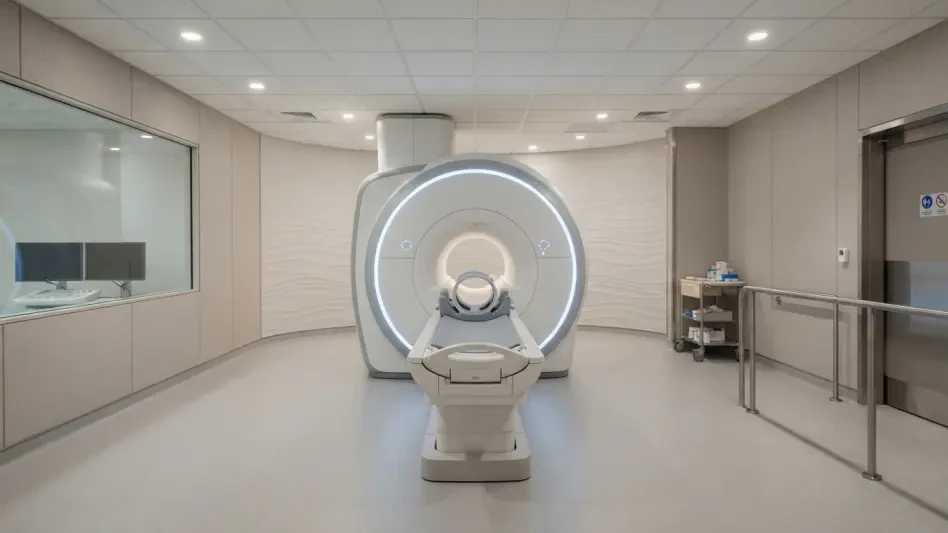

Standardized instructions from radiographers may not suffice for the one-third of the population that experiences high levels of situational restriction during scanning. Modern clinical medicine relies heavily on advanced imaging modalities, such as Magnetic Resonance Imaging (MRI) and Computed Tomography (CT), to achieve diagnostic precision and monitor complex treatment regimens. While these technologies are triumphs of engineering, they present a significant psychological challenge for many patients due to the confined and sterile nature of the equipment. Research indicates that the physical experience of being scanned is inextricably linked to the psychological relationship between the patient and the healthcare provider. Specifically, situational distress triggered by confinement can erode the foundational trust patients place in their physicians, highlighting a complex interaction between high-tech environments and interpersonal dynamics. For individuals prone to claustrophobia, an imaging suite presents a unique set of stressors, including physical restriction, loud acoustic noise, and an uncertain timeframe. These elements can coalesce into a situational crisis characterized by intense panic and an overwhelming biological urge to escape the environment. Beyond the immediate emotional distress, these reactions have tangible clinical consequences, such as motion artifacts that degrade image quality or the premature termination of the procedure. Recognizing that this anxiety is often a situational reaction rather than a fixed personality trait suggests it is a phenomenon that can be managed through targeted clinical intervention and better communication.
The Intersection: Technology and Human Vulnerability
Doctor-patient trust is a multidimensional construct involving the patient’s belief in a provider’s professional competence, integrity, and benevolence. In the context of complex medical technology, patients are at a distinct disadvantage because they rarely understand the technical parameters of the scanner or the physics behind the imaging process. Consequently, they are entirely reliant on clinical staff for both procedural guidance and emotional reassurance during the examination. This vulnerability creates a high-stakes environment where the patient’s sense of safety depends almost entirely on the perceived reliability and empathy of the medical team. When a patient enters the narrow bore of an MRI machine, the loss of autonomy and physical isolation can magnify any existing doubts about the care they are receiving. If the technician appears indifferent or the physician seems detached, the patient may internalize this as a lack of concern for their physical and emotional well-being. This suggests that trust is not a static quality established in a consultation room but a dynamic state that is constantly tested during actual medical procedures.
Effective communication serves as a critical coping resource that mediates the relationship between patient anxiety and medical trust. Interaction characterized by procedural explanations and empathetic listening helps the patient feel safe within the high-stress environment of the imaging bore. If a healthcare provider fails to validate a patient’s fear or dismisses their concerns as irrational, the patient may feel neglected or even endangered, which directly damages their confidence in the medical establishment. Research emphasizes that communication in radiology is not just about giving instructions on when to hold one’s breath; it involves providing a psychological safety net. This includes regular check-ins via the intercom, explaining the remaining duration of the scan, and ensuring the patient knows they can stop the procedure at any time. When these elements are missing, the void is often filled by panic, which the patient then associates with the medical facility as a whole. Therefore, high-quality communication functions as a targeted intervention that can neutralize the negative effects of situational claustrophobia and preserve the integrity of the clinical relationship even under duress.
Statistical Insights: Analysis of the Sichuan Research
A robust cross-sectional investigation conducted in Sichuan Province, China, utilized a sample of 406 adult patients between June and July 2026 to explore these interpersonal dynamics. The study employed validated instruments, including the Claustrophobia Questionnaire and the Chinese Doctor-Patient Communication Quality Scale, to quantify levels of distress and perceived support. This statistical approach allowed researchers to rule out common method bias and ensure the validity of the findings across a diverse, well-educated participant cohort. The participants, who were drawn from tertiary Grade-A hospitals, represented a cross-section of the modern patient population who expect a high degree of transparency and engagement from their healthcare providers. By using latent profile modeling, researchers were able to move beyond simple averages to identify specific patterns of behavior and response. The data provided a clear empirical framework for understanding how physical discomfort translates into interpersonal dissatisfaction. The rigor of the study design ensures that these findings are not merely anecdotal but reflect a significant trend in how psychological states influence the perceived quality of healthcare services in high-tech settings.
The primary discovery of the research is that claustrophobia is significantly and negatively associated with both communication quality and doctor-patient trust. Statistical modeling established that as claustrophobic anxiety increases, the perceived quality of communication drops, which subsequently leads to a reduction in trust. This “indirect pathway” suggests that communication is a modifiable factor that hospitals can improve even if they cannot change the physical dimensions of the scanner. Interestingly, the study also found a significant direct effect, where intense panic simply overpowers the benefits of good communication for some individuals. This implies that while better communication can resolve many problems, there is a threshold of anxiety where the biological fight-or-flight response becomes the dominant factor in the patient’s experience. Statistically, the indirect pathway accounted for nearly 30% of the total effect, proving that a substantial portion of the trust erosion caused by claustrophobia can be mitigated through behavioral changes in the staff. This insight is revolutionary for radiology departments because it provides a clear, actionable lever for improving patient satisfaction without requiring massive capital investment in wider-bore scanners or new hardware.
Segmenting the Experience: Low Versus High Anxiety
Using Latent Profile Analysis, researchers categorized patients into low-claustrophobia and high-claustrophobia subgroups to identify specific vulnerabilities. While both groups generally perceived the overall quality of communication to be high, the high-claustrophobia group reported significantly lower levels of trust. This discrepancy indicates that standard communication protocols may be insufficient for patients experiencing intense situational distress, who require more specialized forms of reassurance. The “one-size-fits-all” approach to patient briefing—where every individual receives the same recorded message or printed pamphlet—fails to address the unique psychological needs of the more anxious 35% of the population. For these high-risk individuals, the mismatch between their internal state and the routine nature of the clinical environment creates a sense of profound isolation. They may feel that the staff does not truly understand the severity of their distress, leading to a breakdown in the benevolent component of trust. This segmentation suggests that hospitals must move away from generic workflows and toward a model of personalized, risk-stratified care that identifies vulnerable patients before they ever reach the scanning table.
The findings suggest that while a radiographer might provide excellent general instructions, they may fail to offer the specialized support that high-risk patients need, such as explaining emergency stop mechanisms or providing continuous vocal feedback. This highlights the urgent need for risk-stratified care within radiology departments. Tailoring the interaction to the specific psychological state of the patient is essential for maintaining the human element in a highly technical environment. For the low-anxiety group, a standard explanation of the procedure is perfectly adequate to maintain trust. However, for the high-anxiety group, trust is fragile and requires active maintenance throughout the duration of the scan. These patients are looking for cues of safety and empathy in every interaction. If the radiographer sounds rushed or impatient, it can trigger a cascading loss of confidence. Therefore, the ability to pivot communication styles based on the patient’s visible or reported anxiety level is a core clinical competency that should be expected of all imaging professionals. This approach ensures that the most vulnerable patients receive the additional psychological scaffolding necessary to complete their diagnostic journey without lasting negative impressions of the healthcare system.
Clinical Strategy: Modernizing Radiology Workflows
To improve patient satisfaction and diagnostic throughput, radiology departments should embed brief claustrophobia screening questions into the initial scheduling process. Identifying high-risk patients before they arrive at the scanner allows staff to prepare familiarization sessions where patients can see the equipment and hear the noise beforehand. These procedural changes help demystify the experience and provide a sense of control to the individual. By the time the patient arrives for their actual appointment, they have already processed the initial shock of the environment, making them more receptive to communication and less likely to experience a panic attack. Furthermore, scheduling software can be adjusted to allow for slightly longer appointment slots for these identified individuals, removing the time pressure that often prevents staff from engaging in the necessary empathetic dialogue. This proactive management of the environment serves to protect both the patient’s mental health and the hospital’s operational efficiency by reducing the number of aborted scans and the need for expensive pharmacological sedation in many cases.
Enhanced staff training is equally vital, focusing on the radiographers and technicians who spend the most time with the patient during the procedure. Training should emphasize managing claustrophobic episodes through continuous audio contact, which acts as a psychological tether to the outside world. By providing explicit guidance on relaxation techniques and maintaining a constant presence, staff can significantly reduce the sense of isolation and confinement. It is not enough for staff to be technically proficient in operating the machinery; they must also be skilled in psychological first aid. This includes learning how to use a calm, steady vocal tone and how to provide “time-stamped” updates that give the patient a sense of progress through the scan. When a patient hears a friendly voice saying, “You’re doing great, only three minutes left on this next sequence,” it transforms a terrifying experience into a manageable task. These small adjustments in behavioral guidance and emotional support create a narrative of partnership rather than one of passive endurance. Ultimately, these operational shifts ensure that the high-tech precision of modern imaging is matched by high-touch patient care, fostering a culture of trust that extends far beyond the radiology suite.
Strategic Pathways: Addressing Limitations and Scaling Care
While the research provides a compelling look at the suite’s dynamics, its cross-sectional design means it identifies correlations rather than definitive temporal causes. Future research should focus on longitudinal studies that track patient trust from the initial scan through subsequent treatment phases to see how these early interactions impact long-term care. It is possible that a negative experience in the radiology department colors a patient’s view of their entire oncology or neurology team, potentially leading to lower adherence to treatment plans. Additionally, intervention studies are needed to determine if specific communication protocols directly lead to higher scan completion rates and better objective outcomes. By measuring variables like motion artifacts and rescan frequencies alongside psychological trust scores, the medical community can build a more comprehensive business case for investing in communication training. These future investigations will help bridge the gap between psychological theory and clinical practice, ensuring that the human experience remains at the center of diagnostic technological advancements throughout the current decade.
The psychological fallout of medical imaging was identified as a major barrier to establishing a trusting relationship, but it was also recognized as a challenge that can be mitigated through person-centered care. Healthcare leaders took the findings of this research and began integrating psychological screening into standard imaging protocols to identify vulnerable populations before distress occurred. By prioritizing tailored communication and continuous audio support, hospitals successfully protected the trust of their most sensitive patients and improved overall diagnostic efficiency. It was determined that the quality of human interaction remained the most vital component of the healing process, proving that empathy was just as important as technical accuracy. Moving forward, clinical departments established new benchmarks for staff training that emphasized emotional intelligence as a core requirement for radiographers. These actions transformed the imaging experience from a source of anxiety into a moment of reinforced clinical partnership. The industry transitioned toward a model where technology and empathy worked in tandem, ensuring that the foundational trust between the doctor and the patient stayed intact, regardless of the physical constraints of the diagnostic environment.