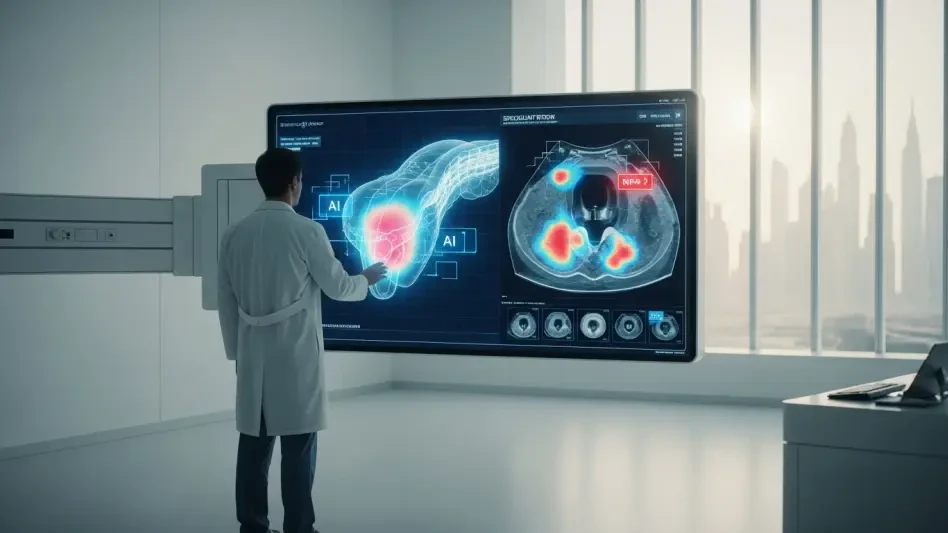

Recent clinical data from major medical hubs across Abu Dhabi and Dubai reveals that prostate cancer remains a significant health challenge, yet the integration of sophisticated artificial intelligence is rapidly altering the diagnostic landscape by identifying subtle patterns that often elude the human eye during standard screenings. Healthcare providers within the United Arab Emirates are increasingly adopting neural networks that can process thousands of radiological images in seconds, allowing for a level of precision that was previously unattainable in local clinics. This shift is not merely about speed but about the fundamental accuracy of identifying malignant cells at an earlier, more treatable stage. By leveraging complex algorithms, doctors can now distinguish between indolent tumors that require simple monitoring and aggressive cases that necessitate immediate surgical or radiological intervention. This technological leap significantly reduces the emotional and physical burden on patients who might otherwise undergo unnecessary invasive procedures. The synergy between Emirati clinical expertise and global AI development has created a specialized environment where data-driven decisions are becoming the gold standard for urological care across the entire region.
Diagnostic Precision: Advancements in Radiological and Clinical Integration
The implementation of multiparametric magnetic resonance imaging (mpMRI) coupled with deep learning platforms has revolutionized how clinicians in the UAE interpret prostate scans. These AI systems analyze pixel-level data to provide a standardized Prostate Imaging-Reporting and Data System (PI-RADS) score, which assists radiologists in pinpointing suspicious areas with remarkable consistency. Major healthcare facilities, such as Cleveland Clinic Abu Dhabi, have demonstrated that these automated tools help minimize the subjective nature of image interpretation, thereby decreasing the likelihood of false negatives. Furthermore, the technology enables the creation of three-dimensional heat maps that guide surgeons during fusion biopsies, ensuring that tissue samples are taken from the most critical areas. This level of anatomical detail allows for a targeted approach that maximizes diagnostic yield while minimizing trauma to the surrounding healthy tissue. As these algorithms continue to evolve through 2027 and 2028, the reliance on high-resolution data will likely phase out the older, less reliable methods of blind systemic biopsies that were common in previous decades.
The successful deployment of AI in prostate cancer detection across the UAE necessitated a fundamental restructuring of medical training and data governance frameworks. Stakeholders prioritized the establishment of rigorous validation protocols to ensure that every algorithm used in clinical settings met the highest international standards for safety and efficacy. Medical professionals focused on developing a hybrid expertise, where traditional clinical judgment was augmented by a deep understanding of algorithmic outputs, ensuring that technology served as a partner rather than a replacement. Looking ahead, it became clear that the next phase of development required an even greater emphasis on cross-institutional data sharing to refine the accuracy of predictive models further. Policymakers and healthcare leaders recognized that maintaining this momentum depended on continuous investment in digital infrastructure and the cultivation of a local talent pool capable of managing these advanced systems. By securing a robust framework for patient privacy and ethical AI use, the UAE solidified its position as a global leader in medical innovation, providing a clear roadmap for other nations seeking to modernize their diagnostic capabilities in the face of complex chronic diseases.