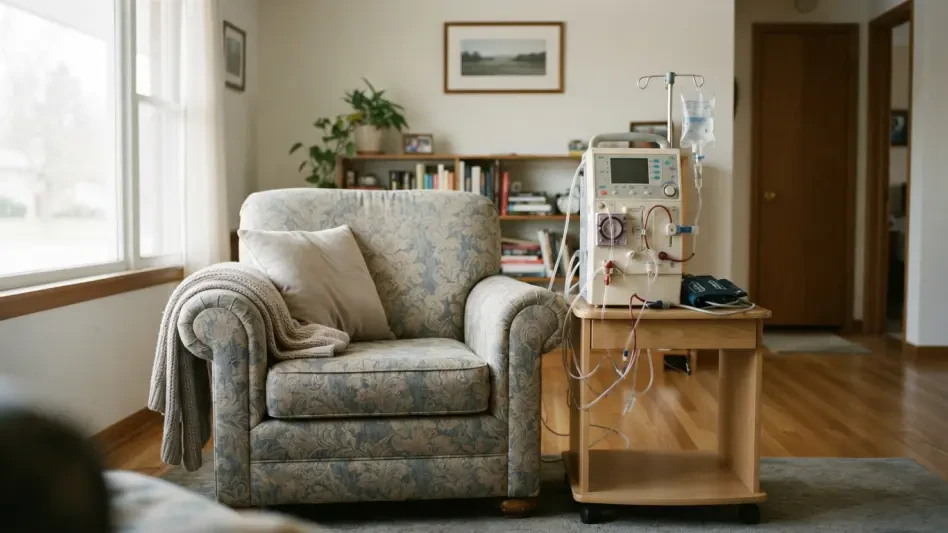

Preceptor training grounded in sociocultural learning theory provides registered nurses with the specific tools needed to facilitate structured reflection and formative assessment. The quiet hum of a dialysis machine in a suburban living room represents the new frontline of modern medicine, where the sterile control of the hospital ward gives way to the complex reality of domestic life in 2026. As the landscape of global healthcare undergoes a profound structural transformation, the responsibility for managing acute and chronic conditions has transitioned to municipal home healthcare services. Within this evolving framework, registered nurses are tasked with delivering sophisticated medical interventions, such as advanced medication titration and complex wound management, within the private residences of patients. These environments are inherently unpredictable, characterized by multimorbidity, diverse socioeconomic backgrounds, and the logistical constraints of domestic spaces. To prepare the next generation of nursing professionals for these challenges, a qualitative study recently explored the efficacy of collaborative pedagogical strategies. This research specifically examined how structured learning models and team-based precepting enhance the clinical education of final-semester nursing students. By focusing on the experiences of both students and their registered nurse preceptors, the investigation provided a comprehensive look at how collaborative frameworks foster professional autonomy and clinical reasoning outside traditional units.
Redesigning Clinical Education: The Four-Week Rotation
The research is situated within the modern context of the undergraduate nursing program, an academic trajectory that culminates in professional licensure. A pivotal element of this curriculum development involved the recent restructuring of the clinical placement for sixth-semester students. In the academic cycles leading up to 2026, the participating university in southern Sweden extended the municipal home healthcare rotation from a brief eight-day observation period to a robust four-week clinical placement. This extension was designed to provide students with a more immersive and meaningful clinical experience, allowing them to move beyond surface-level observations of the home environment. This transition acknowledges that the home is a distinct clinical space requiring a different set of skills than a centralized hospital setting. By lengthening the duration, the program allows students to build rapport with patients and understand the nuances of long-term care management in a community setting.
To ensure this expansion was pedagogically sound, the university implemented a comprehensive preparatory course for preceptors that equipped them with modern instructional strategies. This training session provided registered nurses with a specialized toolkit consisting of fifteen structured learning activities designed to cover a broad spectrum of clinical scenarios. Each activity followed a four-part operational cycle including planning, execution, reflection, and follow-up. While many of these activities remained optional to allow for clinical flexibility, the formal application of the clinical nursing process was a mandatory component. This requirement served as a primary metric for student evaluation, ensuring that learners were not just performing tasks but were engaging in the holistic assessment of the patient’s needs. This structured approach bridged the gap between abstract university theory and the practical realities of managing multimorbid patients in their own homes, where resources and support systems differ significantly from hospital environments.
Research Methodology: Evaluating Student and Preceptor Dyads
The researchers employed a rigorous qualitative approach guided by the principle of information power to ensure that the findings provided deep, meaningful insights into the educational process. Data collection spanned four consecutive academic semesters from 2024 to 2026, drawing from a significant pool of nursing students and their assigned mentors. Through consecutive sampling, sixty student-preceptor dyads were recruited to participate in the study. The participant demographics closely mirrored the broader nursing workforce in Sweden, providing a realistic view of the challenges and successes within the municipal healthcare sector. This demographic alignment is crucial for ensuring that the findings are applicable to the real-world environments where these students will eventually practice. By analyzing the interactions between these pairs, the study captured the intricate balance of teaching and learning that occurs during high-stakes clinical interventions.
Reliability and depth of data were maintained through a combination of conversational paired interviews and homogeneous focus-group discussions. The paired interviews allowed for immediate reflection following the completion of the placement, while the focus groups provided a platform for participants to discuss broader systemic themes across different clinical sites. All audio recordings were transcribed verbatim and analyzed using a thematic framework, allowing conceptual patterns to emerge directly from the participants’ lived experiences rather than being imposed by a predetermined structure. This inductive process ensured that the resulting themes reflected the nuances of teaching and learning in a home-based environment. The methodology highlighted the importance of capturing both the student’s journey toward autonomy and the preceptor’s transition from a clinical provider to a pedagogical facilitator within a rapidly changing healthcare landscape.
Navigating Privacy: The Five Team Constellations
A primary finding of the study was the necessity of adapting traditional supervisory models to the unique and often cramped environment of the private home. While standard collaborative models often favor a strict two-to-one ratio of students to preceptors, the researchers found that this peer learning structure could occasionally be intrusive in smaller residences. Excessive numbers of clinicians in a patient’s home can lead to logistical strain and family discomfort, potentially hindering the therapeutic relationship. To mitigate this, preceptors and students developed five distinct team constellations that allowed for educational flexibility. These configurations included classic peer learning, where one preceptor supervised two collaborating students, and alternating supervision, where two preceptors rotated the guidance of two students. These variations ensured that the educational needs of the students were met without overwhelming the domestic space of the patient.
These flexible arrangements also helped alleviate the individual burden on preceptors, particularly during periods of municipal staffing shortages that have become more common as of 2026. By distributing the responsibility of educational oversight across multiple staff members, the model ensured that students remained supported even when their primary preceptor was occupied with urgent administrative or clinical duties. Furthermore, these configurations encouraged peer-to-peer dialogue, which was highly valued by the students. Working in pairs allowed for mutual debriefing and collective problem-solving, which significantly reduced the anxiety associated with making clinical decisions in an autonomous setting. This team-based approach extended beyond the nurse-student dyad, as students were often integrated into interprofessional rounds involving mobile care teams, rehabilitation personnel, and social workers, reinforcing the importance of collaborative care.
Cognitive Anchors: Bridging Theoretical Knowledge and Practice
Structured pedagogical activities served as essential cognitive anchors in the unpredictable and often chaotic environment of home healthcare. These tasks allowed students to remain productively engaged even when preceptors were required to attend to sensitive patient situations where student presence was not appropriate. By utilizing a bank of fifteen specific activities, students could bridge the gap between abstract university theories and the practical realities of caring for patients in their residences. Preceptors noted that these structured tasks forced students to move beyond task-oriented nursing, such as simply taking vital signs or changing a dressing, and toward a more comprehensive assessment of the patient’s clinical and social needs. This shift is vital in home care, where a patient’s living conditions and support network are just as important as their physiological state.
The mandatory nursing process assignment was particularly effective in fostering critical reasoning skills among the final-semester students. By systematically planning and reflecting on care, students developed the ability to manage multimorbid patients with complex medication regimens. This structured approach ensured that the clinical placement was a rigorous academic experience rather than a passive observation of a senior nurse’s routine. However, the implementation of these tasks was not without friction. The study revealed a dichotomy in student attitudes, where some learners found the activities to be vital tools for synthesis, while others viewed them as superfluous administrative burdens. The researchers noted that the efficacy of these pedagogical tools depends heavily on the preceptor’s ability to demonstrate the practical utility of each task during the flow of a busy shift, turning every clinical interaction into a learning opportunity.
Professional Development: From Clinician to Pedagogical Facilitator
The study highlighted the professional evolution of the preceptors themselves, revealing that the act of teaching often revitalized their own clinical practice. Experienced nurses frequently embraced their role as pedagogical facilitators, using Socratic questioning to guide students toward their own conclusions rather than simply providing answers. This approach helped students develop the clinical judgment necessary for independent practice. Conversely, novice preceptors with only a few years of experience sometimes struggled with internal self-doubt. These junior preceptors were more likely to intervene prematurely during student-led procedures, often due to their own anxieties regarding patient safety. This finding indicates that preceptor training must address the psychological transition from being a clinician to becoming an educator, emphasizing the need for mentors to manage their own stress while supporting a learner’s growth.
This transition is a critical component of maintaining a sustainable nursing workforce in the community. As preceptors gained confidence in their teaching abilities, they reported a greater sense of professional satisfaction and a deeper understanding of their own clinical processes. The collaborative model, which often involved multiple preceptors supporting a group of students, allowed for a shared responsibility that reduced the risk of burnout. This collective approach to education encouraged a culture of reflection within the municipal healthcare teams, as senior nurses discussed pedagogical strategies and student progress during their own clinical huddles. By formalizing the role of the preceptor and providing them with structured tools, the healthcare system acknowledges the vital contribution these nurses make to the future of the profession, turning clinical supervision into a process of professional renewal.
Temporal Dynamics: The Evolution of Student Autonomy
The transition to a four-week placement was overwhelmingly supported by both students and preceptors because it allowed for a clear developmental trajectory. The researchers described a clear evolution in student competence over these four weeks, starting with a two-week period of observation, modeling, and imitation. During this initial phase, students focused on learning the rhythm of municipal care and the technical specifics of home interventions. The concluding two-week period, however, saw a deliberate shift toward autonomous execution. Preceptors moved into the background, allowing students to take the lead in medication management, electronic health record documentation, and complex clinical procedures. This temporal dynamic is crucial for building the confidence needed for independent practice, as it provides enough time for the student to master the environment before being expected to lead.
The extended duration also allowed students to follow specific patients longitudinally, which is a rare opportunity in many hospital-based rotations. By visiting the same patients over several weeks, students gained deep insights into the long-term management of chronic conditions and the negotiation of ethical boundaries within a patient’s private space. They were able to observe how clinical interventions affected a patient’s quality of life over time and how family dynamics influenced care outcomes. This continuity of care is a hallmark of community nursing that the four-week placement successfully captured. Most participants concluded that this timeframe was optimal for consolidating clinical skills and building the self-efficacy necessary to function as an independent registered nurse. This longitudinal perspective helps students understand that home care is not just about isolated medical tasks but about supporting a patient’s life journey.
Scaffolding Success: The Zone of Proximal Development
The researchers utilized the concept of the Zone of Proximal Development to explain how collaborative preceptorship functions as a dynamic system of support. In this framework, the preceptor provides just enough scaffolding to allow the student to reach a level of performance they could not achieve alone. As the student’s competence and confidence grow, the preceptor gradually removes this support, allowing for greater independence and professional growth. A key component of this scaffolding in the home healthcare setting was the use of independent or unattended student visits. The study found that when student pairs were allowed to visit stable patients without their preceptor present, their self-confidence soared as they were forced to rely on their own clinical judgment and peer support.
However, these independent visits were strictly regulated by a robust risk-mitigation strategy to ensure that patient safety remained the paramount priority. Student-led visits only occurred after explicit consent was obtained from the patients and their families, and only with patients whose conditions were predictable and well-known to the clinical team. Furthermore, the preceptor had to verify the student’s technical competence before allowing them to operate independently. Patients who were critically ill or required complex clinical judgment were strictly excluded from student-led visits. This careful balance between autonomy and safety allowed for the legitimate peripheral participation necessary for professional development. It ensured that students could experience the weight of clinical responsibility in a controlled and supervised manner, preparing them for the realities of the workforce.
Advancing Healthcare: Next Steps for Clinical Education
The qualitative investigation concluded that collaborative pedagogical models were highly effective in preparing nursing students for the complexities of modern home-based care. By moving beyond the traditional one-on-one apprenticeship and embracing flexible team configurations, municipal healthcare systems provided robust clinical education even in the face of logistical constraints and staffing shortages. The study emphasized that the success of these placements was not accidental but required a strong and active partnership between the university and the clinical site. The provision of preceptor training and structured reflective tools was found to be essential for transforming a routine clinical rotation into a high-quality, synthesized learning experience. These frameworks did more than just teach clinical skills; they fostered a culture of peer support and professional reflection that benefited both the students and the seasoned nurses.
Looking ahead from 2026, the findings suggested several actionable next steps for nursing programs worldwide as they continued to navigate the shift toward community-based care models. Integrating more interprofessional learning opportunities within the home healthcare rotation could further enhance the student’s understanding of holistic care. Additionally, the study highlighted the need for ongoing support for preceptors, particularly for those transitioning into the role for the first time. Schools and healthcare organizations must prioritize the development of pedagogical skills as a core component of professional nursing practice. Ultimately, the research demonstrated that when students were given sufficient time, structured activities, and collaborative support, they emerged with the clinical self-efficacy and professional readiness required to manage the diverse and evolving challenges of the home environment. This model provided a scalable framework that ensured the next generation of nurses was fully equipped to lead the way in community-oriented healthcare.