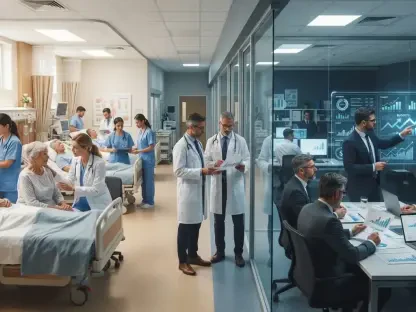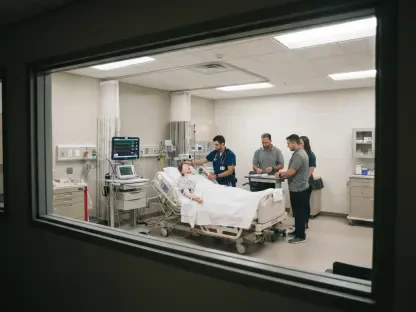

During the peak of the second wave, the deployment of 58 specialized Siddha centers across 37 districts provided a culturally resonant alternative to conventional clinical environments. The emergence of the Delta variant precipitated an exponential surge in infections, placing an immense burden on the healthcare infrastructure and leading to a critical shortage of oxygen-supportive beds and specialized medical equipment in tertiary care hospitals. In response to these institutional pressures, the Government of Tamil Nadu adopted a dual-care strategy. While conventional hospitals focused on severe and critical cases, the administration integrated the Siddha medical system—a traditional practice indigenous to South Asia—into its crisis management framework to isolate, monitor, and treat individuals with asymptomatic or mild symptoms. This strategic deployment was designed to prevent the overcrowding of acute-care facilities while providing accessible, culturally familiar care. A rigorous research evaluation of this initiative found that an overwhelming 89.3 percent of participants reported high levels of satisfaction with these institutional environments, highlighting the potential of medical pluralism in managing large-scale public health emergencies.
Institutional Framework: The Siddha Medical System
The coordination of these centers was handled through a structured collaboration between the Directorate of Indian Medicine and Homeopathy and the Ministry of AYUSH. Siddha is one of several officially recognized traditional medicine frameworks in India, and it remains particularly prominent in Tamil Nadu, where it is deeply embedded in the local culture and historical public health practices. The institutionalization of Siddha for pandemic management was not a spontaneous reaction but rather a calculated evolution of successful pilot programs. Earlier initiatives had already demonstrated that traditional systems could effectively manage thousands of cases under a dedicated program known as “Aarokkiam.” By formalizing operational guidelines and expanding the footprint of these centers, the government established a standardized level of care that could be replicated across diverse districts, ensuring that the traditional medicine approach met modern institutional standards for safety and clinical monitoring.
Cultural Integration: Traditional Medicine in Crisis
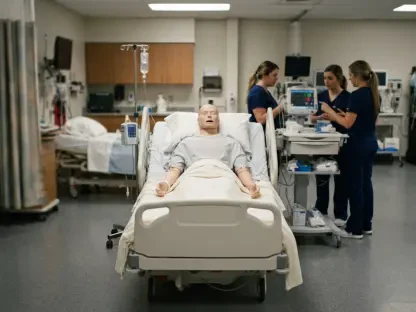
The deployment of traditional medicine systems within a government-led emergency response highlights the importance of cultural resonance in achieving public compliance and satisfaction. By June 2021, the infrastructure for Siddha care had expanded to include 58 operational centers throughout Tamil Nadu. These facilities were established by rapidly repurposing existing civic infrastructure, including schools, colleges, dormitories, and event halls, transforming them into functioning isolation wards. This adaptation of public and private space was essential for maintaining social distancing and providing structured monitoring for thousands of patients who did not require the intensive interventions of a tertiary hospital. The success of these centers relied heavily on the public’s existing trust in the Siddha system, which uses natural formulations and holistic practices that many patients found more approachable than the sterile, high-pressure environment of a conventional intensive care unit.
Infrastructure Evolution: Adapting Civic Spaces
The physical transformation of non-medical buildings into specialized care centers required significant logistical agility. Each repurposed school or college had to be outfitted with the necessary diagnostic tools for pulse oximetry and temperature monitoring, alongside a specialized inventory of Siddha medications. This decentralized approach allowed for better geographical distribution, making the centers easy to reach for nearly 99 percent of the patients involved in the study. By utilizing local landmarks and community buildings, the administration reduced the travel burden on symptomatic individuals and minimized the logistical strain on the centralized ambulance and transport systems. This localized care model ensured that the healthcare response was not just efficient but also physically accessible to a broad cross-section of the population, regardless of their proximity to major urban medical hubs.
Service Quality: The SERVQUAL Evaluation Model
To evaluate the success of these temporary centers from the patient’s perspective, researchers utilized the SERVQUAL framework, a multidimensional research instrument designed to capture the gap between customer expectations and perceived service quality. While patient satisfaction is a common metric in conventional hospital settings, there was a significant lack of empirical data regarding temporary emergency centers that integrated traditional medicine systems during a pandemic. The investigators adapted the SERVQUAL tool to fit the specific operational context of isolation wards, focusing on five foundational domains: tangibles, reliability, responsiveness, assurance, and empathy. This methodological approach allowed for a professional and objective analysis of how well these makeshift centers performed under extreme pressure, providing a clear roadmap for identifying both the strengths and the systemic weaknesses of the traditional care model.
Methodology Framework: Measuring Quality Domains
The research team targeted a sample of 480 individuals, ultimately analyzing 481 participants recruited via simple random sampling from a centralized database maintained by the Siddha COVID War Room. Data were collected through mobile phone interviews by trained personnel using the Open Data Kit platform to ensure data integrity and validation. The investigators measured how patients perceived the physical environment, the reliability of clinical visits, the willingness of staff to provide prompt service, and the empathy shown by healthcare providers. By focusing on these specific domains, the study was able to move beyond anecdotal evidence of success and provide a data-driven look at the patient experience. The use of a standardized framework like SERVQUAL ensured that the results were comparable to other studies in the healthcare sector, facilitating a better understanding of how emergency traditional medicine centers compare to conventional clinical standards.
Participant Diversity: A Comprehensive Demographic Analysis
The study cohort reflected a broad cross-section of the adult population in Tamil Nadu, with men making up 61.8 percent of the participants and the most represented age group being between 26 and 40 years. Notably, 46.4 percent of the respondents held academic degrees, indicating that the appeal of the Siddha COVID Care Centers extended to individuals with high levels of educational attainment. Occupationally, the group was highly diverse, comprising professionals, technicians, sales personnel, homemakers, and students. Regarding immunization status at the time of the investigation, one-third of the participants had received at least one vaccine dose, while 11 percent were fully vaccinated. This demographic variety suggests that the high satisfaction rates were not limited to a specific social or economic group but were shared across the diverse population of the state, underscoring the universal acceptance of the Siddha approach during the crisis.
Experience Predictors: Interpersonal and Structural Factors
The analysis revealed that the “Reliability” domain received the highest average evaluation, with a mean score of 4.51 out of 5. This suggests that patients viewed the centers as exceptionally dependable and well-organized, largely due to the punctual nature of doctor rounds and the structured dispensing of Siddha medications such as Kabasura Kudineer. The inclusion of daily yoga and breathing exercises was also seen as a reliable and holistic part of the recovery process. These systematic clinical protocols helped eliminate ambiguity and reduced patient anxiety during a time of significant national uncertainty. Furthermore, the systematic monitoring of vitals provided patients with a sense of medical security, reinforcing the idea that although the treatment was traditional, the clinical oversight was rigorous and modern in its execution.
Operational Success: Reliability and Facility Standards
Despite being housed in repurposed facilities, the physical infrastructure of the centers exceeded patient expectations, particularly in terms of hygiene and ventilation. More than 40 percent of the cohort highlighted the high standards of cleanliness, which are critical in the management of infectious diseases. The nutritional quality of the food provided was another significant point of satisfaction; in the Siddha framework, diet is considered a vital component of therapy, and the centers adhered to this by providing meals that were both palatable and nutritionally balanced. Additionally, the consistent use of personal protective equipment by healthcare workers and the availability of non-contact diagnostic tools reinforced the perception of a safe and professional environment. These tangible factors played a crucial role in maintaining high morale among patients during their mandatory isolation period.
Space Planning: Impact of Ward Density
A significant finding of the regression analysis was that ward configuration and room density were more accurate predictors of patient satisfaction than demographic factors like age or education. Most participants were in rooms shared with fewer than 15 people, and these individuals reported much higher satisfaction levels than those in wards accommodating more than 30 people. This finding underscores the importance of privacy and personal space, even in emergency settings. As healthcare administrators plan for the 2026-2028 roadmap, these insights suggest that future isolation centers should prioritize lower-density layouts to improve the patient experience. The evaluation of the Siddha centers ultimately showed that integrating traditional systems into modern emergency frameworks is a viable strategy, provided that administrators focus on reliable protocols, interpersonal empathy, and the optimization of physical space to meet the psychological and medical needs of the public.