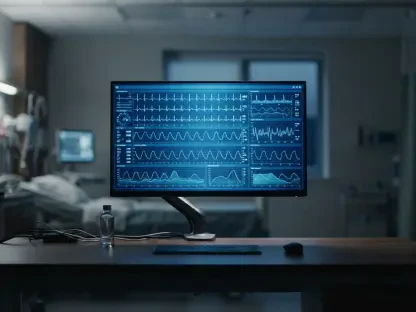

Integrating artificial intelligence into the virtual care workflow helps clinicians filter background noise and highlight anomalies in complex physiological signals. This advancement marks a definitive departure from the early days of telehealth, where video calls were largely limited to verbal exchanges and visual observations. Today, the landscape of digital medicine is evolving into a sophisticated era known as Telehealth 2.0, where the focus has shifted from simple conversational consultations to data-driven clinical encounters that provide the depth of in-person visits. Leading this transformation is Medaica, a medical intelligence firm that has recently secured a strategic investment from Zoom Ventures. This partnership is designed to bridge the long-standing gap between traditional diagnostics and the convenience of virtual care by integrating medical hardware directly into digital appointments. By embedding clinical-grade tools into the video conferencing environment, healthcare providers can now achieve a level of precision that was previously impossible.
Overcoming Physical Barriers in Remote Care
Advancing Real-Time Remote Physical Diagnostics
Medaica’s Telehealth 2.0 platform dismantles the previous limitations of remote care by creating a digital infrastructure capable of supporting high-fidelity physical examinations in any setting. In the past, virtual visits often functioned as mere triage steps, where doctors could observe a patient’s external appearance but lacked the tactile and auditory data required for a definitive medical diagnosis. By utilizing digital medical devices that sync seamlessly with the platform, healthcare providers can now gather clinical-grade data in real time, effectively turning a common laptop or tablet into a comprehensive diagnostic hub. This shift significantly streamlines the healthcare journey for patients by reducing the need for redundant office visits and allowing for immediate clinical decision-making during the first point of contact. The ability to perform these maneuvers remotely ensures that the physical distance between a doctor and patient no longer dictates the quality of the evaluation.
The implementation of these diagnostic hubs represents a significant technological leap that moves beyond the basic video conferencing capabilities of the previous decade. Now, instead of asking a patient to describe their symptoms, a physician can utilize connected peripherals to obtain objective data that informs a more accurate treatment plan. This transition is essential for modern medicine, as it allows for a more proactive approach to patient care where issues can be identified and addressed before they become critical. Furthermore, the integration of these devices ensures that the data collected is standardized and high-fidelity, providing a reliable basis for long-term health monitoring. As this infrastructure becomes more widespread, the distinction between a physical office visit and a virtual examination continues to blur, offering patients a level of convenience and speed that matches the demands of contemporary life. This evolution is not just about technology; it is about redefining the clinical encounter.
Mastering Remote Auscultation with FDA-Cleared Tools
A cornerstone of this new technological paradigm is FDA-cleared remote auscultation, which enables doctors to listen to a patient’s heart, lungs, and vascular system from a distance with remarkable clarity. In a traditional clinical setting, the stethoscope is a primary tool for detecting internal abnormalities, and Medaica has successfully translated this experience into the digital realm. Through specialized digital stethoscopes, body sounds are transmitted over a secure connection, allowing the physician to hear exactly what they would hear if they were in the same room as the patient. This capability is particularly critical for managing cardiovascular and respiratory conditions, where the early detection of a heart murmur or lung crackles can be the deciding factor in a patient’s recovery. By providing clinical-grade audio transmission, the platform ensures that no detail is lost in the digital translation, giving physicians the confidence they need to make high-stakes medical decisions from afar.
Beyond merely transmitting sound, these FDA-cleared tools are designed to work within a secure and compliant ecosystem that prioritizes patient privacy and data integrity. The high-fidelity audio streams are processed to minimize ambient noise, ensuring that the clinician focuses solely on the relevant physiological sounds of the patient. This level of technical refinement is what distinguishes Telehealth 2.0 from its predecessors, as it provides a reliable and repeatable method for clinical assessment. For specialists like cardiologists or pulmonologists, having access to such precise auditory information is essential for maintaining a high standard of care outside of the hospital environment. As these tools become integrated into routine virtual exams, they provide a safety net for patients who might otherwise delay care due to the logistical challenges of visiting a clinic. The ability to perform a thorough auscultation remotely is a transformative development that enhances the scope of virtual care for diverse populations.
Enhancing Clinical Decisions and Access
Augmenting Physician Expertise With Artificial Intelligence
The evolution of virtual care extends far beyond hardware to include a sophisticated software layer powered by artificial intelligence and advanced clinical decision-support tools. Rather than attempting to replace the human element of medicine, these AI algorithms act as a digital assistant that augments the expertise of the physician. By filtering out background noise and highlighting specific anomalies in heart rhythms or breath sounds, the AI helps clinicians focus on the most critical pieces of data during a limited examination window. This data-rich environment provides dynamic visualizations that help clinicians interpret complex physiological signals more accurately than they could through a standard audio-video stream alone. The AI can flag potential issues that might be subtle or difficult to detect with the unaided ear, providing an additional layer of diagnostic security. This collaborative relationship between human intelligence and machine learning ensures that every virtual examination is as thorough as possible.
This intelligent software layer also facilitates a more objective analysis of patient data over time, allowing for better tracking of health trends and response to treatments. When a physician reviews a patient’s physiological signals, the AI can provide context by comparing current readings with historical data stored within the platform. This longitudinal view of a patient’s health is vital for making informed adjustments to medications or therapy plans. Moreover, the clinical decision-support tools integrated into the workflow help reduce the cognitive load on providers, allowing them to spend more time engaging with the patient rather than interpreting raw data streams. By presenting information in an organized and actionable format, the platform empowers physicians to provide higher-quality care with greater efficiency. The result is a more personalized healthcare experience where technology serves to enhance the doctor-patient relationship rather than distancing it, ensuring that virtual visits are both meaningful and clinically sound.
Establishing Global Standards for Virtual Examinations
The collaboration between Medaica and Zoom Ventures marked a pivotal moment in the maturity of the digital health industry, signaling a shift toward more rigorous virtual care. Industry leaders recognized that the future of medicine must be digital-first, provided that virtual platforms could maintain the clinical rigor of a physical office visit. By combining advanced hardware with AI-driven insights and a global communication reach, this partnership created a model that redefined how quality medical examinations are conducted. This approach demonstrated that high-fidelity diagnostics could be accessible to anyone, regardless of their geographical or physical limitations, through a unified digital interface. As these technologies matured, they established a new benchmark for what patients and providers expected from a remote encounter. The shift toward this comprehensive model ensured that the healthcare industry was prepared to meet the evolving needs of a global population that increasingly values both convenience and high-quality clinical outcomes.
Looking ahead, the success of these initiatives provided a clear roadmap for the continued integration of medical technology into everyday digital interactions. Healthcare organizations were encouraged to invest in interoperable systems that could support a wide range of diagnostic devices and AI tools, ensuring that they remained at the cutting edge of clinical delivery. The key takeaway for providers was the importance of adopting a proactive, data-driven approach to patient care that utilized the full potential of Telehealth 2.0. By focusing on actionable insights and real-time monitoring, clinicians were able to move beyond traditional reactive models of medicine. Future considerations for the industry included the expansion of these tools to more specialties and the continued refinement of AI algorithms to enhance diagnostic accuracy further. Ultimately, the transition to this advanced standard of virtual care represented a fundamental change in the healthcare landscape, making high-quality medical services more resilient and accessible to the entire world.