
The plummeting share of global clinical trials conducted in Europe highlights a critical need for systemic regulatory reform across the continent. While the United States and China engage in a high-stakes legislative battle for dominance over the life sciences sector, the global pharmaceutical map is being redrawn in real time. This geopolitical friction has moved beyond mere trade rhetoric into a phase of structural decoupling that threatens to isolate some of the world’s most innovative research hubs. As Washington introduces stringent barriers against Chinese investments, a significant vacuum is emerging within the international biotech market. This shifting dynamic offers European biopharma companies a unique chance to act as strategic intermediaries. By positioning themselves as neutral grounds for collaboration, European firms could bridge the gap between Chinese research and Western markets, provided they navigate the complex regulatory minefield that defines current trans-Atlantic relations.
Navigating the New American Legislative Landscape
The Regulatory Reach of American Biotech Laws
The United States has moved with unprecedented speed to deploy a series of aggressive legislative tools designed to safeguard national security and maintain economic dominance. The BIOSECURE Act stands as a central pillar of this defensive strategy, effectively blacklisting key Chinese biotechnology firms by prohibiting federal agencies from procuring their equipment or services. This measure was reinforced by the COINS Act, which established a rigorous screening process for outbound American investments to ensure that domestic capital does not inadvertently fuel the growth of foreign sectors deemed sensitive to security interests. These policies reflect a fundamental shift in how Washington perceives the life sciences, treating biological innovation as a critical national asset that requires protection from foreign encroachment. The resulting friction has chilled traditional investment pipelines, forcing many American firms to reconsider their long-term partnerships with Chinese research entities.
Building upon these initial restrictions, the Biotech Investment National Security Act (BINSA) has granted the Treasury Department expansive new powers to review pharmaceutical licensing deals and equity investments involving Chinese partners. This legislative expansion comes at a time when the financial flows between these two global powers have reached historic levels, with cross-border licensing potential estimated to have reached approximately $136 billion by early 2026. The motivation for such scrutiny is underscored by the dramatic rise in upfront payments for Western-Chinese licensing deals, which surged by more than 230% over the last four years. This massive transfer of capital and intellectual property has raised alarms in Washington, leading to a regulatory environment where even standard joint ventures are now subject to intense political scrutiny. As a result, the American biotech sector is operating under a cloud of uncertainty as firms struggle to determine which collaborative projects will remain legally viable.
Strategic Implications of the Eurowashing Trend
The phenomenon known as “Eurowashing” has surfaced as a direct market response to the tightening of American regulatory constraints on Chinese scientific engagement. This trend involves European companies acting as strategic conduits, licensing Chinese-invented medicines and rerouting their development through European regulatory and commercial channels. By doing so, these firms can effectively capture the profits and intellectual property benefits that American companies are now legally discouraged from pursuing. Industry observers have pointed out that this movement allows Chinese innovation to maintain a presence in Western markets, albeit under a different flag. While the origin of the scientific breakthrough remains Chinese, the European partnership provides a layer of administrative and political distance that satisfies current legal requirements. This approach has allowed European biotechs to leverage research from abroad, filling their own pipelines with promising candidates that might have lacked a path to approval.
Despite the clear economic incentives, the practice of Eurowashing remains a highly complex and controversial maneuver within the global regulatory landscape. Critics of the practice argue that simply changing the jurisdictional oversight of a project does not inherently eliminate the underlying security or ethical concerns that prompted the initial American restrictions. Furthermore, European partners who engage in these activities must shoulder a significant administrative burden to ensure that the licensed technology is sufficiently “Westernized” to avoid future sanctions. This process involves meticulous due diligence and the restructuring of research protocols to align with both European standards and the shifting expectations of the American market. If a European firm fails to demonstrate a genuine transfer of operational control, it risks being caught in the same regulatory crosshairs as its Chinese counterparts. Consequently, the trend represents both a lucrative opportunity and a potential risk for those who do not strictly adhere to compliance.
Strategic Advantages and Operational Realities
Capitalizing on the Open European Window
The current geopolitical climate has inadvertently created a wider path for European firms because the American government faces immense difficulty in halting China’s pharmaceutical momentum. As noted by industry analysts, attempting to completely decouple the two largest economies in the life sciences sector is akin to placing car brakes on a bullet train. China remains the primary global supplier of active pharmaceutical ingredients, which are the essential building blocks for thousands of medications sold in the United States. This deep interdependence means that any extreme measures to isolate the Chinese biotech sector could lead to a retaliatory move by Beijing that would potentially cripple the entire American drug manufacturing infrastructure. For European firms, this reality provides a strategic opening to act as the preferred partner for Chinese entities that are eager to find stable routes to global markets. By maintaining a balanced diplomatic stance, Europe can offer a neutral environment where science continues despite tensions.
For European firms to successfully capitalize on Chinese intellectual property, they must pay meticulous attention to the legal and operational details that define their partnerships. The success of this model depends heavily on the fine print, which includes ensuring a clear and documented transfer of all relevant intellectual property rights to the European entity. Furthermore, any manufacturing related to these products must ideally take place outside of mainland China to satisfy the requirements of Western health authorities and security regulators. Maintaining majority Western ownership is another critical factor that helps insulate European biotechs from the potential fallout of American sanctions. When these conditions are met, European companies can safely advance their pipelines without fearing that their assets will be restricted. This strategic restructuring allows for the integration of global innovation while strictly adhering to the regional safety and security standards that are becoming mandatory for the trans-Atlantic drug market.
Revitalizing Innovation and Industrial Strength
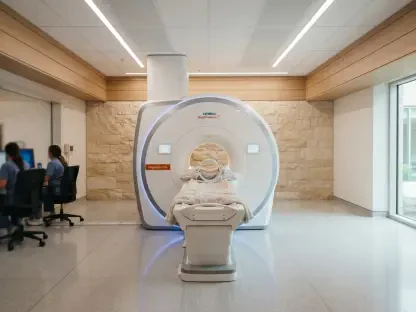
While the current situation offers new opportunities, it also highlights a sobering decline in the overall competitiveness of the European pharmaceutical sector. Recent data indicates that Europe’s share of global pharmaceutical sales has slipped to just 23%, a figure that pales in comparison to the 55% share held by North American companies. This loss of influence is particularly evident in the clinical research sector, where Europe’s share of global trials has plummeted from 22% to 12% in recent years. This erosion of the industrial base is exacerbated by the “commoditization of innovation,” a trend where researchers are finding it difficult to maintain a competitive advantage based solely on traditional research models. Chinese companies, in contrast, have become highly proficient at iterating on published Western research and bringing products to market with greater efficiency. To reclaim its status, Europe must implement the core recommendations of the EU Biotech Act, streamlining bureaucratic processes to operate at high speeds.
The strategic path forward for European biotechnology is defined by a need to balance global collaboration with industrial independence. Stakeholders recognized that for European founders to succeed, they had to meticulously map their ownership structures and data sources to ensure long-term commercial viability. The conclusion reached by industry leaders emphasized that the greatest risks involved not only political posturing but also the inherent challenges of manufacturing in a fragmented market. It was determined that success required a dual approach: staying open to international innovation while simultaneously strengthening domestic manufacturing and research infrastructure. Leaders across the continent agreed that the “window of opportunity” would remain open only if Europe prioritized its own industrial strength over simple geopolitical reactions. By focusing on regulatory agility, the region established a framework that allowed it to provide essential innovation while fostering a new era of global pharmaceutical cooperation.