
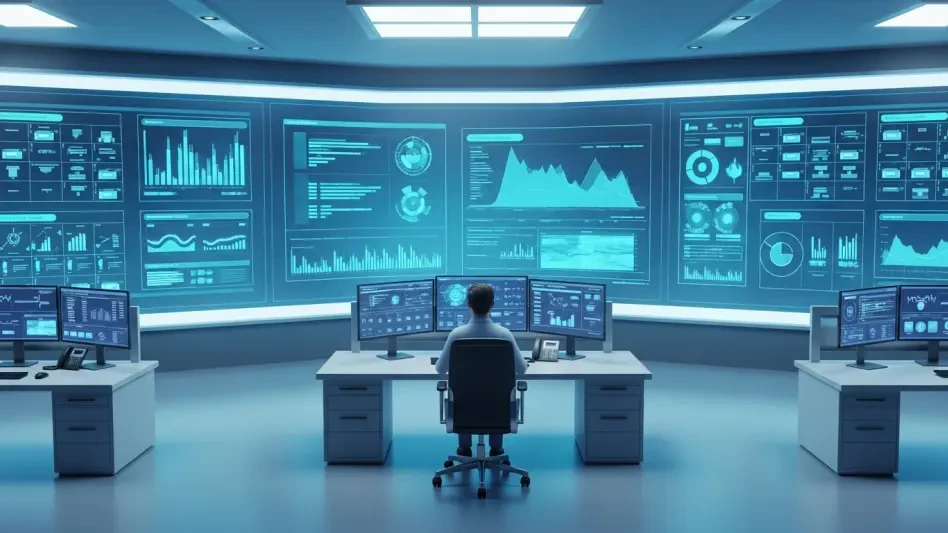

The persistent shortage of qualified nursing professionals has forced healthcare administrators to reconsider the traditional paradigms of inpatient care and bed management. MetroHealth, a primary public health system in Northeast Ohio, has initiated a sweeping technological transformation by converting nearly 500 patient rooms into a highly integrated “Smart Hospital” ecosystem. This ambitious project, executed in partnership with the health-tech innovator Artisight, utilizes a blend of computer vision, voice-activated sensors, and real-time data analytics to create a safer environment for patients and a more manageable workload for staff. By deploying these advanced tools across five key facilities, MetroHealth is positioning itself as a pioneer in the use of ambient intelligence to solve the structural vulnerabilities that have long plagued the American medical sector.
Addressing Industry Fragility and Labor Shortages
The Impetus for Radical Innovation
The modern healthcare landscape is currently grappling with a “perfect storm” of economic and demographic pressures that threaten the stability of traditional delivery models. Rising operational costs and a rapidly aging population have increased the demand for complex medical services, yet the supply of frontline clinicians remains dangerously low. For a safety-net provider like MetroHealth, which primarily serves vulnerable and underrepresented populations, these challenges are even more acute. The institution cannot simply hire its way out of the problem given the national scarcity of nursing talent. Consequently, the leadership team has identified artificial intelligence as a critical force multiplier. By integrating smart sensors into the physical architecture of the hospital, the system can provide a layer of continuous oversight that was previously impossible without a massive and unsustainable increase in human headcount.
Addressing nurse burnout is no longer just a human resources concern; it has become a fundamental requirement for maintaining high-quality clinical outcomes. Studies have shown that when nurses are overwhelmed by administrative tasks and high patient-to-staff ratios, the risk of medical errors and patient dissatisfaction increases significantly. MetroHealth’s shift toward an AI-augmented model is designed to break this cycle by automating the constant, repetitive monitoring that often leads to cognitive fatigue. This strategy acknowledges that the physical and mental well-being of the caregiver is inextricably linked to the safety of the patient. By deploying technology that acts as an “extra set of eyes,” the hospital can maintain its commitment to the community while ensuring that its professional staff remains resilient and focused on the tasks that require human judgment and intervention.
Restoring the Human Connection in Medicine
One of the most significant paradoxes of the digital health era is that clinicians often spend more time interacting with computer screens than with the patients they are meant to treat. MetroHealth’s smart hospital initiative seeks to reverse this trend by offloading the heavy burden of documentation and data entry to intelligent systems. When a virtual nurse handles the intricate details of a patient’s admission history or medication reconciliation through a secure video interface, the bedside nurse is freed from the nursing station. This allows the physical caregiver to engage in high-touch activities, such as wound care, physical assessments, and providing emotional support to families. This redistribution of labor ensures that technology serves as a bridge rather than a barrier, restoring the bedside presence that is the hallmark of effective nursing practice.
Beyond the immediate practical benefits, the reduction of administrative “friction” has a profound impact on long-term professional satisfaction. Nurses who enter the field out of a desire to help others often find themselves disillusioned by the sheer volume of paperwork and bureaucratic requirements that define the modern hospital shift. By implementing voice-activated sensors and automated tracking, MetroHealth is creating a work environment where the most tedious aspects of the job are handled by the infrastructure itself. This cultural shift aims to make the profession more sustainable and attractive to new recruits, helping to alleviate the regional labor shortage over time. The ultimate goal is to foster a clinical environment where the technology is so seamlessly integrated that it becomes invisible, allowing the human element of medicine to once again take center stage.
Building the Intelligent Clinical Infrastructure
The Artisight Platform as a Central Nervous System
The core of MetroHealth’s technological evolution is the Artisight Smart Hospital Platform, a comprehensive system that functions much like a centralized nervous system for the clinical environment. This infrastructure relies on high-performance GPUs and an array of sophisticated ambient sensors that can process vast amounts of visual and auditory data in real time. Crucially, this platform does not operate in a silo; it is deeply integrated into the existing Epic Electronic Health Record system used throughout the organization. This connectivity allows the AI to pull relevant patient data and push actionable insights directly to the devices carried by the nursing staff. If the system detects a potential safety risk or a change in a patient’s condition, it does not just record the event—it triggers a coordinated response across the entire care team.
This level of integration represents a significant departure from the fragmented tech stacks often found in large medical centers. By consolidating various monitoring functions into a single, cohesive platform, MetroHealth avoids the “alarm fatigue” that occurs when clinicians are bombarded by disconnected alerts from multiple machines. The Artisight platform is designed to filter out the noise and present only the most critical information, ensuring that every notification is meaningful and requires a specific action. This responsive, data-driven architecture allows the hospital to operate with a higher degree of precision and agility. As the system continues to gather data across nearly 500 rooms, it will provide the administration with unprecedented insights into the flow of patients and the efficiency of clinical workflows, enabling continuous optimization.
Operational Pillars of Virtual Nursing and Sitting
The smart infrastructure at MetroHealth is anchored by two distinct operational pillars: virtual nursing and virtual sitting. The virtual nursing component utilizes a central command hub staffed by experienced clinicians who interact with patients via high-definition video and audio. These virtual nurses take over time-consuming tasks such as patient education, discharge planning, and the double-checking of high-risk medications. This “dual-care” model provides patients with an additional layer of expertise without requiring a physical presence in the room at all times. Patients benefit from faster response times for their questions, while the physical nurses on the floor are no longer interrupted by tasks that can be handled remotely. This approach maximizes the utility of the available nursing workforce by allowing seasoned professionals to provide care across multiple units.
Simultaneously, the virtual sitting program addresses the pervasive and costly challenge of patient falls. In a traditional setting, patients at high risk of falling often require a one-to-one human “sitter” to stay in the room 24/7, a practice that is both expensive and difficult to maintain during staffing shortages. The AI-powered system replaces this labor-intensive model with continuous computer vision monitoring. The platform is trained to identify specific “pre-fall” behaviors, such as a patient unbuckling a safety belt or attempting to swing their legs over the side of the bed. When these movements are detected, the system immediately alerts the nearest staff member and can even play a pre-recorded message asking the patient to stay seated. This proactive intervention has the potential to drastically reduce injury rates while allowing the hospital to reallocate its human sitters to other critical roles.
Measuring Success and Managing Cultural Shifts
Data-Driven Key Performance Indicators
MetroHealth has established a rigorous framework of key performance indicators to ensure that the investment in AI translates into tangible improvements in both clinical care and operational health. One of the primary metrics for success is the reduction in patient fall rates per 1,000 patient days, which serves as a direct measure of the effectiveness of the virtual sitting technology. Additionally, the system is tracking “throughput” efficiency—the speed at which patients are moved from the emergency department to inpatient beds. By streamlining the documentation required for admissions and discharges, the AI platform helps clear bottlenecks in the hospital’s workflow, ensuring that the facility can accommodate more patients without increasing the total number of beds. These metrics provide the empirical evidence needed to justify the expansion of the smart hospital model.
Beyond clinical and operational statistics, the leadership team is closely monitoring the human impact of the technology through patient satisfaction scores and caregiver surveys. High HCAHPS scores are essential for a hospital’s reputation and financial health, and the virtual nursing interface provides a unique opportunity to improve the patient experience by ensuring that no question goes unanswered. Furthermore, tracking caregiver satisfaction is vital for determining if the AI is truly fulfilling its promise to combat burnout. If the staff reports a significant decrease in their perceived workload and an increase in the time spent on direct patient care, the project will be deemed a success. This multi-dimensional approach to measurement ensures that the technology is held accountable to the people it was designed to serve, rather than just being viewed as a high-tech novelty.
Strategic Implementation and Regional Expansion
The rollout of the smart hospital platform is being conducted in a deliberate, phased manner to ensure that each facility can adapt to the new workflows effectively. The implementation began at the flagship Glick Center and is now expanding to regional satellite hospitals in Brecksville, Cleveland Heights, and Parma, as well as the specialized Rehabilitation Institute. This gradual expansion allows the technical team to troubleshoot hardware issues and refine the AI algorithms in a variety of clinical settings—ranging from intensive care to long-term rehabilitation. By testing the system in diverse environments, MetroHealth can ensure that the technology is robust enough to handle different patient needs and architectural layouts. This phased strategy also allows for better “change management,” as lessons learned at the first site are used to train staff at subsequent locations.
This initiative is part of a broader movement toward “ambient” healthcare, where the physical environment itself becomes an active participant in the care process. MetroHealth’s decision to commit to this technology suggests that advanced AI is becoming a baseline requirement for sustainable hospital operations. For other health systems watching this rollout, the MetroHealth model provides a blueprint for how to integrate sophisticated digital tools into a public, safety-net framework where resources are often limited. The successful expansion of this platform across five locations demonstrates that smart technology is not just for elite, private institutions; it is a vital tool for any provider looking to improve safety and efficiency in a challenging labor market. As the system reaches full operational capacity, it will likely serve as a benchmark for regional and national healthcare standards.
Navigating Privacy and Change Management
Despite the clear advantages of an AI-driven environment, the implementation of continuous monitoring systems brings significant ethical and privacy considerations to the forefront. MetroHealth has had to implement stringent data security protocols to ensure that all video and audio data captured by the Artisight platform is handled in strict accordance with HIPAA regulations. Transparency is a cornerstone of this effort; patients and their families must be fully informed about how the technology works and what data is being collected. Establishing trust is essential, as the presence of cameras and sensors can initially feel intrusive to some individuals. By clearly communicating that the system is designed for safety and that the data is protected by robust encryption, the hospital can alleviate many of the concerns associated with “always-on” monitoring.
Equally important is the internal management of cultural change among the medical and nursing staff. For the platform to be successful, it must be embraced by the clinicians who will use it every day. There is often an initial skepticism toward AI in medicine, with some professionals fearing that technology will replace human expertise or serve as a tool for administrative surveillance. MetroHealth has addressed this by involving frontline nurses in the design and implementation process, ensuring that the tools actually solve real-world problems. When doctors and nurses see that the system catches a potential fall or handles a tedious discharge summary, their perception shifts from viewing the technology as a burden to seeing it as an indispensable partner. This focus on human-centric implementation is what will ultimately determine whether the smart hospital model achieves its full potential.
Future Strategic Considerations and Actionable Steps
The integration of artificial intelligence into the physical infrastructure of the hospital marks a turning point for MetroHealth, shifting the focus from reactive treatment to proactive, ambient monitoring. To ensure the continued success of this model, healthcare leaders should prioritize the deep integration of AI tools with existing electronic health records to prevent data silos. Maintaining a transparent dialogue with both patients and staff regarding the ethical use of computer vision will be essential for sustaining the trust necessary for wide-scale adoption. Furthermore, institutions looking to replicate this success should focus on a phased rollout that allows for cultural adaptation and technical refinement in smaller, controlled environments before a full-scale regional launch.
As the healthcare industry continues to evolve, the ability to synthesize virtual and physical care models will be a primary differentiator for high-performing organizations. Stakeholders must invest in robust cybersecurity frameworks to protect the sensitive data generated by ambient sensors, as any breach could undermine the public’s confidence in these life-saving technologies. Moving forward, the focus should be on refining the predictive capabilities of these AI systems, moving beyond simple movement detection to more complex clinical insights. By treating technology as a collaborative partner rather than a mere replacement for human labor, health systems can create a more resilient and sustainable future that prioritizes both caregiver well-being and patient safety. Progress in this field was measured by the successful transition from traditional observation to intelligent, automated oversight.







