
The disconnect between fragmented medical records and the continuous, lived experience of patients has long been a primary catalyst for diagnostic errors and inefficient clinical workflows. While traditional Electronic Health Record (EHR) systems excel at capturing discrete clinical encounters, they frequently fail to provide a comprehensive narrative of a patient’s health journey outside the hospital walls. This systemic gap necessitates a shift toward patient-powered data models where individuals serve as the primary custodians and aggregators of their health information. By centralizing disparate data points—ranging from surgical histories in specialized clinics to daily biometric readings from consumer devices—the healthcare industry can finally address the pervasive silos that hinder coordinated care. The transition from passive record-keeping to active patient engagement represents more than just a technological upgrade; it is a fundamental redesign of how health information is managed and verified.
Bridging the Gap: The Role of Personal Health Records
Decentralized DatEmpowering Individual Oversight
Decentralization offers a compelling solution to the administrative bottlenecks that prevent real-time data sharing between competing hospital networks and private practices. Currently, patients often find themselves acting as the physical conduit for their own medical histories, carrying paper files or compact discs between specialists who cannot access external databases. Digital personal health records (PHRs) solve this by placing the interoperability burden on the software rather than the provider, allowing patients to grant temporary access to a unified ledger of their health history. This model leverages advanced encryption and permission-based protocols to ensure that sensitive data remains secure while remaining portable across state and international lines. When the patient controls the data, the risk of missing critical information—such as rare drug allergies or previous surgical complications—decreases significantly. This autonomy fosters a more collaborative environment.
Accuracy and Verification: The Patient as a Contributor
Beyond the practicalities of data portability, patient-powered systems introduce a layer of longitudinal accuracy that is often missing from static clinical notes written in haste. Patients are uniquely positioned to identify discrepancies in their own records, such as incorrect medication dosages or outdated lifestyle information that can skew risk assessments. By utilizing intuitive mobile interfaces, individuals can verify their data in real-time, ensuring that every physician in the care continuum is working from a “single source of truth.” This democratic approach to data management transforms the patient from a subject of clinical observation into an active participant in the diagnostic process. As these platforms become more integrated with biometric sensors, the distinction between clinical and consumer data begins to blur, providing a richer, more nuanced dataset for chronic disease management. This evolution requires robust frameworks to ensure the data is clinically valid.
Integrating Real-Time Metrics into Clinical Workflows
Wearable Technology: From Fitness Tracking to Diagnostic Tools
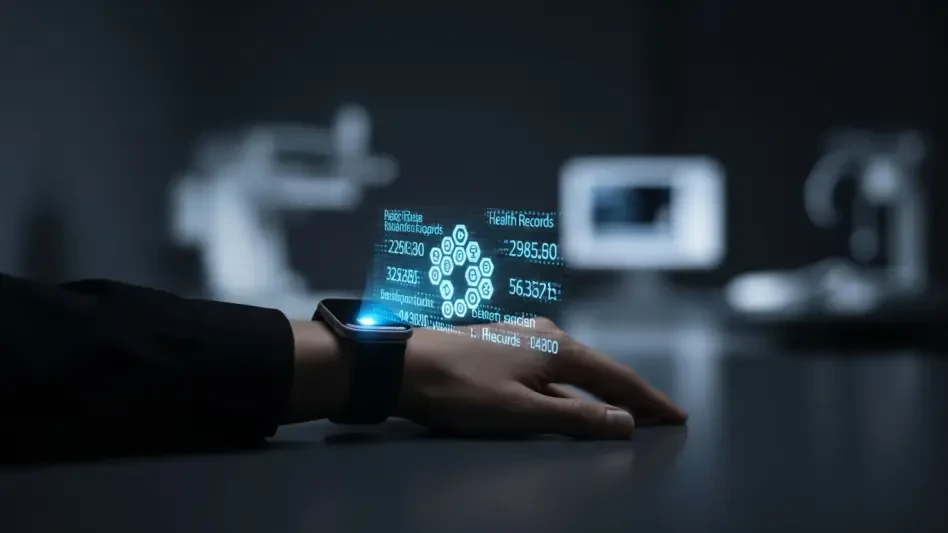
The evolution of wearable technology has moved far beyond basic step counting, with contemporary devices now offering medical-grade monitoring of vital signs. Modern smartwatches and bio-patches can provide continuous electrocardiogram (ECG) readings, oxygen saturation levels, and even non-invasive glucose monitoring for diabetic management. These data points, when fed directly into a patient-managed health hub, provide a dynamic view of physiological trends that episodic clinical visits simply cannot capture. For instance, an irregular heart rhythm that only occurs during sleep might be missed in a standard office visit but can be easily identified through week-long continuous monitoring. This constant stream of high-fidelity data allows for earlier interventions, potentially preventing emergency room visits and reducing the overall cost of care. The challenge lies in filtering this vast amount of information into meaningful insights that do not overwhelm clinicians with noise.
Scaling and Implementation: The Path Toward Integrated Care
The movement toward a unified, patient-controlled data ecosystem successfully addressed the historical challenges of healthcare fragmentation by prioritizing transparency and portability. Stakeholders who invested in robust interoperability frameworks and user-centric design realized significant improvements in diagnostic accuracy and patient satisfaction scores. Moving forward, the industry should focus on refining the filtering mechanisms for real-time biometrics to prevent clinician burnout while maximizing the utility of the data collected. It became evident that when individuals were provided with the tools to manage their own health narratives, the systemic barriers between different medical institutions began to dissolve. Future initiatives must prioritize the digital literacy of patients to ensure that these advanced tools are accessible to all demographic groups, regardless of technological proficiency. By maintaining a focus on ethical data governance, the healthcare landscape transformed into a resilient network.