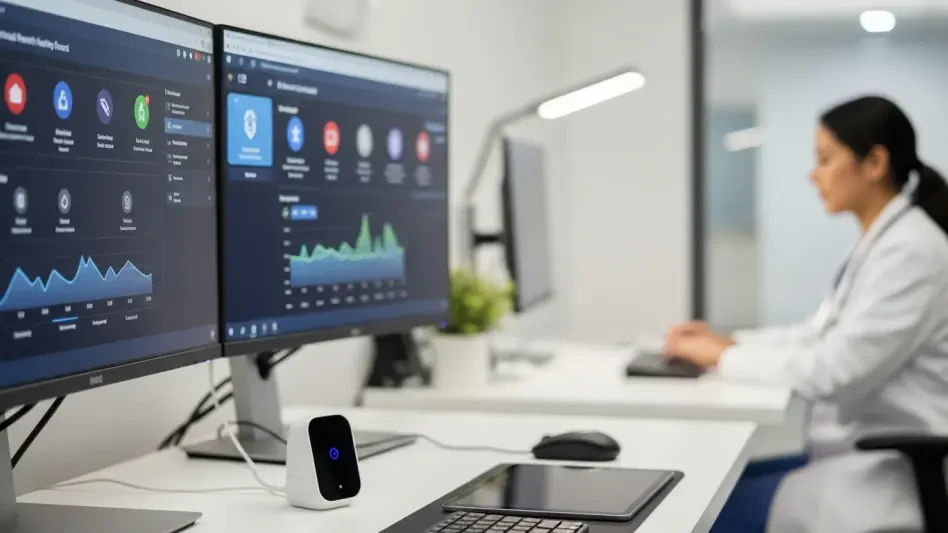

The rapid proliferation of wearable biosensors and remote monitoring applications has transformed the modern clinical landscape from a series of episodic encounters into a continuous stream of physiological insights. While healthcare systems have traditionally relied on snapshots of health captured during brief office visits, the current environment in 2026 relies on a more comprehensive understanding of the patient experience outside the hospital walls. This shift is driven by a significant portion of the adult population that now utilizes sophisticated wearables to track everything from heart rate variability to nocturnal respiratory rates. However, the sheer volume of this patient-generated data presents a substantial logistical hurdle for medical professionals who are already grappling with significant informatics burnout. The challenge no longer lies in the availability of data but rather in the sophisticated orchestration of that information into a format that supports, rather than hinders, clinical decision-making. By prioritizing the adoption of Fast Healthcare Interoperability Resources standards, the industry is finally moving toward a reality where disparate data points are funneled into a single, actionable view within the primary electronic health record. This structural evolution is essential for ensuring that the promise of personalized medicine does not collapse under the weight of unmanaged information streams.
Bridging the Gap: Medical-Grade Precision Versus Consumer Utility
Clinicians must navigate a complex ecosystem of data sources where the distinction between high-fidelity medical devices and general-purpose fitness monitors is often blurred. While consumer-grade wearables have become increasingly accurate, they frequently lack the rigorous validation required for acute diagnostic purposes compared to clinical-grade tools such as continuous glucose monitors or hospital-issued patch sensors. The primary objective for modern health systems is to establish a hierarchy of data reliability that allows providers to weigh information based on its source and clinical relevance. This process involves moving away from a reliance on subjective patient self-reporting, which is often colored by recall bias or misunderstanding, and moving toward an objective, continuous history of physiological activity. By integrating validated sensor data directly into the workflow, physicians can observe subtle trends that might otherwise go unnoticed during a standard physical exam. This shift does not dismiss the value of consumer fitness data, which remains useful for tracking long-term lifestyle habits and activity levels, but it necessitates a more nuanced approach to how that data is interpreted within a medical context. Ensuring that only the most relevant and reliable metrics reach the point of care is fundamental to maintaining clinician trust in these digital tools and preventing the diagnostic errors that can arise from low-quality data inputs.
Establishing robust ingestion pipelines is the subsequent phase in making this vast amount of information truly useful for the clinical team, focusing heavily on identifying the most relevant signals amidst an ocean of background noise. Simply accumulating numbers without a clear strategy for analysis only adds to the cognitive load of the provider, which is why healthcare organizations are increasingly turning to advanced algorithmic filtering. By setting specific clinical thresholds tailored to the individual patient’s baseline, systems can use machine learning to highlight only those deviations that require immediate medical attention. This automated triage mechanism allows the clinical team to move away from a reactive model of care where problems are addressed only after they become symptomatic. Instead, they can embrace a proactive management strategy for chronic conditions, intervening at the first sign of physiological distress before it escalates into a crisis. This approach is particularly effective for managing complex patients who require frequent monitoring but may not need a traditional office visit for every minor adjustment in their treatment plan. When the technology serves as a filter rather than a simple conduit, it empowers the medical staff to focus their expertise on the patients who are currently at the highest risk. This refined data strategy is the bedrock of a more efficient and responsive healthcare delivery system that prioritizes precision over sheer volume.
Advancing Specialized Care: Targeted Outcomes Through Remote Monitoring
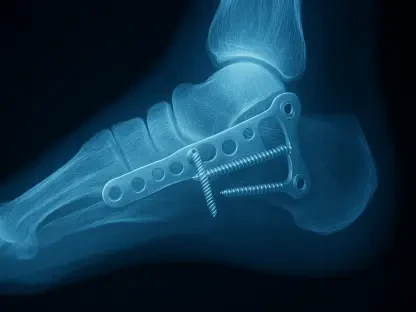
In the realm of musculoskeletal health, patient-generated data is providing a critical bridge between scheduled office visits and the critical recovery period that takes place at home. Wearable sensors now allow physical therapists to measure a patient’s range of motion and exercise adherence with objective precision, which significantly enhances the ability to adjust rehabilitation protocols in real time. This level of oversight was previously impossible, as therapists largely relied on a patient’s own estimation of their progress or pain levels during weekly appointments. Furthermore, this timestamped and verified data serves as essential documentation for insurance providers and legal teams, offering concrete proof of the value and efficacy of the prescribed rehabilitation plan. By closing the feedback loop between the patient and the therapist, these tools drive better adherence and faster recovery times, ensuring that surgical outcomes are optimized through rigorous post-operative monitoring. The ability to visualize a patient’s daily movement patterns allows for a more dynamic and personalized approach to physical therapy that adapts to the actual pace of the individual’s healing process. Consequently, the integration of these sensors has turned home-based recovery into a transparent and highly managed component of the overall surgical journey.
Cardiometabolic care is also undergoing a major transformation through the identification of micro-patterns in daily physiological activity that were once invisible to the naked eye. Subtle changes in sleep quality, minor dips in heart rate variability, or slight increases in resting heart rate can now act as early warning signs for heart failure or other significant cardiac events. This model of continuous risk detection enables clinicians to perform small, timely interventions that prevent major clinical crises and significantly reduce the need for expensive hospital readmissions. For patients managing chronic conditions like hypertension or diabetes, the ability to see the immediate impact of lifestyle changes on their physiological metrics serves as a powerful motivational tool. Clinicians can use these long-term trends to refine medication dosages with a degree of accuracy that was previously unattainable through sporadic blood pressure checks or occasional lab tests. This continuous stream of information transforms the patient from a passive recipient of care into an active participant in their own health management, supported by real-time data that validates their efforts. As these specialized monitoring programs continue to mature, they are setting a new standard for how chronic diseases are managed, moving the focus from crisis intervention to the maintenance of optimal physiological balance through constant, low-touch surveillance.
Addressing Operational Friction: Integrating Systems and Financial Frameworks
Despite the undeniable clinical benefits, cultural and administrative friction remains a primary obstacle to the widespread adoption of remote monitoring within traditional medical practices. Many providers still view patient-generated data as an additional administrative burden rather than a foundational tool for modern medicine, largely because current systems often require them to log into multiple disparate platforms. For these programs to achieve long-term success, the data integration must become effectively invisible, fitting naturally into the tools and dashboards that clinicians already use for their daily tasks. This means that data from a patient’s smart watch or glucose monitor should appear alongside their lab results and imaging studies without requiring extra clicks or manual data entry. Solving this user experience challenge is critical for reducing provider burnout and ensuring that digital health tools are embraced as a help rather than a hindrance. When the technology is designed to respect the clinician’s time and cognitive bandwidth, it fosters a culture of innovation where data-driven insights are valued and utilized to their full potential. Overcoming these organizational hurdles requires a concerted effort to align the technical capabilities of these devices with the practical realities of a fast-paced clinical environment.
The financial sustainability of these remote monitoring programs is another key consideration that has been bolstered by the emergence of new reimbursement codes for remote therapeutic monitoring. These billing pathways provide the necessary economic framework for healthcare practices to invest in and maintain the sophisticated infrastructure required for continuous data analysis and patient engagement. Without a clear return on investment, many smaller practices would find it difficult to justify the costs associated with the hardware, software, and staff time needed to manage these data streams. However, as payers increasingly recognize the cost-savings associated with reduced hospitalizations and improved chronic disease management, the financial incentives for remote monitoring have become more robust. When the clinical utility of the data is matched by a viable economic model, remote monitoring moves from being a niche experimental project to a standard and sustainable part of the patient care continuum. This economic alignment is essential for the democratization of high-tech care, ensuring that these advanced tools are available to a broad range of patients regardless of the size or location of their primary care provider. As the industry continues to refine these financial models, the focus will remain on demonstrating the long-term value of data-driven care in improving population health outcomes while controlling overall expenditures.
Strategic Evolution: The Realization of Data-Driven Patient Care
The transition toward a fully integrated, data-driven healthcare model depended on a foundational partnership between the patient and the provider, where information served as a shared language for managing wellness. This evolution succeeded because healthcare systems recognized that empowering patients with their own metrics could drive significant behavioral changes, provided a clear structure existed to prevent health anxiety or the misinterpretation of complex data. As predictive models evolved throughout the mid-2020s, these data streams finally created a dynamic feedback loop that ensured more precise and patient-centric care across diverse populations. The implementation of standardized protocols for data intake allowed organizations to mitigate the risks of information overload while maximizing the benefits of remote monitoring for those with chronic illnesses. Furthermore, the alignment of clinical utility with economic viability through updated reimbursement pathways proved to be the final piece of the puzzle that moved these initiatives from experimental pilots to standard clinical practice. By the time these systems reached full maturity, the barriers that once hindered remote care had largely dissolved, replaced by a more resilient and responsive infrastructure. Ultimately, the successful integration of patient-generated data redefined the boundaries of the clinical environment, proving that the most effective medical care took place long before the patient ever stepped into a doctor’s office.