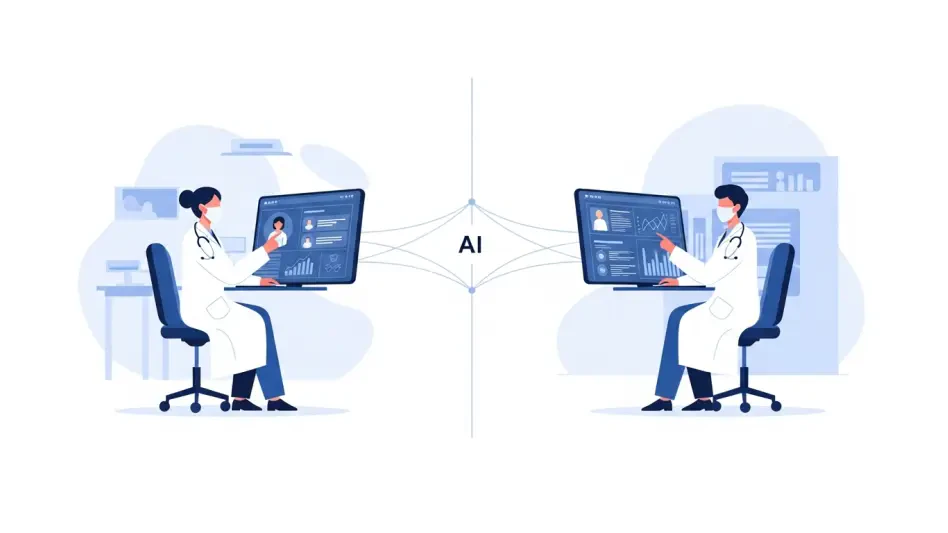

As healthcare providers across Asia accelerate their adoption of advanced diagnostic technologies, a stark contradiction has emerged where medical data remains trapped within institutional silos despite the region’s rapid pace of digital transformation. This digital fragmentation serves as the focal point for understanding the next phase of medical evolution, where the core subject of analysis is the role of Artificial Intelligence not merely as a diagnostic tool, but as a critical infrastructure layer. This shift is designed to bridge the gaps between disparate healthcare systems, moving away from isolated encounters toward a seamless, cross-border journey for patients. By examining the technical, logistical, and regulatory hurdles facing Asian healthcare, it becomes clear that AI-enabled interoperability is the key to transformation. The challenge lies in moving beyond basic digitization to create a system where data is truly portable and searchable. This analysis explores how an infrastructure-centric approach to AI can overcome the limitations of legacy systems, linguistic barriers, and administrative burdens to create a more collaborative and effective healthcare ecosystem throughout the region. The goal is to move past the era of digital islands and toward an integrated network that prioritizes the patient’s longitudinal health journey over the operational convenience of individual hospitals.
The Paradox: Why Data Remains Isolated
The fundamental challenge in Asian healthcare is not a lack of technology, but the “internal-only” design of existing digital systems that prevents external collaboration. Hospitals, clinics, and insurance providers have invested heavily in Electronic Medical Records and digital billing platforms, but these systems were primarily built to optimize internal operations rather than to facilitate the exchange of information with external partners. Even when international data standards such as HL7 or FHIR are technically present, their real-world implementation remains fragmented across different vendors and institutional structures. This means that while medical data is technically digital, it is rarely portable in a way that benefits the patient. The result is a landscape where every institution acts as a closed ecosystem, forcing patients to restart their medical history every time they seek care from a new provider or cross a provincial border within their own country.
This interoperability gap results in a persistent reliance on manual, analog workarounds that compromise the efficiency of modern medicine and introduce unnecessary risks. Even in highly developed markets with high-speed connectivity, clinicians still frequently depend on faxes, secure emails, and physical media—such as CDs or USB drives for radiology images—to share patient histories. For the patient, this translates to a fragmented experience where they must act as their own medical record couriers, carrying physical documents and film from one appointment to the next without a unified digital history to support their care. This lack of continuity not only leads to redundant testing and increased costs but also prevents doctors from seeing the full clinical picture, which is essential for managing complex or chronic conditions. The transition from digital storage to digital portability is the most significant hurdle currently facing the regional healthcare industry.
Navigating Diversity: Clinical and Regulatory Diversity
The difficulties of data exchange are magnified when patient care crosses national borders, introducing layers of complexity that traditional systems are ill-equipped to handle without assistance. Asia is a linguistically and regulatorily diverse region, and cross-border referrals require far more than just a literal translation of medical records; they require deep clinical contextualization. A receiving physician in a regional hub needs to understand the medical standards, specific drug formulations, and clinical guidelines used in the patient’s home country to provide safe and effective care. This is particularly challenging in regions where local dialects and specific medical terminologies vary significantly, making it difficult for automated systems to maintain the integrity of a patient’s diagnosis and treatment history across different languages.
Currently, this process involves a complex chain of human intermediaries, including specialized medical translators and medical tourism coordinators, which introduces the risk of human error and creates significant treatment delays. Furthermore, differences in local consent requirements and data security expectations create a conservative environment where data sharing is discouraged by default. Institutions are often hesitant to share data due to fears regarding international liability and compliance with varying data privacy laws, even when such sharing is clearly in the patient’s best interest. This regulatory caution, combined with linguistic barriers, further stalls the integration of regional healthcare, making the vision of a connected Asian medical network difficult to achieve through traditional administrative means. The need for a system that can automate compliance and clinical translation has never been more pressing for regional health equity.
Workflow Integration: Making AI Invisible to Clinicians
A significant shift in the healthcare industry is the move away from a pure focus on diagnostics toward the “infrastructure layer” of Artificial Intelligence. The success of AI adoption depends entirely on its ability to fit seamlessly into a doctor’s daily workflow rather than creating additional administrative tasks that lead to burnout. If a tool requires a clinician to manually export data from one platform, upload it to an AI engine, and then manually re-enter the results into a third system, the net value of the technology is lost to workflow friction. Doctors are already overwhelmed by documentation requirements, and adding another layer of complexity—regardless of how accurate the underlying algorithms might be—often results in low adoption rates and wasted institutional investment.
An infrastructure-centric approach ensures that AI functions as a flexible translator that connects legacy systems without requiring a total overhaul of existing IT architecture or intensive training. This involves AI accessing data in the correct format at the right time and returning results directly into the Electronic Medical Record systems that doctors already use every day. By acting as an interoperability layer, AI can bridge the gap between different institutional platforms, making clinical data accessible and actionable without disrupting the established routines of medical professionals. When the technology works in the background to summarize histories, flags potential drug interactions from external records, and prepares summaries for specialists, it empowers physicians to spend more time with patients and less time managing data entry, which is the ultimate measure of a successful digital implementation.
Technical Deadlocks: Replacing Rigid APIs with Adaptive Agents
Traditionally, connecting different hospitals required rigid, one-to-one technical integrations known as Application Programming Interfaces, which are often expensive and difficult to scale. These connections are brittle; if one hospital updates its software version, the entire integration might break, requiring weeks of technical troubleshooting and additional costs. AI changes this logic by acting more like a human communicator than a fixed pipe, offering a level of flexibility that traditional software simply cannot match. Just as a human coordinator can listen to a complex clinical explanation and summarize it specifically for another person’s needs, an AI referral agent can understand information from one institution, structure it logically, and present it in the specific format that another institution can readily use.
This “flexible interoperability” allows markets with uneven digital maturity to connect more quickly and affordably than previously thought possible. It bypasses the need for massive, multi-year system replacements by allowing older legacy databases to communicate with modern cloud platforms through an intelligent intermediary. This is a practical solution for the diverse economic realities found throughout Asia, where some facilities are at the cutting edge while others are still using decades-old technology. By utilizing AI agents to coordinate data exchange, healthcare providers can build a connected network that is more resilient and adaptable than one reliant on traditional, static software connections. This shift effectively democratizes access to high-quality healthcare data, ensuring that a patient’s location or their hospital’s budget does not dictate the quality of information available to their doctors.
Security Standards: Strengthening Data Trust and Global Coordination
One of the most significant barriers to the widespread exchange of medical data is the persistent myth that analog systems are inherently safer than digital ones, yet paper records offer almost no auditability. True security in the age of AI is built on rigorous permission controls and transparent audit trails that record every single action taken within a digital system, from who viewed a file to what changes were made. By adhering to international security frameworks and using secure, localized cloud infrastructure, AI can actually increase the safety and integrity of patient data compared to traditional, manual methods. The ability to encrypt data at rest and in transit, combined with AI-driven monitoring for unusual access patterns, provides a level of protection that was impossible in the era of physical charts and courier services.
The demand for these AI-driven systems is further fueled by a regional “medical resource mismatch,” where urban specialist centers face a high demand for clinical expertise while rural areas lack specialized care. Cross-border data exchange becomes a vital bridge between these centers of excellence and patients in growth markets who require advanced oncology care, complex surgeries, or expert second opinions. AI facilitates this by matching the right patient with the right specialist based on their specific medical profile and ensuring that all necessary medical records are prepared and reviewed before the patient even travels. This coordination reduces the time patients spend away from home and ensures that the care they receive is informed by their entire medical history, leading to better clinical outcomes and a more efficient use of specialized medical resources across the entire continent.
Strategic Evolution: Advancing Toward Autonomous Healthcare Coordination
The successful integration of AI was measured by its ability to disappear into the background, allowing doctors to focus entirely on medicine while the infrastructure handled coordination. Regional healthcare leaders observed how the transition from isolated data silos to an integrated AI-driven network simplified the complex logistics of patient transfers and specialist consultations. It was recognized that the most effective implementations were those that prioritized the standardization of data exchange over the purchase of individual diagnostic gadgets. As clinicians grew accustomed to having comprehensive patient histories at their fingertips, the quality of care improved, and the administrative burden that once defined the medical profession began to lift. This evolution proved that the primary value of AI lay in its capacity to serve as the invisible connective tissue of the modern medical ecosystem.
Future initiatives must prioritize the establishment of unified regional data governance frameworks to ensure that the progress made in technical interoperability is supported by legal clarity. Stakeholders were encouraged to move away from proprietary systems that lock data into a single vendor’s platform and instead embrace open-architecture solutions that favor patient-centric portability. It is recommended that national health ministries and private providers collaborate on creating “data corridors” that allow for the secure, rapid movement of clinical information across borders. Furthermore, continuing to refine the accuracy of AI agents in clinical contextualization will be essential for maintaining the safety of medical decisions. By focusing on these infrastructure developments, the healthcare industry ensured that the advancements of 2026 provided a solid foundation for a future where high-quality medical expertise is accessible to every patient, regardless of their geographic location.