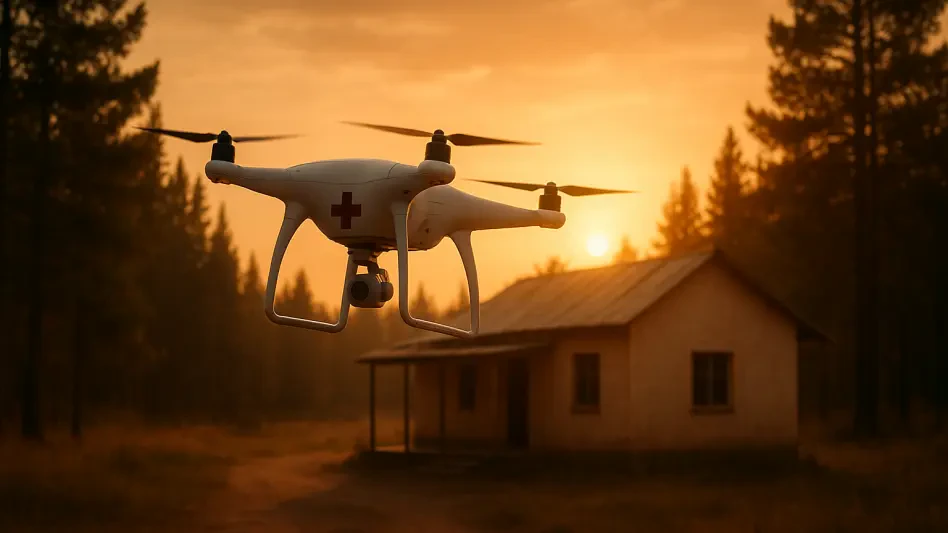

Advancements in drone sensors and flight software are enabling the safe transport of time-sensitive medical cargo over longer distances than previously possible. In the rural corridors of northern Michigan, this technology is addressing a persistent challenge where geography and climate often hinder the delivery of essential healthcare services. The Michigan Medical Drone Delivery Pilot has recently moved into its second phase, representing a concerted effort by Munson Healthcare, Traverse Connect, and blueflite to modernize regional medical logistics. This initiative goes beyond simple aerial transport; it seeks to weave autonomous flight into the fabric of a 29-county health system. By leveraging expertise from Central Michigan University’s Rural Health Excellence Institute, the coalition aims to convert experimental data into a sustainable operational model. The current expansion focuses on the practicalities of high-frequency delivery, ensuring that rural patients receive diagnostic results with the same speed as those in urban centers.
Technical Milestones: Expanding the Operational Envelope
The second phase of this initiative involves a strategic series of flight tests conducted between Munson Medical Center and the Crystal Lake Health Center in the Traverse City area. These missions represent a significant scale-up from the initial 2025 tests, which primarily focused on short-distance, low-complexity deliveries within a limited radius. Currently, the team is executing more demanding flight profiles that involve longer durations and the simultaneous management of multiple aircraft in the same airspace. This multi-drone coordination is essential for creating a reliable network that can handle the volume of a regional hospital’s laboratory and pharmaceutical needs. By simulating the delivery of various medical supplies and lab samples, the pilot is testing the resilience of the hardware and software under real-world conditions. These flights provide the empirical evidence needed to prove that drones can maintain a consistent schedule regardless of ground traffic patterns or traditional road construction delays.
Technical sophistication is at the heart of this expansion, with a heavy emphasis on advanced sensor suites and autonomous navigation capabilities provided by blueflite. These platforms are designed to navigate complex environments while maintaining the integrity of sensitive cargo, such as blood products or biological specimens. Federal Aviation Administration oversight remains a critical component of the process, as the data collected during these missions helps to define safety standards for beyond-visual-line-of-sight operations in rural America. Beyond simple navigation, the drones utilize sophisticated flight software to adjust to the high winds and variable weather conditions characteristic of the Great Lakes region. This robustness ensures that the transport of time-sensitive materials is not compromised by environmental factors that would normally ground less capable aircraft. Successful completion of these technical milestones is a prerequisite for moving toward a permanent, fully automated logistics network.
Strategic Outcomes: Transforming Rural Patient Access
The analysis of the expanded pilot program showed that the strategic integration of aerial mobility provided a significant return on investment for rural healthcare providers. State-level support from the Michigan Advanced Aerial Mobility Activation Fund proved instrumental in bridging the gap between technological concept and regional implementation. By aligning the goals of the Michigan Department of Transportation with the economic objectives of the Michigan Economic Development Corporation, the project successfully established the state as a leader in the low-altitude economy. The results indicated that bypassing ground-based logistical bottlenecks reduced laboratory turnaround times by more than fifty percent in remote areas. Furthermore, the partnership between health systems and academic researchers allowed for a comprehensive evaluation of cost-savings associated with reduced courier reliance. These findings demonstrated that aerial delivery was not merely a convenience but a vital tool for improving the overall efficiency of the healthcare supply chain.
To ensure the long-term viability of this network, stakeholders recommended the immediate development of standardized drone-port infrastructure at all major regional clinics. The project concluded that the next phase required a focus on specialized technician training to manage the automated fleet and handle the loading of biological materials. It was determined that maintaining community support was vital, which led to the proposal of transparent noise-monitoring programs and public education initiatives regarding drone safety. Planners also identified the need for specialized maintenance protocols to keep the aircraft operational during extreme winter temperatures, ensuring year-round reliability. These actionable steps provided a clear path for other states to follow when implementing their own rural healthcare delivery systems. By focusing on scalability and regulatory compliance, the coalition established a blueprint that transformed medical logistics from a ground-dependent hurdle into a seamless aerial advantage.