
The transition to a multi-tiered architecture ensures that session keys remain secret even if long-term cryptographic keys are compromised in the future. As healthcare delivery becomes increasingly reliant on the Internet of Medical Things (IoMT), the sheer volume of telemetry data generated by patient-worn sensors has outpaced the security capabilities of traditional centralized cloud systems. These legacy frameworks often serve as lucrative targets for sophisticated cyber threats, where a single breach can expose years of sensitive physiological records or permit the malicious tampering of life-critical medical devices. To resolve these vulnerabilities, contemporary research has pivoted toward decentralized solutions that provide a verifiable, tamper-proof record of data exchange. By integrating permissioned blockchain structures with distributed off-chain storage, medical institutions can finally bridge the gap between the constant need for clinical data availability and the absolute requirement for patient confidentiality. This architectural shift marks a departure from static security perimeters, moving instead toward a dynamic, cryptographically enforced environment where trust is distributed across a network of clinical stakeholders rather than centralized in a single, vulnerable server.
Systematic Literature Review Methodology: Building a Foundation
The design of the current framework was informed by a comprehensive Systematic Literature Review (SLR) that strictly followed the PRISMA 2020 protocol to ensure academic rigor and reproducibility. Researchers meticulously queried five of the most prominent academic databases—IEEE Xplore, PubMed, Scopus, ScienceDirect, and Google Scholar—focusing on the period between 2018 and the first quarter of 2026. Initially, this search yielded a corpus of 155 relevant records, which were then subjected to a multi-stage screening process to eliminate duplicates and studies that lacked empirical depth. By applying a five-indicator quality rubric, the investigation team narrowed the selection to 118 high-quality studies, supplemented by nearly twenty secondary references. This methodical approach allowed the developers to identify specific, persistent gaps in existing IoMT security designs, such as the frequent lack of quantitative performance data and the absence of formal mapping between technological features and actual clinical requirements.
Beyond identifying technological shortcomings, the systematic review highlighted a troubling trend of methodological opacity in previous attempts to secure medical networks. Many prior models were described in purely theoretical terms without providing reproducible search protocols or clear design justifications. Furthermore, the analysis revealed a significant lack of understanding regarding how various blockchain consensus mechanisms behave when subjected to the high-frequency telemetry demands of a modern hospital environment. These findings served as a critical catalyst for the development of the new hybrid model, ensuring that the architecture was not merely a response to hypothetical threats but a direct solution to documented industry failures. By centering the framework on these identified gaps, the resulting system provides a more grounded and practical approach to securing the digital healthcare landscape, moving beyond descriptive summaries to a more robust, empirically validated architecture.
Architecture: The Six-Tier Reference Model
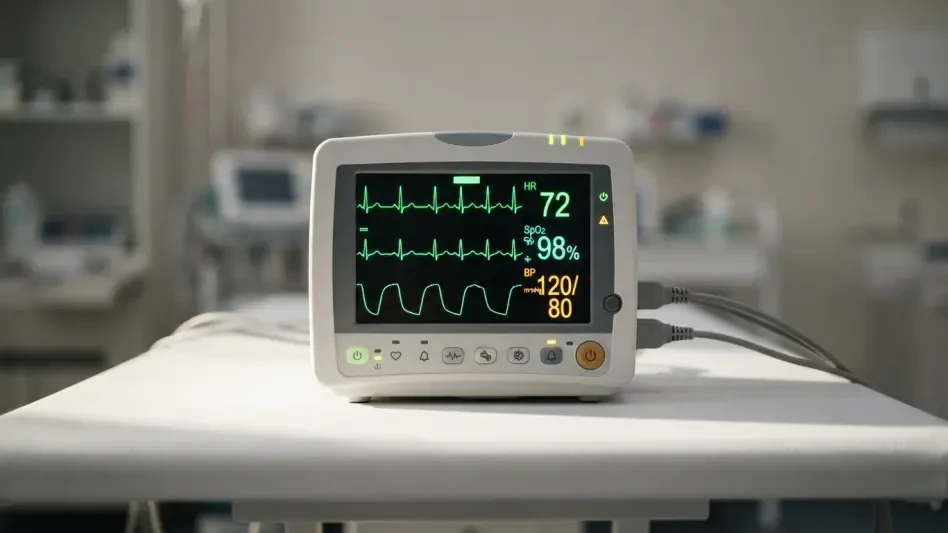
To facilitate a more resilient data environment, the researchers formalized a six-tier reference architecture that distributes computational and security responsibilities across specialized cooperative entities. At the most basic level, sensing medical devices capture raw physiological metrics, such as heart rate and oxygen saturation, and transmit them to intelligent edge gateways. These gateways serve as the heavy lifters of the network, performing authenticated encryption and transaction assembly to spare the battery-constrained sensors from excessive processing. Above the gateway layer, institutional validator nodes operated by accredited clinical centers participate in a Practical Byzantine Fault Tolerance (PBFT) consensus mechanism. This structure ensures that only verified data is added to the permanent ledger, preventing unauthorized actors from injecting false medical information into a patient’s history or disrupting the clinical decision-making process.
The upper tiers of the architecture are designed to manage access and store bulky medical records without compromising the speed of the blockchain itself. Automated smart contracts act as the network’s gatekeepers, enforcing granular patient consent and role-based access control for authorized human users, such as attending physicians or insurance auditors. Rather than storing large medical files directly on the blockchain—a practice that leads to “ledger bloat” and system slowdowns—the framework utilizes the InterPlanetary File System (IPFS) for decentralized off-chain storage. In this hybrid configuration, the blockchain only stores compact, cryptographically verifiable content identifiers (CIDs) and integrity hashes. This separation between the data layer and the integrity layer allows the system to remain lean and scalable, ensuring that even as the volume of medical images and records grows, the speed of verification remains consistent across the entire healthcare consortium.
Operational Workflow: Implementing PUF Security Protocols
The security of the framework is deeply rooted in its operational workflow, which utilizes seven sequential phases to prioritize mutual authenticity and data confidentiality. A pivotal innovation in this model is the integration of Physical Unclonable Functions (PUFs) during the device registration process. Unlike traditional security methods that store static cryptographic keys in a device’s clear memory—where they can be easily extracted by a physical attacker—PUFs leverage the unique, inherent physical variations in the hardware’s circuitry to generate keys. During the initial enrollment, a device’s unique physical fingerprint is bound to its digital identity, meaning the private key is reconstructed dynamically at runtime and exists only when needed. This hardware-bound approach makes the medical sensors virtually immune to physical tampering or cloning, providing a level of security that software-based encryption alone cannot achieve.
Following registration, the system employs a robust mutual authentication protocol using a Diffie-Hellman public share exchange and random nonces to establish a symmetric session key. This local communication channel between the sensor and the edge gateway is protected against common threats like man-in-the-middle attacks and replay attempts. Once the sensor transmits its encrypted payload, the gateway applies authenticated encryption and uploads the data to the decentralized IPFS storage. It then generates a 208-byte canonical transaction tuple that includes a domain separation tag, device identifiers, and a timestamp. By using fixed byte allocations for every transaction element, the system eliminates concatenation vulnerabilities that could otherwise be exploited to cause logic errors in smart contracts. This deterministic parsing ensures that the data recorded on the ledger is both immutable and accurately represented, maintaining a high standard of data integrity for clinical use.
Formal Verification: Testing System Resilience
To move beyond theoretical claims of safety, the research team employed formal methods to model and verify the framework’s resistance to sophisticated cyberattacks. Using applied pi-calculus and automated symbolic proofs via the ProVerif 2.05 tool, the investigators simulated a perimeter exchange between sensors and gateways under the assumption of a Dolev-Yao network adversary. This powerful threat model presumes that an attacker has full control over the communication channels and can intercept, modify, or inject any message at will. The formal verification process confirmed that the framework successfully maintained three critical security properties: session-key secrecy, injective agreement to prevent unauthorized impersonation, and perfect forward secrecy. These properties ensure that even in the unlikely event of a future security compromise, the historical data generated by the system remains protected and unreadable to unauthorized parties.
The rigor of this verification was further demonstrated through controlled “negative tests” where the researchers intentionally disabled certain security features. For example, when signature verification routines were removed, the automated ProVerif tools immediately identified a valid attack trace, highlighting the vulnerability that would exist without the framework’s core cryptographic defenses. This confirmed that the security of the entire system is fundamentally derived from its hardware-bound signatures rather than just the obscurity of its architecture. By providing these mathematical guarantees, the researchers have established a high level of confidence in the framework’s ability to protect patient data in high-stakes environments. This formal proof serves as a vital bridge between experimental design and real-world deployment, suggesting that the model is ready to handle the unpredictable nature of modern network threats.
Performance Metrics: Benchmarking Consensus Mechanisms
The viability of the proposed hybrid architecture was evaluated through a series of discrete-event simulations and physical hardware benchmarks designed to reflect real-world clinical conditions. A primary focus was the performance of the PBFT consensus mechanism, which was tested under varying committee sizes ranging from 4 to 31 nodes. In a local area network (LAN) environment with low latency, the system achieved a block-commit speed of roughly 32 to 39 milliseconds. This efficiency translates to a high throughput of over 3,000 transactions per second, which is more than sufficient for even the busiest multi-specialty hospitals. When the simulation was expanded to a wide area network (WAN) involving multiple hospital sites, the throughput remained robust at approximately 800 transactions per second. These results indicate that the framework can scale predictably across a large healthcare consortium without suffering from the performance degradation often associated with public blockchains.
Beyond transaction speed, the stability of the system was confirmed by low confidence-interval half-widths in the simulation data, suggesting that the architecture provides a highly consistent user experience. The low latency observed in these tests is particularly critical for medical monitoring, where a delay in data processing could potentially impact the timeliness of life-saving clinical interventions. By demonstrating that the blockchain layer does not introduce significant bottlenecks, the researchers have addressed one of the most common criticisms of distributed ledger technology in healthcare. This balance of speed and security ensures that physicians can trust the integrity of the data they receive without experiencing the lag times that have plagued earlier iterations of secure medical networking. The data suggests that the hybrid model is well-suited for high-traffic environments where both accuracy and immediacy are paramount.
Hardware Efficiency: Maximizing Battery Longevity
One of the most significant challenges in IoMT security is the limited computational and power resources of wearable medical sensors. To address this, the investigators measured the “cryptographic duty cycle” on physical hardware components, including the Raspberry Pi 4B and the ESP32-S3 microcontroller. The benchmarking revealed that while edge gateways can handle complex digital signatures in mere microseconds, resource-constrained sensors require nearly 25 milliseconds to perform a single signature. If a device were required to sign every individual reading, it would reach saturation at only 40 transactions per second and quickly deplete its battery. However, the proposed framework strategically offloads the recurring cryptographic burden by requiring the sensor to sign only once during the initial session key establishment, allowing the gateway to handle the subsequent heavy lifting.
This design choice reduces the sensor’s cryptographic workload to a negligible 0.04% duty cycle when operating at a one-minute refresh interval. By minimizing the energy expenditure associated with security, the framework significantly extends the operational lifespan of patient-worn devices, which is essential for the long-term management of chronic conditions. Patients are more likely to comply with monitoring protocols if their devices do not require frequent charging or interfere with daily activities. Furthermore, this approach ensures that the sophisticated security features do not compromise the usability of the hardware. The research demonstrates that it is possible to achieve military-grade security on inexpensive, low-power medical sensors by intelligently distributing the computational load across the network. This focus on energy efficiency makes the framework a practical solution for the next generation of medical wearables.
Storage Efficiency: Strategies for Long-term Scaling
As the healthcare industry continues to digitize, the sheer volume of medical records has become a major obstacle for traditional blockchain implementations. The study addresses this through an efficient storage model that maintains a 1-to-20 ratio between on-chain metadata and off-chain data. By anchoring a compact 208-byte digest on the blockchain for every 4-kilobyte payload stored on the decentralized IPFS, the system can track one million medical records while consuming only 208MB of ledger capacity. This efficiency is vital for the long-term sustainability of the network, as it prevents the ledger from becoming an unmanageable burden for the validator nodes. Clinical institutions can maintain a full history of patient interactions without needing to invest in massive storage infrastructures, making the system more accessible to smaller clinics and regional healthcare providers.
In addition to storage capacity, the research team used analytical modeling to identify potential bottlenecks in end-to-end data transit. Interestingly, the data revealed that the primary source of latency was not the blockchain consensus or the local cryptographic processing, but rather the fragmentation of data frames during wireless transmission from the sensor to the gateway. Based on these insights, the authors recommended the implementation of sample aggregation and the use of Bluetooth Low Energy (BLE) to optimize the communication layer. By understanding these network dynamics, medical institutions can fine-tune their hardware setups to ensure the fastest possible data delivery. This holistic view of the system—from the physical hardware layer to the distributed ledger—allows for a more comprehensive optimization strategy that considers every link in the data chain.
Future Considerations: Advanced Trajectories for Secure Care
While the hybrid framework provides a powerful defense against current cyber threats, the research team emphasized the need for continuous evolution to stay ahead of future technological shifts. One of the most critical next steps involved the integration of post-quantum cryptography to protect sensitive medical data against the potential rise of quantum computing. Additionally, the researchers identified the potential for using Trusted Execution Environments (TEEs) at the gateway level to provide an extra layer of hardware security. These “secure enclaves” would ensure that data remains protected even if the gateway’s main operating system is compromised, providing a deeper level of defense-in-depth for the most sensitive clinical environments. These forward-looking improvements were seen as essential for maintaining the long-term viability of the framework as the threat landscape continues to change.
The practical application of this research was concluded with recommendations for transitioning from simulated environments to live, multi-institutional clinical trials. Investigators suggested that future iterations of the system should explore the use of federated machine learning at the edge gateway. This would allow for localized diagnostic insights to be generated without ever moving raw patient data off-site, further enhancing privacy while providing real-time clinical support. By building on the foundation of the PBFT consensus and IPFS storage, healthcare consortia were encouraged to adopt more advanced fault-tolerant engines as they become available. The research concluded that by following this roadmap, the medical community could establish a standard for secure, decentralized IoMT integration that prioritizes patient safety above all else. These steps provided a clear path toward a future where digital medicine is both highly efficient and fundamentally resilient to the evolving world of cybercrime.