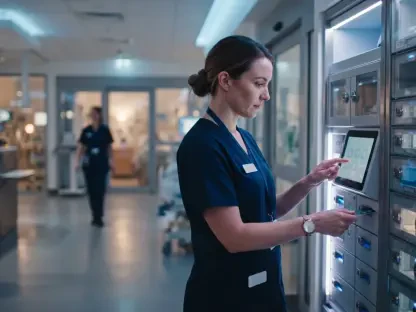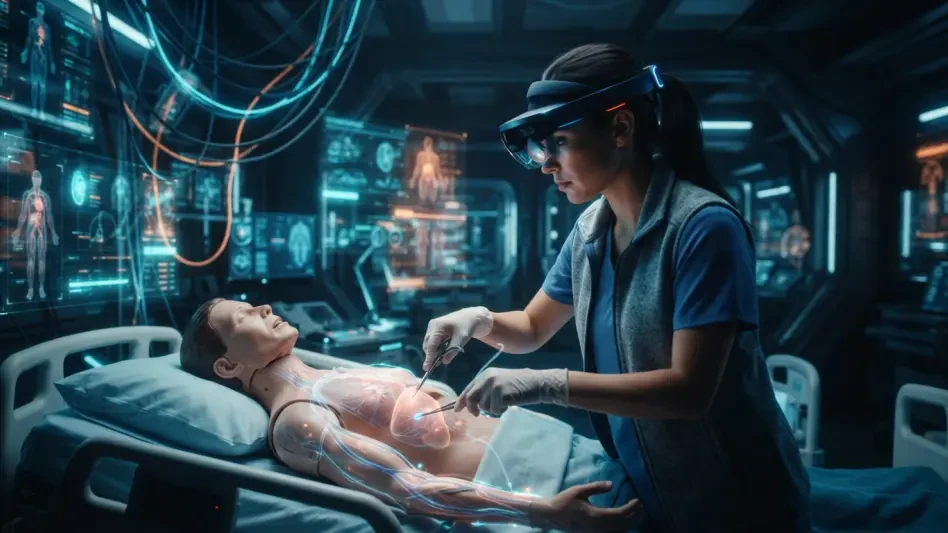

Clinical simulations utilizing head-mounted displays have been shown to bridge the gap between theoretical knowledge and the practical application of nursing skills. In an era where healthcare systems face unprecedented demands, the traditional methods of training are evolving to ensure that new practitioners enter the workforce with a high degree of readiness. The implementation of immersive virtual reality (IVR) represents a significant leap forward from static textbook learning or the limited availability of hands-on hospital placements. By placing a student in a fully rendered digital environment, educators can mimic the chaotic atmosphere of an emergency room or the precision required in a surgical suite without risking patient safety. This technology allows for the repetition of complex procedures until they become second nature, addressing the anxiety often felt by novices. As nursing education moves from 2026 into a more technologically integrated future, the focus shifts toward tools that foster both technical proficiency and psychological resilience.
Integrating Immersive Environments in Medical Curricula
Transitioning to Digital High-Fidelity Training
Traditional simulation has long relied on physical manikins, which offer tactile feedback but often lack the environmental context of a bustling hospital ward. IVR changes this dynamic by providing a three-dimensional workspace where every detail, from the sound of a heart monitor to the visual cues of a distressed patient, is meticulously recreated. Research involving undergraduate nursing students has demonstrated that these high-fidelity systems create a sense of presence that physical models struggle to replicate. In recent studies, participants engaged with head-mounted displays to navigate clinical scenarios that required rapid decision-making and precise motor skills. The ability to interact with virtual patients and medical equipment in a 360-degree space ensures that the cognitive load is managed effectively, allowing students to focus on the nuances of care. This transition to digital simulation helps bridge the gap between low-fidelity classroom drills and the high-stakes reality of clinical rotations.
Cultivating Psychological Safety and Accessibility
Beyond the technical specifications, the psychological impact of immersive training is profound, as it allows learners to experience a safe space for failure. When a student makes a mistake in a virtual setting, the consequences are educational rather than catastrophic, which encourages a more adventurous exploration of medical protocols. This iterative process is crucial for building the muscle memory required for actual clinical practice. Furthermore, the portability and scalability of IVR headsets mean that institutions can provide high-quality training to a larger number of students simultaneously, overcoming the logistical hurdles associated with expensive physical simulation labs. By integrating these systems into the standard curriculum, universities are now able to offer a more standardized and accessible form of education. This ensures that every student, regardless of their location, receives the same level of exposure to complex clinical challenges, effectively democratizing advanced medical training for the next generation.
Measuring the Impact on Competence and Engagement
Evaluating Satisfaction and Confidence Gains
Empirical data recently gathered from nursing cohorts reveals a striking correlation between the use of head-mounted displays and improved student outcomes. In initial sessions, students reported high satisfaction levels, yet these figures reached near-perfect scores after repeated exposure to the technology. For instance, satisfaction ratings climbed from an impressive 24.01 to a perfect 25.0, signaling a total consensus on the value of the immersive format. This upward trend was mirrored in self-confidence metrics, which rose significantly as students became more familiar with the virtual interface and the clinical tasks at hand. The statistical significance of these gains suggests that IVR is not merely a novel distraction but a substantive pedagogical tool that reinforces a student’s belief in their own clinical competence. By achieving such high levels of acceptability, the technology proves to be an effective motivator, keeping students engaged and committed to their professional development throughout their academic journey.
Implementing Strategic Readiness for Healthcare
Academic leaders and healthcare administrators recognized that the widespread adoption of immersive virtual reality was a necessary evolution for modern nursing programs. They prioritized the integration of these digital tools alongside traditional manikin-based simulations to create a comprehensive hybrid learning model. Future strategies focused on developing even more complex scenarios that incorporated multi-patient management and interdisciplinary team coordination within the virtual space. Educators emphasized that while IVR provided a powerful foundation for confidence and satisfaction, it functioned best as a precursor to real-world experience. Institutions began investing in software updates that allowed for real-time feedback and data analytics to track student progress more accurately. By establishing a standard where digital proficiency met clinical excellence, the industry ensured that new nurses were better prepared for the complexities of patient care. These steps successfully bridged the transition from the classroom to the clinic.