
Regional healthcare improvements are being driven by a focused academic interest in mastering complex interventional techniques like tumor ablation and embolization. This paradigm shift in medical practice reflects a movement where the traditional boundaries between identifying an illness and treating it have begun to blur into a single, cohesive clinical pathway. The recent academic gathering at the AIIMS Jammu Convention Centre served as a critical nexus for this evolution, bringing together pioneers in the field of radiodiagnosis. By integrating advanced imaging technologies with minimally invasive surgical techniques, practitioners are now capable of addressing life-threatening conditions with unprecedented precision. This synergy not only reduces recovery times but also minimizes the risks associated with conventional open surgeries. The focus has moved beyond the mere observation of pathology toward active, image-guided intervention that addresses the root cause of patient ailments.
Therapeutic Precision
Expert Training
The synergy between the Department of Radiodiagnosis and the Indian Society of Vascular and Interventional Radiology facilitated a deep dive into the latest protocols for managing vascular and oncological challenges. Experts from premier institutions like PGIMER Chandigarh and AIIMS New Delhi provided detailed insights into the mechanics of digital subtraction angiography and its role in modern trauma care. The curriculum was designed to bridge the gap between theoretical knowledge and the high-pressure environment of the intervention suite. By examining case studies involving gastrointestinal bleeding and uterine artery embolization, participants explored the nuance required to navigate complex vascular pathways. This collaborative environment allowed for a robust exchange of ideas, ensuring that the next generation of radiologists is equipped to handle the multifaceted demands of modern patient care. Such initiatives are essential for standardizing high-quality medical practices.
Vascular Methods
Furthermore, the academic discourse emphasized the critical importance of acute stroke management and carotid stenting in reducing long-term morbidity. As the prevalence of vascular diseases continues to rise, the ability of radiologists to perform immediate, life-saving interventions becomes a cornerstone of regional health infrastructure. The program detailed how rapid imaging interpretation followed by immediate mechanical thrombectomy or stenting can drastically alter patient trajectories. These high-stakes procedures require not only a steady hand but also an intimate understanding of hemodynamics and anatomical variations. The faculty underscored that the transition from a purely diagnostic role to an interventional one requires a fundamental shift in institutional culture and resource allocation. By focusing on these high-impact areas, the event highlighted the indispensable role of image-guided therapies in transforming the radiologist’s role into that of a primary clinician.
Skill Enhancement
Simulation Usage
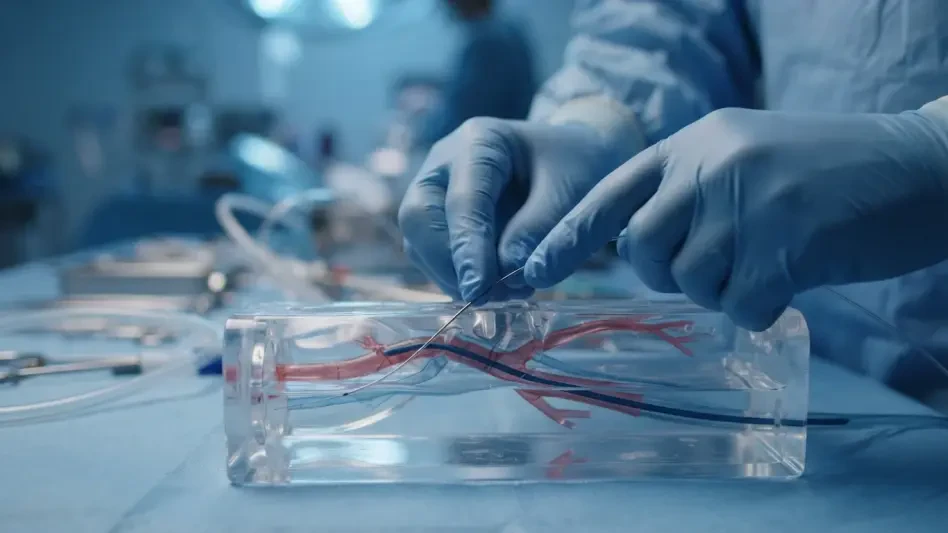
Central to the educational initiative was a series of hands-on workshops that utilized specialized interventional radiology phantoms to simulate realistic clinical scenarios. These interactive sessions allowed junior and senior residents to practice intricate maneuvers, such as transarterial chemoembolization and vacuum-assisted breast biopsies, in a controlled environment. Mastery of these techniques is vital for the successful treatment of various malignancies and benign conditions, offering patients alternatives to more invasive surgical options. The use of phantoms provided a safe space for trainees to refine their needle placement and catheter navigation skills, which are essential for procedures like core needle biopsies and the insertion of peripherally inserted central catheters. This practical exposure ensured that the theoretical frameworks discussed during the lectures were immediately translated into tangible technical skills, maintaining the highest safety standards in medicine.
Future Strategy
The strategic partnership between AIIMS Jammu and its academic counterparts established a robust framework for medical education that prioritized patient safety and technological innovation. Throughout the two-day event, the leadership fostered an environment where technical proficiency met clinical empathy, ensuring that every technological advancement translated into better outcomes for the community. The organizing team successfully created a platform for academic exchange that transcended traditional departmental silos, encouraging a more integrated approach to hospital care. The institute focused on expanding these specialized services to reach underserved populations, thereby narrowing the gap in healthcare accessibility. By institutionalizing these training modules, the faculty paved the way for a sustainable model of specialized medical care that leveraged regional expertise. This commitment to excellence ensured that the advancements in radiodiagnosis remained at the forefront of the regional evolution.