
The long-standing structural barrier separating clinical intuition from technical execution is finally dissolving as natural language processing allows medical professionals to build sophisticated digital tools through simple verbal instruction. Historically, healthcare operations have been tethered to legacy software architectures and rigid vendor roadmaps that prioritize standardized scale over localized efficiency. This technical governance often ignores the nuanced reality of a busy clinic, forcing staff to adapt their patient care to the limitations of the software rather than the other way around.
This socio-technical divide has created a persistent bottleneck where clinical expertise is isolated from technical implementation. While a dental assistant or nurse might identify a simple way to automate patient intake, the path to realization traditionally required months of negotiation with IT departments or external vendors. However, the market significance of software agility has never been higher, as healthcare providers face increasing pressure to improve patient outcomes while navigating a complex regulatory landscape. Frameworks such as HIPAA and GDPR now demand development methodologies that are both flexible and inherently secure, setting the stage for a more democratized approach to innovation.
The Evolution of Healthcare IT and the Shift Toward User-Centric Development
Traditional healthcare IT environments were often characterized by monolithic systems that resisted rapid change. These architectures functioned as silos, where data entry was a manual burden and interoperability remained a distant goal. As organizations recognized that rigid software hindered competitive delivery, a shift toward user-centric development began to emerge. This transition prioritized the lived experience of the healthcare provider, moving away from the era of “one-size-fits-all” enterprise solutions.
Moreover, the regulatory environment has evolved to support this agility by establishing clearer standards for data handling. This clarity allowed for the adoption of emerging development methodologies that empower front-line workers. By reducing the friction between a clinical idea and its digital execution, healthcare systems started to close the gap that once led to operational stagnation. The focus moved from maintaining old systems to fostering a culture of continuous improvement through technological empowerment.
Driving the Transformation Through Democratized Development
Emerging Trends in AI-Assisted Programming and Localized Innovation
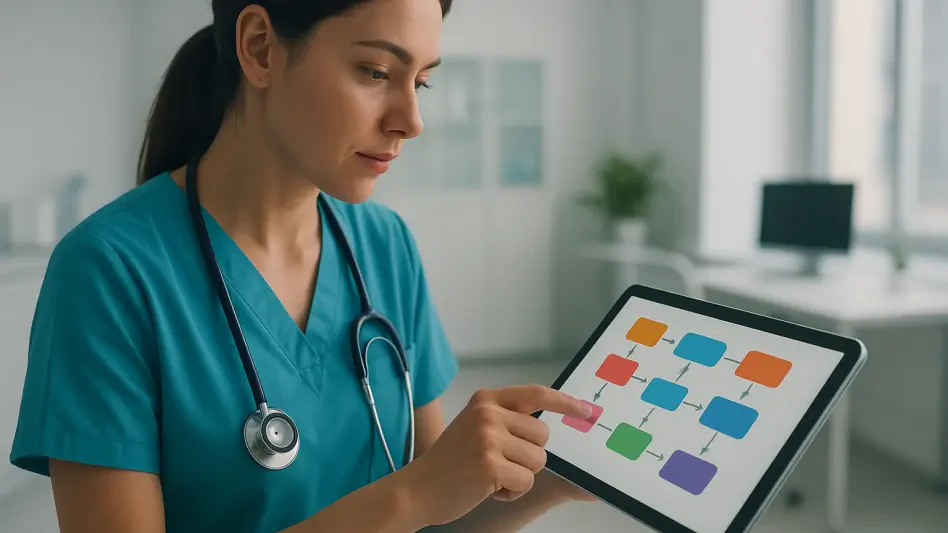
The rise of vibe coding has redefined the relationship between medical staff and their digital environment. By using natural language instead of traditional syntax, administrative and clinical staff now act as active creators of their own workflows. A dental office manager can describe a specific reporting tool to an AI assistant, which then generates the code necessary to pull data from practice management systems in real time. This conversational approach bridges the contextual knowledge gap that once frustrated professional developers who lacked clinical backgrounds.
Furthermore, these bespoke tools directly combat professional burnout by eliminating the repetitive stressors of redundant data entry. When staff can build a localized solution to a specific administrative friction point, they regain time for patient interaction. This shift transforms the role of the medical administrator from a passive user of flawed software into an empowered problem solver. Real-time iteration ensures that the software evolves as quickly as the needs of the clinic, providing an unprecedented level of operational flexibility.
Market Momentum and Performance Indicators for Low-Code Solutions
Statistical projections indicate a massive expansion in AI-driven development tools within the healthcare sector from 2026 to 2030. This growth is fueled by the measurable reduction in time-to-solution compared to traditional enterprise cycles. Where a custom software update once took twelve months, vibe coding allows for the deployment of targeted tools in a matter of days. These efficiency metrics are driving institutional adoption as the cost-benefit ratio favors internal innovation over expensive third-party suites.
The economic impact of this democratization is profound, as it lowers the barrier to entry for high-quality software. Smaller practices that could never afford custom development now have the capacity to build sophisticated workflows that rival those of large hospital systems. Analyzing these trends reveals a market that is moving away from purchasing monolithic licenses and toward investing in platforms that facilitate staff-led creation. This momentum suggests that the ability to build and iterate on software will soon be a standard operational requirement.
Navigating the Technical and Structural Hurdles of DIY Software
Despite the advantages, empowering staff to build their own software introduces the risk of technical debt. Fragmented applications created by various staff members can become difficult to maintain if there is no centralized oversight. Managing the long-term lifecycle of these tools requires a balance between encouraging innovation and ensuring that the underlying code remains functional as systems update. Institutional skepticism often stems from this concern, as IT departments worry about a proliferation of “shadow IT” that they cannot support.
Accuracy and clinical reliability also remain paramount concerns in an AI-assisted environment. Mitigating the risks of logic errors or hallucinations in AI-generated administrative tools is essential for maintaining safety standards. Organizations must address cultural resistance by providing clear pathways for validation and support. Success requires a strategic allocation of resources, ensuring that staff have the time to experiment without compromising their primary clinical duties or the overall integrity of the medical record.
Security Governance and the Ethics of “Invisible Guardrails”
Redefining compliance in the age of vibe coding means shifting the burden of data protection from the individual to the underlying platform. By implementing “invisible guardrails,” organizations ensure that any tool built by a staff member adheres to strict permissions and privacy mandates by default. This automated oversight prevents the accidental exposure of sensitive patient information while still allowing for creative problem-solving. Data boundary management becomes a structural feature of the development environment rather than an afterthought for the user.
Validation protocols must be established to differentiate between low-risk administrative tools and high-risk clinical decision support. While an automated scheduling dashboard may require minimal oversight, any tool that influences patient diagnosis requires rigorous verification. Ethical considerations regarding transparency and accountability in automated code generation are central to this discussion. Maintaining a clear audit trail of how code was generated and how data is handled ensures that the democratization of software does not come at the cost of patient trust.
The Future Landscape of Decentralized Healthcare Innovation
The era of the one-size-fits-all vendor model is nearing its end as hyper-localized, purpose-built digital environments become the norm. Disruptive technologies, particularly agentic AI, are beginning to autonomously identify and fix workflow friction points before the staff even notices them. This evolution is giving rise to a new professional role: the clinical technologist. These individuals possess both medical expertise and the ability to steer AI-driven development, acting as the bridge between patient care and digital infrastructure.
Decentralized software creation also holds the potential to scale innovation in underserved or rural healthcare markets where traditional IT resources are scarce. By lowering the technical and financial barriers to custom software, vibe coding allows smaller clinics to develop solutions tailored to their specific patient demographics. This global economic influence democratizes high-tier operational efficiency, ensuring that the benefits of technological progress are not restricted to wealthy urban medical centers. The landscape is shifting toward an ecosystem where innovation is a distributed, continuous process.
Cultivating an Agile Ecosystem for Sustainable Healthcare Growth
The transition toward vibe coding represented a fundamental shift in the healthcare power dynamic, moving authority from remote developers to front-line providers. Organizations that thrived in this environment invested early in secure, guard-railed platforms that permitted safe experimentation. These leaders recognized that the long-term benefits of aligning software functionality with the lived reality of medical practice outweighed the initial hurdles of implementation. This approach transformed software from a static constraint into a dynamic asset that evolved alongside clinical needs.
Staff members who participated in this digital democratization reported higher levels of professional satisfaction as their administrative burdens decreased. The strategic recommendation for the industry focused on fostering a culture where technical agency was viewed as a core competency. By the end of this transformative period, the successful integration of staff-built tools proved that systemic change was best achieved from the bottom up. Ultimately, the industry moved away from passive software consumption and toward a sustainable model of localized, intelligent innovation.