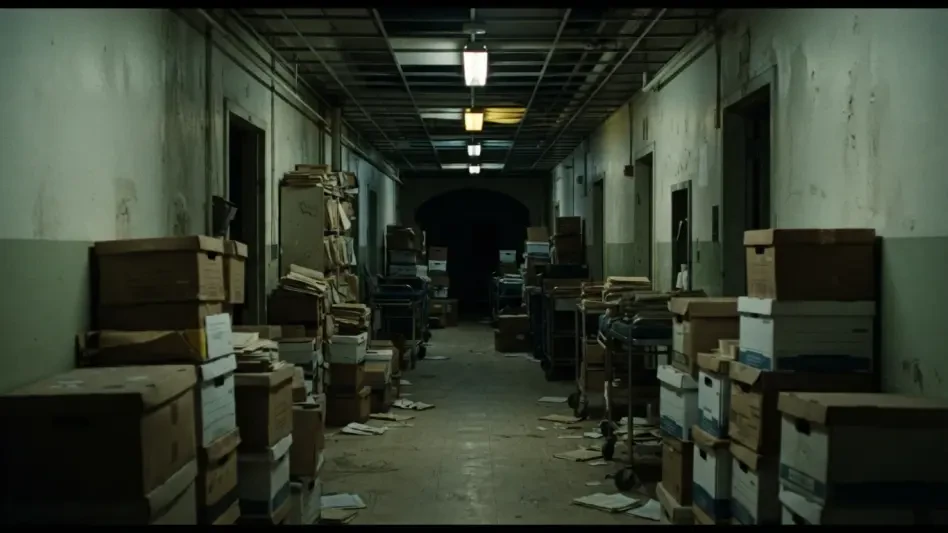

Gwent Police have launched a criminal investigation into unauthorized access at St Cadoc’s Hospital after sensitive medical records were allegedly exposed. This breach surfaced when an urban exploration group uploaded high-definition footage to various social media platforms, showcasing what appeared to be vulnerable patient data left in an unsecured area of the facility. The imagery, shared by the group known as Urban Welsh Explorer, depicted a labyrinth of cluttered corridors and derelict rooms overflowing with discarded medical equipment, antiquated furniture, and, most alarmingly, rows of boxes containing identifiable medical information. This discovery has ignited a fierce debate regarding the adequacy of physical security measures at healthcare facilities that maintain legacy records. While the hospital continues to provide essential mental health services, the proximity of these abandoned sections to active patient wards has raised significant questions about the potential for future incursions. The situation highlights a growing concern over the management of decommissioned areas in public buildings.
Security Discrepancies: Conflicting Accounts of the Incursion
The individuals behind the social media posts asserted that their entry into the facility was not forced, claiming that an unlocked door granted them effortless access to the cache of documents. They categorized the presence of these records as a blatant violation of General Data Protection Regulation (GDPR) standards, highlighting the sensitive nature of the information found within the disused wings. The explorers documented numerous files containing personal histories and diagnostic details that should have been securely archived or destroyed according to strict legal mandates. These documents included identifiable details that, if misappropriated, could lead to significant privacy breaches for thousands of individuals. By documenting the scene without removing or altering the items, the group sought to establish themselves as observers of systemic neglect. This discovery has forced a public dialogue about whether existing oversight for physical document storage is sufficient in an era primarily focused on digital cybersecurity threats and cloud protection.
In response to initial skepticism from hospital officials who suggested the footage might be outdated or manipulated, the group released several timestamped photographs to verify that their visit occurred in June 2026. This move was intended to prove that the lack of oversight was a current and ongoing issue rather than a relic of the past. They maintained that the site’s security was insufficient to protect patient privacy, as the ease of their access contradicted the board’s claims of a secure facility. The explorers argued that their primary motivation was to highlight these failures rather than to cause any damage or disruption to hospital operations. However, this perspective clashes sharply with the legal reality of trespassing and the potential for such footage to encourage other unauthorized individuals to attempt similar entries. The friction between the group’s role as informal auditors and their status as unauthorized intruders continues to complicate the investigation into the hospital’s storage practices and its transparency.
Institutional Rebuttal: Financial Costs and Regulatory Safeguards
Contrary to the claims made by the exploration group, the Aneurin Bevan University Health Board has characterized the event as a deliberate and criminal act involving forced entry into restricted zones. Board representatives clarified that the areas accessed by the trespassers were intentionally locked and designated specifically for the storage of historic patient records, which are required to be kept for specific periods under healthcare regulations. The administration maintained that these documents were not simply left in the open but were housed within a facility that met established safety and privacy criteria until the security perimeter was compromised by external actors. They argued that the integrity of the data was maintained by physical barriers that were bypassed through illegal means, shifting the narrative from one of systemic negligence to one of criminal victimization. This stance emphasizes the difficulty healthcare providers face in protecting vast quantities of physical data across older campuses.
The escalation of this incident into a formal criminal investigation by Gwent Police signaled a transition toward more rigorous enforcement of property and data protection laws. The health board took proactive steps by notifying the Information Commissioner’s Office, ensuring that the potential regulatory implications were addressed with full transparency. This situation served as a critical wake-up call for healthcare organizations to reassess their protocols for managing decommissioned wings and the long-term storage of physical archives. Administrators recognized that legacy data management required as much digital and physical oversight as modern electronic health records. Moving forward, the implementation of biometric access controls and regular security audits of all non-active sites became essential strategies to mitigate the risk of similar breaches. By integrating these robust defense layers, the health board established a higher standard for the protection of privacy rights in the face of unforeseen security challenges.