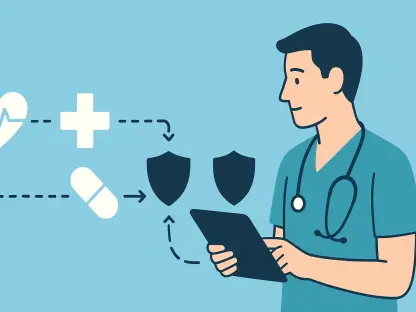

The healthcare sector’s long-standing battle against documentation-induced burnout has finally met a formidable adversary in the form of a platform that treats spoken clinical dialogue as the fundamental building block of medical intelligence. While previous generations of medical technology often focused on the digitization of paper records, the Abridge Clinician Intelligence Platform introduces a paradigm shift by positioning itself as a patient-centered intelligence layer. This evolution marks a transition from passive recording tools to active, AI-native infrastructure designed to support the entire care journey, effectively bridging the gap between the nuanced human conversation in an exam room and the rigid requirements of institutional record-keeping.
By grounding its technical capabilities in real-time interactions, Abridge addresses the core problem of the “digital tax”—the exhaustive administrative burden that has historically distanced clinicians from their patients. The platform operates on the philosophy that the conversation is the most accurate reflection of a medical encounter. Consequently, it seeks to transform these verbal exchanges into structured, actionable data that serves not only clinical documentation but also billing, research, and evidence-based practice. This review explores how this infrastructure functions, the technical partnerships driving its performance, and the broader implications for a healthcare industry striving for sustainability.
Evolution: The Patient-Centered Intelligence Layer
The trajectory of clinical documentation has moved from manual shorthand to transcribed dictation, and finally to the complex Electronic Health Record systems that dominate the current landscape. However, these advancements often created more work for the provider, leading to a systemic crisis of burnout. The Abridge platform emerged as a solution to this inefficiency by treating the doctor-patient conversation as a “base unit” of medicine. Unlike legacy scribing services that required human intervention or basic speech-to-text engines that lacked medical context, this platform utilizes generative AI to synthesize complex narratives from ambient noise.
This evolution signifies a shift toward a more holistic view of the care journey. Abridge is not merely a tool for post-visit note-taking; it is an infrastructure that connects clinical care with the administrative and scientific machinery of healthcare. By integrating directly into the workflows of major health systems, it provides a foundational layer where spoken words are automatically mapped to clinical standards. This approach ensures that the “source of truth” remains the actual encounter, reducing the likelihood of data loss or misinterpretation that often occurs when a clinician attempts to recall details hours after a visit has concluded.
Furthermore, the intelligence layer serves as a connective tissue between disparate stakeholders. It allows for a synchronized flow of information where the same conversation that informs a patient summary also provides the evidentiary basis for insurance claims and life sciences research. By streamlining these processes, the platform aims to restore the focus of medicine to the relationship between the provider and the patient, ensuring that the technology remains a supportive background presence rather than a primary distraction. This structural change is essential for health systems looking to improve operational efficiency while maintaining high standards of care.
Core Features: Technical Infrastructure and Integration
Ambient Documentation: Performance Across the Care Journey
A primary strength of the Abridge platform is its ability to function across the pre-visit, during-visit, and post-visit phases of a patient encounter. In the pre-visit stage, the AI synthesizes longitudinal data from the patient’s history to provide the clinician with a concise briefing, highlighting care gaps or specific chronic conditions that require attention. This proactive preparation allows the provider to enter the room with a clear agenda, maximizing the limited time available for direct patient interaction. During the visit, the platform’s ambient listening capabilities capture the conversation with high fidelity, supporting over 28 languages to ensure equity in diverse clinical settings.
The post-visit phase is where the platform’s automation truly shines. It generates specialty-specific clinical narratives, billing codes, and orders that are ready for clinician review. This process is significantly bolstered by deep integration with major Electronic Health Record systems like Epic, Oracle Health, and athenahealth. By living within these existing environments, Abridge eliminates the need for clinicians to toggle between different applications, which is a major source of cognitive fatigue. The AI agents within the platform also allow for natural language editing, enabling doctors to refine notes with simple verbal or typed commands before finalizing them in the permanent record.
Technical Architecture: NVIDIA-Powered Clinical Reasoning
The performance of the Abridge platform is underpinned by a strategic technical collaboration with NVIDIA, specifically utilizing the Blackwell AI infrastructure. This partnership is crucial because medical documentation requires a level of precision and “clinical reasoning” that generic large language models often fail to provide. By building on the Nemotron family of open models, Abridge has developed clinical foundation models that are specifically tuned for the nuances of healthcare terminology and workflow. This domain adaptation allows the AI to understand the relationship between symptoms, diagnoses, and treatments rather than simply predicting the next word in a sentence.
Utilizing the Blackwell infrastructure provides the necessary compute power to handle the immense data throughput of over 100 million annual conversations. This scale requires low-latency processing to ensure that the AI-generated drafts are available almost immediately after the encounter. Moreover, the technical architecture is designed to be auditable, providing a transparent link between the generated note and the original audio segments. This “evidence-based” AI approach is a critical differentiator, as it mitigates the risk of hallucinations—a common concern with generative models—and ensures that the documentation is a faithful representation of the clinical reality.
Clinical Decision Support: Bridging Science and Care
Beyond simple documentation, Abridge distinguishes itself by embedding active clinical decision support directly into the point of care. Through partnerships with prestigious organizations such as the American Heart Association and the American Diabetes Association, the platform integrates the latest medical research into the clinical workflow. During an encounter, the AI can surface evidence-based discussion points or clinical pathways tailored to the specific patient’s condition. This transforms “static science” into “active intelligence,” ensuring that the most current guidelines are accessible to the clinician without requiring manual searches.
This integration of science and technology helps to standardize patient outcomes across large health systems. When every clinician has immediate access to the latest research and guidelines within their documentation tool, the variability in care delivery is reduced. Moreover, this feature supports the move toward value-based care, where financial incentives are tied to the quality and consistency of patient outcomes. By surfacing these insights in real-time, Abridge empowers clinicians to make informed decisions that are aligned with global medical standards, ultimately improving the safety and efficacy of the care provided.
Emerging Trends: AI and Workflow Automation
The landscape of clinical AI is rapidly shifting toward broader team support and the integration of physical environments. A significant trend is the expansion of ambient documentation to include inpatient nursing. Nursing burnout is a critical issue, often exacerbated by the intensive documentation required for handoffs and bedside interventions. Abridge has addressed this by developing specialized models that capture nursing workflows, allowing these professionals to remain present at the bedside. This expansion indicates a move toward a “whole-care-team” approach, where the benefits of AI are not restricted to physicians but are distributed across the entire clinical staff.
Another emerging trend is the rise of “smart room” technology, where the physical environment of the hospital is synchronized with the digital record. By partnering with hardware and sensor providers, Abridge is creating an ecosystem where the room itself facilitates the capture of clinical data. This integration allows for virtual health centers to monitor patients more effectively and ensures that every interaction within the hospital room is documented accurately. This trend reflects a broader move toward “invisible technology,” where the tools used to manage healthcare are so well-integrated that they do not require conscious effort from the staff to operate.
A third major development is the focus on “Revenue Integrity” and the movement toward real-time claims adjudication. Traditionally, the gap between a patient visit and the settlement of a financial claim has been filled with administrative friction and manual audits. By using the clinical conversation as an auditable source of truth, Abridge is enabling a future where payers and providers can agree on billing codes in real-time. This reduces the adversarial nature of healthcare finance and ensures that resources are spent on care delivery rather than the resolution of administrative disputes. This trend is likely to accelerate as more payers recognize the value of audio-verified documentation.
Real-World Applications: Operational and Sector Impact
Inpatient Nursing: Enhancing Bedside Care
The application of Abridge in inpatient settings has demonstrated tangible benefits for nursing staff and hospital operations. For example, at Reid Health, the implementation of the platform contributed to a significant reduction in nursing vacancy rates, dropping from 18% to 8.6%. This improvement is largely attributed to the reduction in documentation time, which allows nurses to focus on patient care and education rather than data entry. By capturing interventions and bedside education ambiently, the platform ensures that the clinical record is comprehensive and up to date, which is vital for patient safety during shift changes and handoffs.
The handoff process is often cited as a high-risk moment in inpatient care due to the potential for communication errors. Abridge streamlines this by providing a clear, conversation-based summary of the patient’s status and the care provided during the previous shift. This level of clarity reduces the cognitive load on the incoming nurse and ensures a smoother transition of care. Furthermore, health systems have reported substantial decreases in incidental overtime, as nurses are no longer required to stay past their shifts to finish documentation. This operational efficiency not only saves money but also improves the overall job satisfaction and retention of the nursing workforce.
Payer-Provider Alignment: Streamlining Research and Billing
In the broader healthcare ecosystem, Abridge is playing a pivotal role in aligning the interests of providers, payers, and life sciences organizations. By providing an auditable record grounded in the actual patient-provider dialogue, the platform helps insurance companies move toward more efficient billing models. For payers like Aetna and Cigna, this transparency reduces the need for retroactive audits and denied claims, as the evidentiary basis for a particular billing code is easily accessible. This alignment is essential for the industry to move toward a more sustainable financial model that prioritizes accuracy and trust.
Additionally, the platform serves as a bridge to clinical trials and medical research. During routine visits, the AI can scan for specific biomarkers or risk factors—such as those associated with Alzheimer’s disease—and identify potential candidates for life-saving trials. This capability makes research more accessible to a general patient population that might not otherwise have the opportunity to participate in clinical studies. By identifying these candidates at the point of care, Abridge helps to accelerate the research process, potentially bringing new treatments to market faster and improving the long-term outlook for patients with complex or rare conditions.
Challenges: Constraints in Widespread Adoption
Despite its significant advancements, the adoption of the Abridge platform faces several hurdles, particularly regarding technical accuracy and regulatory standardization. Ensuring that the AI maintains high precision across 28+ languages and a vast array of medical specialties is an ongoing challenge. While the use of specialized clinical foundation models reduces the risk of hallucinations, the complexity of medical dialogue—which often includes slang, regional dialects, and non-linear explanations—requires continuous refinement of the AI’s reasoning capabilities. Maintaining this level of accuracy is essential for building and sustaining the trust of the medical community.
Regulatory and market obstacles also present a significant barrier to the widespread implementation of real-time billing and adjudication. Shifting the entire healthcare infrastructure to an AI-verified model requires a high degree of standardization and collaboration between competing payers and providers. There is also the matter of patient privacy and data security, especially as clinical conversations are recorded and processed by AI. While Abridge employs de-identification and robust security measures, the legal and ethical implications of using large-scale conversation data for AI training remain a topic of intense scrutiny. Overcoming these challenges will require not only technical innovation but also a concerted effort to establish industry-wide norms and regulations.
Future Outlook: Long-Term Systemic Impact
The trajectory of the Abridge platform suggests a future where administrative friction in healthcare is virtually eliminated through the use of autonomous AI agents. These agents, working under the direct supervision of clinicians, will likely handle increasingly complex multi-step tasks, such as coordinating follow-up care, managing referrals, and ensuring that all elements of a treatment plan are executed. As the technology matures, the “intelligence layer” will become even more deeply embedded in the physical and digital environments of healthcare, creating a fully synchronized ecosystem where data flows seamlessly between all stakeholders.
Long-term, this technology has the potential to shift the healthcare industry from an adversarial model to a collaborative one. When the clinical conversation serves as a shared and objective “source of truth,” the incentives for providers, payers, and researchers become more aligned. This could lead to a more sustainable healthcare system where financial resources are directed toward improving patient outcomes rather than managing the process of documentation. Ultimately, the impact on society could be a healthcare system that is more accessible, more equitable, and more focused on the human element of medicine, with technology serving as the invisible foundation that makes it all possible.
Assessment: Review Summary and Verdict
The Abridge Clinician Intelligence Platform stood as a transformative force in the modernization of clinical workflows. By prioritizing the patient-provider interaction as the primary source of medical data, the platform moved beyond the limitations of traditional transcription. The integration of high-performance compute from NVIDIA and the development of clinical foundation models ensured that the AI provided more than just text; it provided a level of reasoning that was previously unavailable in ambient documentation tools. This technical rigor was matched by a strategic focus on the entire care team, including inpatient nursing, which significantly broadened the platform’s impact on health system operations.
The review of the platform’s implementation showed that it successfully addressed the root causes of clinician burnout while simultaneously improving the accuracy of medical records. It facilitated a more collaborative environment where science was brought to the point of care through active decision support. Although challenges remained regarding global standardization and the complexity of real-time financial adjudication, the progress made between 2026 and 2028 suggested a clear path forward for the industry. The platform demonstrated that when technology is designed to support human connection rather than replace it, the entire healthcare ecosystem benefited from increased efficiency and better patient outcomes.
In conclusion, the actionable next steps for health systems involved the deeper integration of these intelligence layers into the physical infrastructure of care, such as smart rooms and virtual monitoring centers. The industry was encouraged to move away from siloed data entry toward a conversation-based record that served all stakeholders. Looking forward, the focus was expected to shift to the refinement of autonomous agents that could further reduce the manual labor of care coordination. The platform ultimately proved that a well-designed AI infrastructure could reconcile the competing demands of clinical care, financial integrity, and scientific advancement, marking a pivotal moment in the digital transformation of modern medicine.