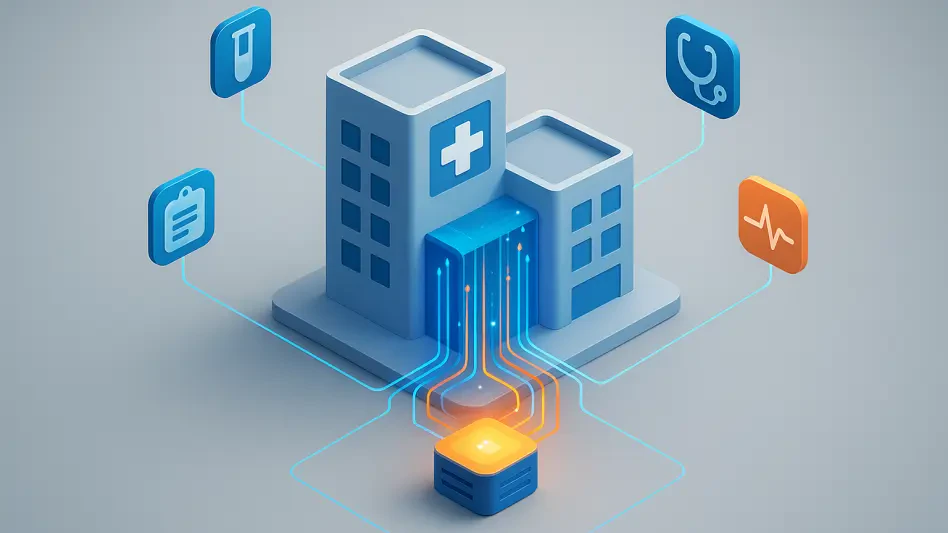

Establishing clear policies regarding data ownership and access is essential to ensure that sensitive patient information is used in compliance with both legal and ethical standards. The modern healthcare sector is currently undergoing a radical transformation, moving away from a traditional model of static record-keeping toward a reality defined by data-driven intelligence. As the industry advances through the current year, the primary focus has shifted from the mere collection of information to the sophisticated application of that data to improve patient care, streamline hospital operations, and anticipate public health crises before they escalate. This evolution represents more than a simple technical upgrade; it is a fundamental shift in the philosophy of care that demands a precarious balance between high-tech innovation and rigorous security standards. Historically, patient information—ranging from vital signs to laboratory results—was stored in digital silos, used primarily for documentation and billing. However, the current landscape requires a proactive approach where this wealth of information is synthesized into actionable insights. To navigate this new era successfully, medical providers must transition from a reactive stance to one that utilizes historical and real-time data to drive both medical and administrative decisions.
Integrating Diverse Data Sources: Breaking Down Information Silos
The sheer scope of data available to healthcare providers has expanded exponentially and is no longer limited to the information traditionally found within Electronic Health Records (EHRs). Today’s digital ecosystem represents a complex web of medical imaging, genomic sequencing, pharmacy histories, and insurance claims, supplemented by real-time streams from patient wearables and mobile health applications. This diversification offers a more holistic view of the patient than ever before, but it also renders traditional storage and analysis methods largely obsolete. Providers are finding that a fragmented view of a patient’s health often leads to missed opportunities for early intervention or preventative care. By aggregating these various data streams, medical teams are able to observe subtle patterns that would remain invisible in a more confined dataset. The transition requires a move toward interoperability, where devices and software from different manufacturers can communicate seamlessly to provide a comprehensive picture of a patient’s physiologic status at any given moment.
A primary obstacle to this progress has long been the existence of data silos—isolated pockets of information where clinical, financial, and administrative records do not communicate effectively. To harness the true power of analytics, organizations must prioritize the integration of these disparate systems into what industry experts describe as a single source of truth. Creating a unified profile that provides a comprehensive view of both individual patients and broader populations is the essential foundation for any modern healthcare strategy. When financial data is viewed alongside clinical outcomes, for instance, administrators can better understand the cost-effectiveness of specific treatments and allocate budgets more efficiently. Breaking down these silos requires significant investment in middleware and standardized data formats like HL7 FHIR, which allow for the fluid exchange of information across various platforms. This integration ensures that every stakeholder, from the surgeon in the operating room to the billing specialist, works from the same set of updated information.
Security and Compliance: Protecting Sensitive Patient Information
In the realm of healthcare, data utility is inextricably linked to data security because medical information remains among the most sensitive personal data in existence. Its management is strictly governed by ethical mandates and legal frameworks such as the Health Insurance Portability and Accountability Act (HIPAA). As healthcare systems become more interconnected through cloud-based analytics and remote monitoring tools, the risk of data breaches increases significantly. These security threats carry the potential for devastating financial penalties and a permanent loss of patient trust, which is difficult to rebuild once compromised. Consequently, modern healthcare organizations are treating security not as an elective feature but as a foundational requirement. By implementing rigorous verification protocols, facilities ensure that only verified users can interact with patient records. This protective layer is vital for maintaining the integrity of the healthcare system while still allowing for the advanced data exploration necessary to improve clinical results.
Security must be integrated into the architecture of every analytics solution through HIPAA-compliant tools featuring end-to-end encryption and multi-layered access controls. Encryption ensures that data remains unreadable to unauthorized parties during both transmission and storage, while granular access controls limit visibility to only those personnel who require it for specific duties. Furthermore, robust audit logs provide a transparent and permanent trail of every interaction with a patient’s file, ensuring accountability and allowing organizations to identify potential vulnerabilities before they are exploited. These technical safeguards enable organizations to explore big data without compromising individual privacy. As medical facilities adopt more sophisticated artificial intelligence and machine learning models, the focus on data masking and anonymization has also intensified. These techniques allow researchers to analyze large-scale trends and develop new treatment protocols while ensuring that individual identities remain protected from exposure throughout the process.
Real-World Applications: Enhancing Clinical and Operational Efficiency
When a secure and integrated framework is established, analytics can solve real-world medical challenges, particularly through the use of predictive modeling. In clinical settings, algorithms can now identify patients who are at high risk for readmission or hospital-acquired infections with remarkable accuracy. This allows medical teams to intervene before a crisis occurs, adjusting treatment plans or increasing monitoring for those most vulnerable. On a macro level, these analytical tools enable public health officials to forecast disease outbreaks and ensure that critical resources, such as vaccines or specialized equipment, are allocated to the areas of greatest need. This shift toward predictive medicine represents a departure from the traditional “wait-and-see” approach, moving the industry toward a model of preventive care. By utilizing longitudinal data, clinicians can recognize the early indicators of chronic diseases, allowing for lifestyle interventions that can significantly improve long-term outcomes and reduce the burden on the healthcare system.
Beyond direct patient care, analytics serves as a powerful tool for hospital administration by identifying bottlenecks in emergency departments and optimizing the scheduling of operating rooms. By analyzing workflow data and managing complex supply chains, facilities can reduce waste and allow clinicians to dedicate more time to direct patient interactions rather than administrative tasks. This strategic shift also supports population health management, allowing providers to identify community-wide risk factors—such as environmental triggers or socioeconomic barriers—and design targeted preventative programs. For example, data might reveal a high incidence of respiratory issues in a specific neighborhood, prompting a targeted outreach campaign. Efficient resource management is no longer just about cutting costs; it is about ensuring that the right care is delivered at the right time. When administrative efficiency improves, the overall quality of care follows, as hospital staff are less overwhelmed by logistical hurdles and can focus on the human elements of medicine.
Strategic Implementation: Building the Four Pillars of Success
A successful data-driven strategy rests on four critical pillars: clear data governance, high data quality, scalable technological infrastructure, and skilled personnel. Organizations must define who is authorized to access specific datasets while ensuring that the information collected is accurate, standardized, and consistently updated. Without high-quality data, even the most advanced analytical models will produce flawed or misleading results. This necessitates a culture of documentation excellence, where every member of the medical staff understands the importance of precise data entry. Governance frameworks also address the lifecycle of data, determining how long records should be kept and when they should be securely archived or destroyed. By establishing these rules early, organizations avoid the pitfalls of “data hoarding,” which can lead to increased security risks and storage costs. Consistency across the organization is key, as standardized data allows for more accurate comparisons between different departments and facilitates better benchmarking against industry standards.
Perhaps most importantly, there is a growing need for professionals who can bridge the gap between data science and the unique complexities of the healthcare environment. These individuals must be capable of translating raw numbers into meaningful clinical insights that doctors and nurses can actually use in their daily work. This requires a workforce that is not only tech-savvy but also possesses a deep understanding of medical workflows and patient psychology. The investment in human talent is just as important as the investment in software; without the right people to interpret the data, technology remains an underutilized tool. Training programs must evolve to include data literacy as a core competency for all healthcare workers, from executive leadership to frontline staff. As the technological infrastructure scales to accommodate larger datasets, the ability of the workforce to adapt to new analytical tools will determine the ultimate success of the digital transformation. Building this internal expertise ensures that data remains a strategic asset rather than a source of confusion.
Moving Forward: Recommendations for Sustainable Healthcare Innovation
The successful integration of these systems required a fundamental shift in how leadership viewed technology, moving it from a back-office expense to a core clinical asset. Those who prioritized early adoption of predictive modeling found that they were better prepared for fluctuations in patient volume and resource availability. Organizations that invested in comprehensive staff training programs saw higher rates of clinician satisfaction and lower levels of burnout, as automated tools reduced the burden of manual data entry. It became clear that the most effective strategies were those that treated data as a living resource rather than a static record. Decision-makers who established clear metrics for success from the outset were able to demonstrate the tangible benefits of analytics to stakeholders, securing long-term support for future initiatives. By focusing on the intersection of technical capability and human expertise, the industry moved toward a more resilient and responsive model of care that better served both providers and patients.
The path forward involved a commitment to continuous improvement and a willingness to adapt as new analytical capabilities emerged. Facilities that maintained a flexible technological architecture were able to integrate new data sources without disrupting existing workflows. Collaboration between healthcare providers and technology developers proved essential for creating tools that were both powerful and user-friendly. Furthermore, the industry recognized that patient engagement was a vital component of the data ecosystem; when patients understood how their information contributed to better outcomes, they were more likely to participate in digital health initiatives. The focus shifted toward long-term sustainability, ensuring that data strategies remained aligned with the evolving needs of the population. By treating analytics as a permanent fixture of medical management, organizations secured their ability to deliver high-quality, personalized care in an increasingly complex world. This proactive approach ensured that the healthcare sector remained at the forefront of the digital age.