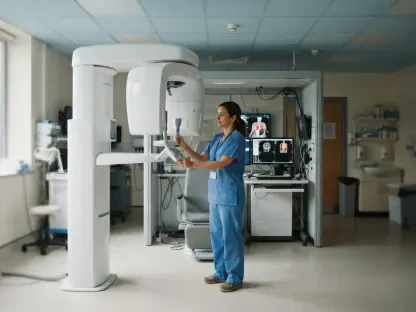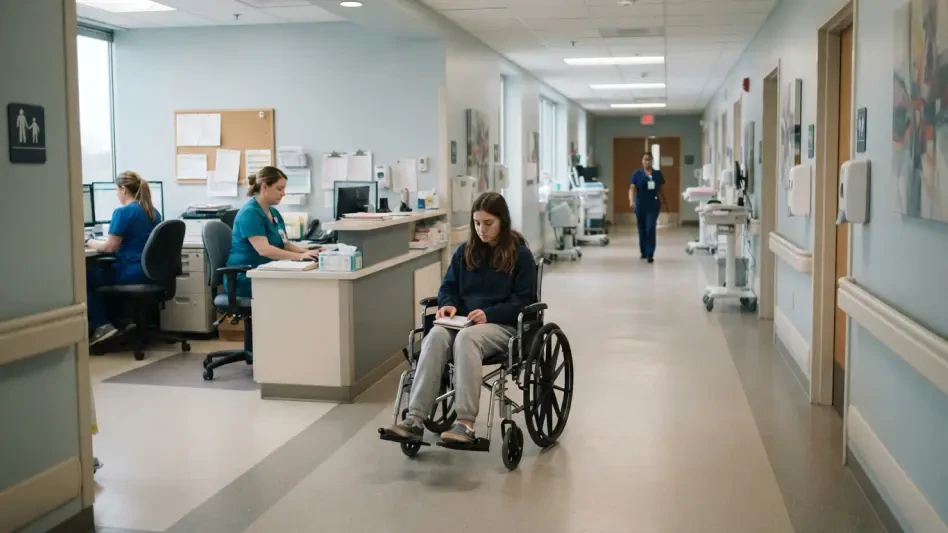

The sanitized corridors of a pediatric ward were never intended to serve as a child’s primary residence for years on end, yet for hundreds of young patients like Jaloni, these clinical spaces have become the only available shelter in a failing social safety net. Inside the walls of SSM Health Cardinal Glennon Children’s Hospital in St. Louis, a teenager found himself caught in a bureaucratic and medical limbo that stretched across 475 days. This phenomenon, often termed hospital boarding or a social stay, represents a critical intersection where modern medicine’s ability to save a life far outpaces the social infrastructure’s ability to sustain one. For Jaloni, the hospital was not just a place of healing but a kingdom of plastic fish tanks, rotating room assignments, and surrogate family members who wore scrubs instead of street clothes.
The tragedy of this situation lies in the profound mismatch between the child’s medical status and their residential reality. Once a patient is medically cleared for discharge, the hospital remains an expensive and inappropriate substitute for a home; yet for children with complex physical needs or those entering the foster care system, there is often nowhere else to go. This crisis is not merely a logistical hiccup but a systemic failure that highlights the extreme poverty and violence plaguing urban centers. When a child survives a gunshot wound only to be trapped in a hospital room because their home environment is unsafe or ill-equipped, the surgeon’s victory becomes a hollow milestone in a much larger struggle for stability.
The Invisible Crisis in Modern Pediatric Care
The phenomenon of social stays has quietly escalated into a national emergency, though it remains largely invisible to the general public, who view hospitals as transient waystations. In reality, these institutions have become the primary housing providers for a growing population of youth who have been abandoned by or separated from their biological families due to the sheer complexity of their care needs. The term “boarding” describes the period during which a child remains in an acute care bed despite having no clinical reason to be there. This practice creates a massive bottleneck in the healthcare system, occupying beds that are desperately needed for incoming emergencies while subjecting these children to an institutionalized existence that stifles their development.
The crisis is exacerbated by the fact that many of these children have transitioned from the care of their parents to the custody of the state while hospitalized. This legal shift adds layers of administrative complexity to an already fraught situation. State agencies, often overwhelmed and underfunded, frequently struggle to find foster placements that are both wheelchair-accessible and staffed by individuals trained to handle high-level medical regimens. Consequently, the hospital becomes a default warehouse for human lives, a place where the lights never truly dim and the rhythm of life is dictated by shift changes and vital signs checks rather than the natural milestones of adolescence.
Defining Pediatric Hospital Boarding and Its Context
To understand the scope of this issue, one must recognize that boarding occurs when a patient’s physical stability is achieved, but the social stability of their environment is nonexistent. In a typical medical scenario, a patient recovers and returns home to the care of loved ones; however, for children like Jaloni, the trauma of their injuries is often compounded by the collapse of their support systems. When a child requires a ventilator, a feeding tube, or constant repositioning to prevent life-threatening pressure sores, the demands on a family living in poverty can become insurmountable. The resulting delay in discharge is not a choice made by the medical team but a forced necessity when the alternative is a return to a situation that would inevitably lead to rehospitalization or death.
The systemic origins of this crisis are rooted in a chronic shortage of specialized residential care facilities and community-based support programs. Healthcare systems were designed for acute intervention—the swift diagnosis and treatment of injury or disease—rather than long-term residential management. When the social services sector fails to provide adequate foster homes or step-down facilities, the hospital is forced to absorb the burden. This creates a cycle where the most vulnerable children are kept in the most expensive settings, not because it is the best place for them, but because it is the only place that cannot legally turn them away.
Key Drivers and Characteristics of Extended Stays
The factors driving these extended stays are as complex as the medical conditions themselves, often involving a blend of physical trauma and deep-seated social inequities. Many children who find themselves boarding for months on end are victims of circumstances that have stripped them of their autonomy and their families’ ability to provide a safe haven. These drivers are not isolated incidents but part of a broader pattern of systemic neglect that disproportionately affects families in low-income urban areas where resources are already stretched to the breaking point.
The Cycle of Violence and Medical Trauma
For many urban youth, the path to the hospital ward begins with a moment of extreme violence that leaves a permanent mark on their bodies and their futures. Jaloni’s story is emblematic of this cycle; at age 14, he was admitted with multiple gunshot wounds that resulted in a spinal cord injury and a lifetime of wheelchair dependence. This type of trauma is rarely an isolated event in the lives of these patients, as many have already lost siblings and cousins to the same gun violence that eventually claimed their own mobility. The medical intervention saves their lives, but it also places them into a category of complex care that their communities are not equipped to handle.
The psychological impact of such violence is profound, creating a state of hypervigilance that persists even within the sterile safety of the hospital. For a teenager who has grown up in an environment where mortality is a daily concern, the hospital can feel like both a sanctuary and a prison. The physical disability resulting from a spinal cord injury necessitates a level of care—including wound management and intensive hygiene—that requires specialized equipment and 24-hour attention. When this medical trauma occurs in a family already struggling with its own challenges, the hospital stay becomes the first chapter in a long history of displacement.
The Breakdown of Home-Based Support
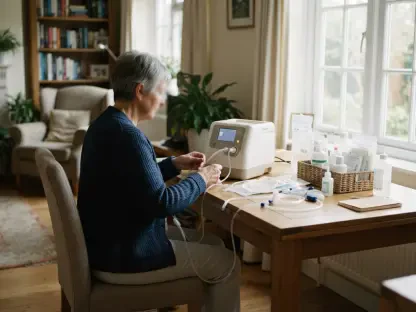
A significant contributing factor to hospital boarding is the reality that many families simply cannot meet the rigorous demands of intensive home medical care. In Jaloni’s case, his primary guardian was his grandmother, a double amputee who used a wheelchair herself, making it physically impossible for her to assist with the constant repositioning and lifting her grandson required. His mother, working as a paid caregiver for others, lacked the time and resources to manage a high-needs medical regimen at home. This breakdown is not a failure of love but a failure of capacity, where the intersection of poverty and disability creates a barrier that no amount of familial devotion can overcome.
When home care fails, the consequences are often catastrophic, leading to severe infections or bedsores that require surgical intervention and prolonged recovery. These complications frequently trigger investigations for medical neglect, which can result in the child being removed from the home and made a ward of the state. Once the state assumes custody, the child cannot return to the original family environment, yet the state often lacks an immediate, viable alternative. This leaves the child stuck in the hospital, caught between a family that wants them but cannot care for them and a state that is legally responsible for them but has no place to put them.
The Specialized Foster Care Gap
The deficiency in the foster care system for children with high medical needs is perhaps the most critical bottleneck in the discharge process. Most foster homes are not equipped with ramps, widened doorways, or the specialized medical equipment necessary to support a child with a spinal cord injury or chronic respiratory issues. Furthermore, the number of foster parents with the medical training required to manage these cases is staggeringly low. This gap ensures that even when a child is ready to leave the hospital, they remain in a hospital bed for weeks or months while caseworkers search for a placement that may not exist.
The lack of residential facilities designed for pediatric step-down care further compounds the problem. Unlike adult medicine, which has an extensive network of nursing homes and rehabilitation centers, the pediatric world has very few options for children who need more than a family home but less than an acute care hospital. This vacuum in the continuum of care means that children are often “institutionalized” in a setting that was never meant for long-term living. The result is a population of youth who grow up in hospitals, navigating their developmental milestones under the glow of fluorescent lights and the constant hum of medical machinery.
Identifying What Makes This Crisis Unique
What sets the pediatric boarding crisis apart from other healthcare challenges is the unique way it blends advanced medical life-support capabilities with a total failure of social infrastructure. We live in an era where surgeons can mend shattered spines and keep children alive through unimaginable trauma, yet the system fails to provide those same children with wheelchair-accessible apartments or trained caregivers. This friction between high-tech medical success and low-tech social failure creates a distinct type of limbo for the patient. The child is a miracle of modern science but a casualty of modern policy, living in a space that is physically safe but emotionally and socially stagnant.
The legal transition of children to wards of the state during their hospitalization is another unique factor that complicates the boarding issue. When a child becomes a ward of the state while in a hospital bed, the facility effectively becomes their legal residence. This shifts the relationship between hospital staff and the patient; nurses and caregivers often find themselves acting as surrogate parents, providing the emotional labor that would typically come from a family member. This dynamic creates a “hospital kingdom” where the patient is the center of a clinical community, yet they are simultaneously isolated from peer groups and the normal social interactions that define childhood and adolescence.
The Current State of Hospital Boarding
As of 2026, data surrounding pediatric hospital boarding reveals a financial and humanitarian crisis of staggering proportions. In states like Missouri and Illinois, hundreds of children remain in hospitals beyond medical necessity each year, with the costs of these social stays reaching tens of millions of dollars. For a single hospital, the uncompensated costs of boarding can be immense, as insurance companies and state Medicaid programs often refuse to pay for days not deemed medically necessary. This leaves healthcare systems to absorb the cost of housing, feeding, and supervising children who have essentially been abandoned by the social services systems designed to protect them.
The administrative challenges of logging these stays mean that the documented figures likely underrepresent the true scale of the problem. Many hospitals do not have a formal mechanism for tracking social stays separately from medical ones, leading to a lack of clear data that could drive policy change. However, the available research indicates that the cost of boarding a child with complex needs can approach $4,000 per day. This is an extraordinarily inefficient use of resources, as the funds spent on a few weeks of hospital boarding could often pay for a year of specialized foster care or a major home modification if the infrastructure were in place to facilitate such a transition.
Reflection and Broader Impacts
The long-term hospitalization of children creates a strange, hybridized existence that leaves lasting marks on both the patients and the staff who care for them. The hospital, designed for sterility and efficiency, is a poor substitute for the messy, vibrant world of a growing child, yet it becomes the only world they know. This environment shapes their perception of reality, their social skills, and their sense of self in ways that are only beginning to be understood by psychologists and sociologists.
Reflection
One of the most striking aspects of the boarding crisis is the way hospital staff steps in to provide a surrogate community for these children. Nurses, custodians, and even cafeteria workers often become the primary social contacts for a boarding child, forming bonds that go far beyond clinical duties. In Jaloni’s experience, the staff became his confidants and his audience, providing a sense of normalcy through events like a “hospital prom” or by helping him navigate schoolwork. These efforts are heroic, yet they highlight the tragedy of institutionalization; a child should not have to rely on rotating shifts of medical professionals to experience the milestones of growing up.
The institutionalization of developmental milestones is a bittersweet reality of long-term hospital stays. Children learn to navigate their identities within the confines of a clinical setting, turning hospital rooms into personalized spaces and finding joy in the small routines of hospital life. However, this adaptation can lead to a form of “institutionalized” behavior, where the child becomes comfortable in the controlled environment of the hospital but struggles with the unpredictability and lack of support in the outside world. The hospital provides a “fish tank” of safety, but it cannot prepare a child for the vast and often hostile ocean of independent living or life in a community still plagued by the violence that sent them to the hospital in the first place.
Broader Impact
The broader impact of this crisis extends to the very foundations of healthcare policy and economic stability. Using acute-care hospitals for long-term housing is a symptom of a fractured system that prioritizes reactive crisis management over proactive social support. This economic inefficiency drains resources from the entire healthcare system, leading to longer wait times in emergency rooms and reduced availability of specialized pediatric beds. Furthermore, the psychological toll on these youth—who often feel as though they are in a state of perpetual limbo—can lead to long-term mental health challenges that will require even more resources to address as they transition into adulthood.
From a policy perspective, the boarding crisis serves as a stark reminder that health is not merely the absence of disease but the presence of a stable, supportive environment. The millions of dollars spent on social stays represent a missed opportunity to invest in community-based housing and specialized foster care training. When the healthcare system is forced to compensate for the failures of the welfare and housing systems, everyone loses. The youth in limbo lose their chance at a normal childhood, hospitals lose their ability to serve the acutely ill, and taxpayers lose millions in a cycle of inefficient spending that fails to solve the root causes of the problem.
The Path Toward Systemic Reform
The investigation into the true costs of pediatric hospital boarding established that the current trajectory is both financially unsustainable and morally unacceptable. The findings concluded that the reliance on acute care facilities to house medically cleared children resulted from a fragmented social services network that lacked the specialized infrastructure for complex pediatric cases. To move forward, it is evident that legislative reform must focus on creating transitional housing models that bridge the gap between the hospital and the home. The data showed that investing in the modification of biological homes and the intensive training of foster parents was a more cost-effective and humane approach than continuing the practice of long-term boarding.
Systemic change required a fundamental shift in how state agencies and healthcare providers collaborated, moving toward a model where discharge planning began at the moment of admission. Legislators recognized that by providing financial incentives for specialized foster care and increasing the availability of home-based nursing, the state could significantly reduce the duration of social stays. The goal was to ensure that the medical victory of saving a child’s life was not followed by the social defeat of institutionalization. By prioritizing the development of community-based resources, the system aimed to return these children to environments where they could grow, learn, and finally leave the hospital ward behind for a true home.