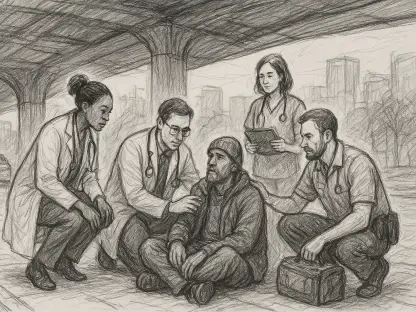

The enduring friction between the rising price of life-saving medical care and the rigid boundaries of partisan identity has created a unique social phenomenon in the most conservative corners of the United States. In regions where political loyalty to the Republican platform remains virtually unshakable, a contradictory reality has emerged: the very populations most committed to these ideologies are often those most harmed by the resulting healthcare policy shifts. This tension defines a modern paradox where economic survival and ideological adherence are increasingly at odds, forcing a recalculation of what it means to be a representative in a polarized electorate.
The significance of modern healthcare policy has never been more apparent than in the current landscape of 2026. As federal subsidies that once lowered premiums have reached their expiration, the socio-economic landscape of the electorate has shifted toward a state of heightened vulnerability. Partisan identity continues to act as a primary lens through which voters perceive these changes, often overshadowing the direct financial impact of legislative decisions. This intersection of policy and identity creates a environment where the survival of a political movement can depend on its ability to navigate the material suffering of its own base without alienating the core ideological tenets that define the party.
This examination explores the current trends within Georgia’s 14th Congressional District, a region serving as a primary case study for these national tensions. The analysis will detail the “Medicaid gap” and the legislative rollbacks that have altered the premium structure for thousands of residents. Furthermore, it will investigate the linguistic branding that dictates how policy is received by the public and provide a roadmap for understanding the future of voter sentiment. By looking at the period from 2026 to 2036, the trend analysis identifies the potential for a deepening socioeconomic disconnect that may eventually challenge the status quo of American political strategy.
The Economic Reality: The Healthcare Crisis
Data and Adoption Trends in the 14th District
The current data regarding health coverage in Georgia’s 14th Congressional District reveals a stark disparity compared to national averages. Approximately 14% of the district’s population under the age of 65 remains uninsured, a figure that highlights the persistent struggle for medical access in rural, conservative strongholds. This trend has been exacerbated by the recent expiration of enhanced subsidies for plans purchased through the Affordable Care Act marketplace. In this district alone, 74,000 residents lost vital financial assistance, contributing to a statewide drop in enrollment of over half a million people as premiums became unsustainable for working-class families.
Beyond the raw numbers of the uninsured, there is a growing reliance on “crisis care” as a substitute for traditional primary medical services. Families who cannot afford the upfront costs of a doctor’s visit or the monthly burden of high-deductible insurance are increasingly utilizing emergency rooms for non-emergency conditions. This trend represents a shift in healthcare adoption where medical care is treated as a reactionary necessity rather than a proactive investment. Because emergency departments are legally required to stabilize patients regardless of their ability to pay, they have become the de facto safety net for a population that has been priced out of the private insurance market.
The economic impact of this shift is felt not only by the individuals but also by the local healthcare infrastructure. As emergency rooms see a surge in uninsured patients, the cost of providing care is often shifted back onto the community through higher local taxes or increased service fees for those who do have insurance. This creates a cycle where the lack of accessible primary care drives up the overall cost of living, further straining the budgets of households already living on the edge. Despite these clear economic indicators, the political alignment of the region has not moved toward a rejection of the policies that allow these conditions to persist.
Real-World Applications: Policy Shifts
The human element of this crisis is best exemplified by the “Medicaid gap,” a policy vacuum that traps the “working uninsured” between poverty and self-sufficiency. In Cohutta, Georgia, residents like Amber Bates illustrate the daily reality of this struggle. Bates and her family, who care for a child with autism, find themselves in a position where they earn too much to qualify for Georgia’s restrictive Medicaid program but too little to afford private premiums. This situation forces the family to spend nearly one-third of their total income on essential prescriptions, leaving little room for other necessities like housing or food security.
Legislative actions such as the “One Big Beautiful Bill Act” have introduced practical barriers that further complicate the path to coverage for rural populations. By increasing documentation burdens and introducing monthly fees for program maintenance, this legislation has functioned as a deterrent for those with limited administrative resources or unsteady income. The Congressional Budget Office estimates that the combination of these documentation hurdles and the loss of federal subsidies could lead to 15 million more Americans becoming uninsured over the next decade. For a district that already struggles with high poverty rates, these policy shifts represent a tangible reduction in the quality of life.
In contrast to these restrictive measures, the stalled “Lower Health Care Premiums for All Americans Act” serves as a reminder of the legislative gridlock currently defining the federal approach to medicine. While the bill was marketed as a solution to rising costs, analysis suggested it would have actually increased the number of uninsured individuals by 100,000 annually. For constituents in the 14th District, the failure of this legislation has meant a continuation of the status quo where premiums have doubled for many families. The lived experience of these voters is one of navigating a complex web of failed promises and escalating costs, yet their political loyalty remains remarkably stable.
Perspectives: Political and Policy Experts
Professor Charles Bullock of the University of Georgia provides a critical lens into why this “frustrated loyalty” persists among the electorate. He suggests that partisan realignment has reached a point where personal economic interests are often secondary to a broader sense of cultural and ideological belonging. Voters are increasingly willing to “stick with the party line” because the Republican identity has become deeply intertwined with their personal values and social networks. In this context, a vote for a candidate who opposes federal healthcare expansion is not seen as a vote against one’s own health, but rather as a vote for the preservation of a specific way of life.
A significant shift in this narrative occurred with the “Marjorie Taylor Greene Pivot” before her departure from Congress in early 2026. Greene, long known for her staunch opposition to federal overreach, surprised many by acknowledging that the expiration of ACA subsidies was a catastrophic blow to her constituents. She described the subsidies as a “lifeline” for her own family and for the 74,000 people in her district who faced doubling premiums. This rare admission from a high-profile conservative leader highlighted a growing internal friction within the party, where the practical needs of the base began to clash with the anti-subsidy rhetoric of the national platform.
Furthermore, the phenomenon of “branding” identified by candidates like Shawn Harris illustrates the psychological divide in how policy is perceived. Harris has noted that while many voters in the 14th District express a visceral hatred for “Obamacare” as a partisan label, they simultaneously support the specific protections of the “Affordable Care Act,” such as coverage for pre-existing conditions and the ability to keep children on a parent’s plan. This cognitive dissonance suggests that the branding of healthcare policy has become more important than its functional utility. As long as a policy is associated with a rival partisan identity, it is likely to be rejected by this segment of the electorate, regardless of the personal benefits it might provide.
Future Implications: Healthcare and Partisanship
The trajectory of healthcare in the United States over the next decade points toward a deepening policy void if a cohesive alternative to current structures is not established. Without a unified plan that addresses the specific needs of rural and working-class populations, the number of uninsured Americans is expected to grow significantly. This trend will likely place even more pressure on local health systems and emergency services, potentially leading to a decline in overall public health outcomes in regions like North Georgia. The absence of a Republican-led comprehensive healthcare strategy remains a primary risk factor for the long-term stability of the region’s social fabric.
A broader implication of this trend is the growing “socioeconomic disconnect” between the federal leadership and the working class. As voters continue to experience rising costs, there is a risk that they will view the entire political class as out of touch with “real life” struggles. However, current trends suggest that this frustration may not translate into a shift in partisan alignment. Instead, voters have shown a tendency toward externalizing blame, directing their anger at abstract concepts like “inflation” or “the system” rather than the specific healthcare platforms of their chosen representatives. This suggests that ideological identity acts as a buffer that protects political parties from the consequences of unpopular economic policies.
As the political cycle moves toward the next decade, the cultural branding of healthcare will likely remain the dominant force in American politics. Even as tangible economic hardships increase, the power of ideological narratives may continue to override the demand for policy reform. The future of healthcare in conservative districts will depend on whether a new generation of leaders can bridge the gap between ideological purity and the practical necessity of affordable medical care. If the current trend of “frustrated loyalty” continues, the American political landscape will remain defined by a constituency that prioritizes its partisan home over its own physical and financial health.
Summary and Conclusion: Moving Forward
The investigation into Georgia’s 14th District identified a profound disconnect between the economic needs of a community and its political choices. The evidence showed that while 14% of the population lacked insurance and thousands lost subsidies, the ideological commitment to the Republican Party remained the primary driver of voter behavior. The analysis found that the “Medicaid gap” and the expiration of federal assistance created significant financial burdens, yet these hardships were often filtered through a partisan lens that prevented a shift in political strategy. Stakeholders observed that the branding of the “Affordable Care Act” continued to play a larger role in public perception than the actual benefits of the policy.
The study concluded that the trend of externalizing blame for healthcare costs allowed political leaders to maintain support even while presiding over a decline in medical accessibility. It was noted that the absence of a cohesive alternative to existing healthcare structures left a policy vacuum that exacerbated the struggles of the working uninsured. Moving forward, the analysis suggested that addressing healthcare as a public health necessity rather than a tool for partisan warfare would be essential for improving outcomes. Ultimately, the findings emphasized that unless the cultural branding of policy is addressed, tangible economic hardship may fail to change the political trajectory of the American landscape.