
Treating avoidable injuries caused by medication errors imposes a massive financial burden on European health systems, costing billions of dollars every year. This fiscal drain is coupled with a profound human toll, as medication-related incidents contribute to more than 160,000 deaths annually across the continent, a number that shockingly eclipses fatalities resulting from road traffic accidents. In the current landscape of 2026, the modernization of medication management has transitioned from a theoretical improvement to an urgent operational mandate. Hospitals are increasingly finding that the traditional, manual methods of handling pharmaceuticals are no longer sufficient to meet the demands of complex patient care. The shift toward integrated, data-driven ecosystems is designed to dismantle the fragmented workflows that have historically plagued hospital pharmacies and nursing units. By moving beyond isolated technological “islands” and toward a cohesive framework of connected medication technologies, healthcare institutions can begin to mitigate the systemic risks that lead to avoidable harm. This transformation is not merely about purchasing new equipment but about fundamentally reimagining how data and physical assets interact to protect patients and support clinical staff. As hospitals navigate the pressures of workforce shortages and rising patient acuity, the implementation of these sophisticated systems serves as a cornerstone for building a more resilient and safer healthcare environment.
The Operational Burden: Fragmented Hospital Workflows
Time and motion studies indicate that registered nurses spend a significant portion of their shifts—averaging over 100 minutes—on medication-related tasks, including preparation, documentation, and administration. In an era where healthcare systems are grappling with a nursing burnout rate that affects more than half of the workforce, these administrative burdens represent a critical drain on clinical resources. When workflows are fragmented, nurses must navigate manual cross-referencing and labor-intensive pharmacy processes that are inherently prone to human error. This inefficiency does not just waste time; it actively detracts from the ability of clinicians to provide direct patient care and increases the cognitive load on professionals who are already stretched thin. The reliance on manual documentation often leads to transcription errors and communication gaps that can have devastating consequences at the bedside. By failing to streamline these repetitive tasks, hospitals are inadvertently contributing to the very staff fatigue that further exacerbates the risk of medication errors. The current trajectory of 2026 suggests that without a shift toward automated visibility, the operational strain on nursing staff will continue to undermine the quality of patient outcomes and institutional stability.
Beyond the impact on nursing staff, the lack of data continuity creates significant challenges for hospital pharmacists, who frequently find themselves mired in non-value-added activities. When medication histories are trapped in isolated information systems, establishing a clear and real-time picture of a patient’s treatment plan becomes an arduous task. These data silos make it difficult to identify potential drug interactions or verify accurate dosages during critical care transitions. The absence of a unified digital thread means that pharmacists must spend valuable time hunting for information rather than engaging in clinical interventions that could improve therapy outcomes. Furthermore, fragmented systems often result in poor inventory oversight, leading to unexpected medication shortages or the accumulation of expired stock, both of which impose further financial and safety risks. This disjointed approach to pharmacy management prevents institutions from leveraging the full potential of their professional staff, turning clinical experts into administrative troubleshooters. Establishing a seamless flow of information is essential for ensuring that every member of the care team has access to the same reliable data, thereby reducing the likelihood of dispensing errors and ensuring that the right medication reaches the right patient at the right time.
Transitioning Systems: Connected Medication Ecosystems
The distinction between simple automation and true connectivity is a pivotal concept in the evolution of modern hospital infrastructure. Historically, many institutions sought to solve medication management issues by installing standalone pharmacy robots or automated dispensing cabinets. While these “islands of automation” provided localized benefits, they often failed to address the underlying problem of data fragmentation because they did not communicate effectively with other hospital systems. In contrast, the current trend involves the implementation of connected medication frameworks—integrated ecosystems where hardware and software work in harmony to provide a continuous stream of real-time data. This connectivity allows for the transformation of raw operational data into actionable insights, enabling hospital leaders to oversee the entire medication lifecycle from procurement to administration. By integrating dispensing technology with electronic health records and pharmacy information systems, hospitals can create a transparent environment where every transaction is tracked and verified. This holistic approach ensures that the technology serves as a proactive safeguard rather than a reactive tool, providing the visibility needed to identify bottlenecks and prevent errors before they reach the patient.
Achieving enterprise-wide visibility through connected systems enables a higher degree of operational intelligence that was previously unattainable with manual or siloed methods. For instance, real-time tracking of medication levels across various departments allows for more sophisticated inventory management, drastically reducing the occurrence of stock-outs for life-saving drugs. This level of oversight also supports faster and more informed decision-making by providing leadership with a bird’s-eye view of the hospital’s entire medication flow. When every dispensing cabinet and pharmacy robot is part of a unified network, the system can provide predictive analytics that highlight potential risks or inefficiencies in the supply chain. This shift toward a data-driven model prioritizes the “five rights” of medication administration—right patient, right drug, right dose, right route, and right time—while removing the friction of manual double-checking. Furthermore, these integrated frameworks facilitate better coordination among diverse healthcare professionals, ensuring that nurses, pharmacists, and physicians are all operating from a single version of the truth. By investing in these intelligent ecosystems, hospitals are not just upgrading their equipment; they are building a resilient foundation that supports clinical excellence and institutional sustainability in an increasingly complex medical landscape.
Evidence of Success: Implementation and Practical Results
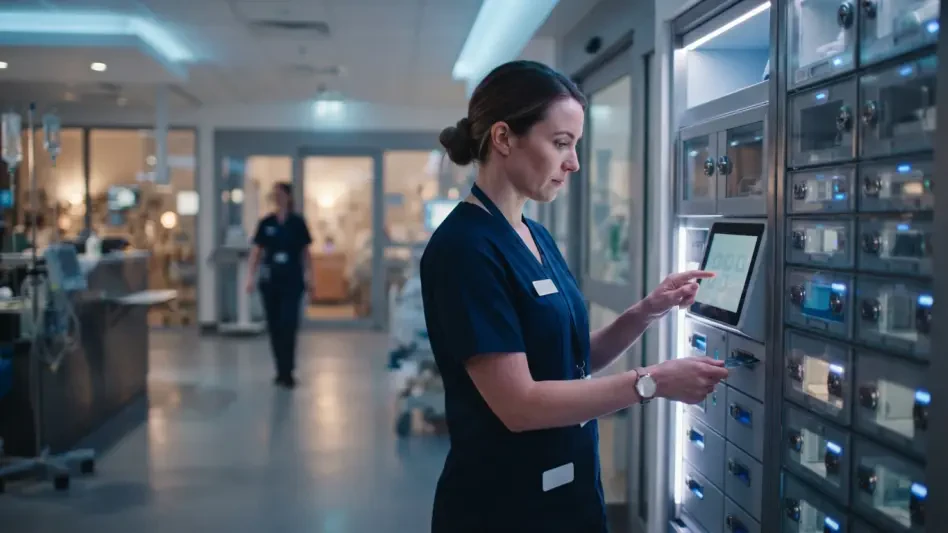
Concrete evidence supporting the modernization of medication management can be found in the results of a multi-year European study that included institutions like Geneva University Hospitals. This research focused on the practical application of automated dispensing cabinets, such as the BD Pyxis™ Pro, across various clinical environments. The findings revealed that users experienced marked improvements in safety, efficiency, and the traceability of medications, particularly in high-stakes settings like intensive care units and emergency departments. The ability to individualize storage spaces within towers and refrigerators significantly reduced the risk of picking errors, a common pitfall in high-pressure environments. Moreover, the study highlighted how the integration of advanced hardware with sophisticated data platforms led to more streamlined workflows, allowing staff to spend less time on manual inventory checks and more time on patient-facing duties. The success of these implementations at world-class facilities serves as a powerful proof of concept for other hospitals looking to justify the investment in modernized technology. The data suggests that when these systems are deployed correctly, they provide a measurable return on investment by decreasing the rate of avoidable harm and optimizing clinical resources.
However, the transition to these advanced medication management systems is not without its challenges, as technology is rarely a “plug-and-play” solution. The research from Geneva and other leading centers emphasizes that the effectiveness of these tools depends heavily on how well they are integrated into existing hospital IT infrastructures and daily staff workflows. A successful implementation requires a cultural shift within the organization, where clinical teams are trained not only on how to use the hardware but on how to leverage the data it provides. There is a critical need for alignment between the technology and the physical layout of the hospital wards to ensure that the systems enhance rather than hinder the speed of care. Furthermore, administrators must address the complexities of interoperability, ensuring that the medication management platform can communicate seamlessly with electronic medical records and other digital health tools. Without this careful strategic planning, even the most advanced equipment can become just another isolated tool that fails to deliver its full potential. The reality of 2026 is that the most successful hospitals are those that view technology implementation as a collaborative process involving IT professionals, pharmacists, and bedside clinicians to ensure the final system is tailored to the needs of the environment.
Strategic Alliances: Partnerships and Analytical Platforms
The relationship between healthcare institutions and technology providers has undergone a fundamental shift, moving away from a traditional vendor-client model toward a strategic partnership. In this modern paradigm, providers are no longer just sellers of machinery; they are operational partners expected to deliver comprehensive analytical tools and expertise to improve the entire pharmacy workflow. This is exemplified by the combination of advanced dispensing hardware with intelligent software layers like the BD Incada™ Platform. These platforms serve as the intelligence of the medication management ecosystem, offering clinician-driven dashboards that provide real-time visibility into medication status and potential risks across the entire enterprise. By utilizing conversational AI, these systems allow healthcare staff to interact with complex data in a more intuitive manner, making it easier to identify trends and resolve issues quickly. This collaborative approach ensures that the technology remains responsive to the evolving needs of the hospital, providing a scalable solution that can grow alongside the institution. Strategic partnerships enable hospitals to access ongoing support and data-driven insights that are essential for maintaining high standards of patient safety and operational efficiency over the long term.
User-centric design has become a hallmark of modern medication management platforms, focusing on reducing the cognitive load on healthcare professionals. By incorporating specialized storage solutions and ergonomic interfaces, these systems are built to accommodate the physical and cognitive realities of a busy hospital environment. For example, the use of individualized compartments for high-risk medications physically prevents the selection of the wrong drug, providing a hard stop against one of the most common types of medication errors. These intelligent layers of the system are designed to act as a silent, reliable partner for clinicians, automating the most repetitive and error-prone parts of the workflow. The integration of AI-driven analytics further enhances this support by highlighting unusual patterns or potential discrepancies that might otherwise go unnoticed by human operators. As hospitals continue to face intense pressure to deliver high-quality care with limited resources, the adoption of these intuitive, user-focused technologies will be a defining factor in their ability to maintain safety and staff satisfaction. By prioritizing the human element in technology design, institutions can ensure that their modernization efforts lead to a more harmonious and effective working environment for all clinical personnel.
Future-Proofing Healthcare: Advancing Patient Safety
Healthcare leaders recognized that the path forward required more than just the adoption of individual gadgets; it demanded a systemic integration of technology into the fabric of daily clinical practice. They shifted their focus toward creating a connected medication management ecosystem that reduced the reliance on human memory and manual cross-referencing. By prioritizing interoperability and data continuity, these institutions successfully dismantled the silos that historically led to communication breakdowns and medication errors. This strategy involved the use of real-time analytics to monitor every step of the medication lifecycle, providing a level of transparency that was previously impossible. The implementation of these systems allowed for a more proactive approach to patient safety, where potential issues were identified and mitigated before they could result in harm. As a result, hospitals were able to foster a culture of safety that was supported by robust technological safeguards, ensuring that clinicians had the tools they needed to provide the highest standard of care. The focus was on building a resilient infrastructure that could withstand the pressures of high patient volumes and complex treatment protocols without compromising on the quality of outcomes.
To sustain these gains, medical institutions established clear protocols for the continuous evaluation and optimization of their medication management systems. They moved toward a model of ongoing collaboration with technology partners to ensure that software updates and hardware upgrades were aligned with the evolving needs of the clinical environment. This approach included the use of data-driven feedback loops, where insights from the medication management platform were used to refine hospital policies and improve staff training programs. By treating the technology as a dynamic part of the hospital’s operational strategy, leaders were able to ensure that the system remained effective in the face of changing healthcare demands. They also prioritized the expansion of these connected frameworks to include every department, from the central pharmacy to the most remote outpatient clinics, creating a truly unified approach to medication safety. This strategic foresight allowed hospitals to not only reduce the incidence of avoidable errors but also to improve the overall efficiency of their operations, freeing up valuable resources that could be reinvested in patient care and staff development. The move toward holistic system integration proved to be the most effective way to secure a safe and sustainable future for modern healthcare.