
As we navigate the complex landscape of modern medicine, the focus is shifting from what we treat to how we treat it. With the Asia-Pacific region housing nearly 60% of the global population, the stakes for patient-centric drug delivery have never been higher. Modern healthcare has become exceptionally good at developing scientific innovations, from biologics to precision medicines, yet for many, the actual experience of receiving these treatments remains tethered to fear and discomfort. I am joined by Faisal Zain, an expert in medical technology and device manufacturing, to discuss the critical intersection of clinical efficacy and patient behavior. We explore how the region is grappling with rising costs, the psychological barriers of needle phobia, and the technological shifts that are redefining the treatment journey for millions of patients.
With healthcare costs in the Asia-Pacific region projected to rise by 10 to 12% annually, how are regional health systems managing the pressure of delivering better outcomes with such finite resources?
The financial strain is palpable across the region, especially as we balance the needs of an aging population against a backdrop of workforce shortages. We are seeing a region that is simultaneously navigating these rising costs while trying to tackle a growing burden of chronic diseases that require long-term management. It is no longer just about the funding; it is about the emotional and physical fatigue that sets in when systems are stretched too thin to provide personalized care. To manage this 10 to 12% surge in expenditures, providers are realizing that clinical innovation alone cannot bridge the gap between a prescription and a successful recovery. We have to look at how treatments fit into the daily lives of patients to ensure that every dollar spent on advanced therapies actually results in a completed course of care rather than a wasted dose.
We often focus on the clinical success of a drug, but you have highlighted that fear and anxiety remain major barriers—how do these emotional factors impact long-term health outcomes?
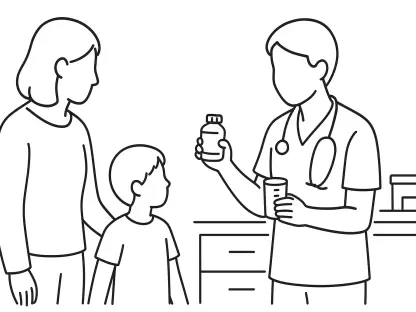
For a child facing a needle or a patient undergoing years of daily growth hormone injections, the physical sting is often just a small part of the problem. Global studies show us that needle phobia affects between 20 to 50% of children and nearly 20 to 30% of adults, which is a staggering portion of the population that might actively avoid or delay life-saving care. This isn’t just a minor inconvenience; it leads to missed doses, delayed treatments, and ultimately, a clinical failure of the therapy itself. When a patient feels a surge of anxiety every time they see a syringe or smells the cold, sterile scent of a clinic, we have failed to address the most human element of healthcare. We must move toward a model where the treatment experience is as refined as the molecular structure of the drug itself to prevent this emotional fatigue from derailing the patient’s journey toward health.
In a market as vast as India, where initiatives like Ayushman Bharat have expanded access to over 550 million people, what does the shift toward long-term specialty medicines mean for delivery systems?
The scale of healthcare expansion in India is truly unprecedented, with the National Health Authority successfully bringing 550 million beneficiaries into the fold of modern medicine. As these patients gain access to biologics and long-term injectable therapies, the sheer volume of repeated injections becomes both a logistical and a psychological hurdle for families. It is one thing to provide the medicine to a remote village or a bustling city, but it is another challenge entirely to ensure a patient stays engaged for the months or years required for success. We are seeing a shift where healthcare providers are no longer just dispensers of medicine but managers of complex, long-term patient journeys. In this context, the simplicity and comfort of delivery become the linchpins that determine whether a patient actually finishes their treatment or falls out of the system due to the burden of administration.
Looking at the injectable drug delivery market in Asia-Pacific, which is expected to grow at a CAGR of 9.8% from 2026 to 2031, what is driving this rapid expansion in technology?
This 9.8% compound annual growth rate is being fueled by several converging factors, primarily the rising adoption of biologics and biosimilars that require sophisticated delivery methods. We are also seeing a massive push for expanded immunization programs and a surging demand for patient-centric technologies that make self-administration easier and less intimidating at home. As healthcare expenditure grows across the region, there is a realization that drug delivery isn’t just the final step in the chain—it is a core contributor to real-world outcomes and patient satisfaction. Between 2026 and 2031, the market will increasingly favor technologies that prioritize convenience, comfort, and pain management over traditional, bulkier methods. This growth reflects a broader healthcare evolution where the “how” of delivery is finally catching up to the scientific sophistication of the medication itself.
Safety is a significant concern for both patients and providers, particularly in Southeast Asia where needlestick injuries are quite high—how does modern technology address this risk?
The statistics are quite alarming, with recent data showing that Southeast Asia has the highest one-year prevalence of needlestick injuries globally, reaching a rate of 58.2%. For healthcare workers, every single injection carries a hidden risk of accidental injury and potential infection, which adds immense psychological stress to an already burdened workforce. By moving toward needle-free systems or more intuitive, safer injectable designs, we can drastically reduce this 58.2% figure and create a much safer environment for clinicians. Improving the safety of drug delivery isn’t just about protecting the person receiving the drug; it’s about optimizing hospital operations and ensuring our medical staff can work without the constant shadow of occupational hazards. It is a critical piece of the puzzle for improving overall clinical workflows and reducing the “safety tax” that needle-based systems currently impose on our hospitals.
Techniques like needle-free injection systems are gaining traction; how do these high-pressure jet streams change the patient experience compared to traditional methods?
Needle-free technology is a game-changer because it uses a high-pressure jet stream to deliver medication through the skin in a fraction of a second, without any metal piercing the flesh. This approach significantly lowers the physical and psychological barriers that usually come with traditional hypodermic needles, making the process feel less like a “procedure” and more like a simple touch. We have seen that vaccine delivery is the largest application segment for this in Asia-Pacific, proving its incredible utility in routine immunization and preventive care where speed and patient comfort are vital. For patients undergoing multiple IVF injections within a single cycle or daily hormone therapy, the absence of a needle can transform a painful, dreaded chore into a manageable routine. It is fundamentally about building trust with the patient and making the process of receiving life-saving medicine feel less invasive and more like a natural part of their daily life.
What is your forecast for the evolution of patient-centric drug delivery systems in the coming years?
I believe we are entering an era where the boundary between the drug and the delivery device will almost entirely disappear, leading to a truly integrated healthcare experience. By the end of this decade, the success of a pharmaceutical company will be measured as much by its delivery platform as by its clinical efficacy, as we strive to drive adherence through sheer convenience. We will see non-invasive solutions like transdermal patches and wearable injectors become the gold standard for chronic disease management, moving care away from the sterile hospital setting and into the comfort of the patient’s home. Ultimately, my forecast is that by focusing on reducing fear and building confidence through technology, we will finally see a significant drop in the rates of treatment non-adherence across the Asia-Pacific region. Healthcare will no longer be something that happens “to” a patient, but a seamless, painless part of their life that they can embrace without hesitation.