
Introduction
The medical landscape in the Houston metropolitan area underwent a fundamental transformation when the doors of Houston Methodist Cypress officially opened to the public. This facility serves as the culmination of a decade of strategic planning aimed at dismantling the limitations often found in traditional healthcare environments. By constructing a smart hospital from the ground up, the leadership sought to create a seamless integration of physical healing spaces and advanced digital infrastructure. The primary objective of this analysis is to explore how this 100-bed facility addresses the most pressing challenges in modern medicine through a focused, patient-centered approach.
Readers can expect to learn how the hospital utilizes purposeful innovation to reduce administrative burdens and enhance the safety of every patient interaction. This article examines the strategic vision, the implementation of cutting-edge communication tools, and the measurable efficiency gains seen during the initial period of operation. By exploring these facets, the narrative provides a comprehensive look at how a healthcare organization can successfully harmonize technology with the human touch. The scope of the content covers everything from clinical workflows and data-driven monitoring to the architectural flexibility required for long-term scalability.
Key Questions
What Is the Strategic Vision Behind This New Facility?
The traditional healthcare model often suffers from a fragmented approach where technology is layered on top of aging infrastructure, leading to systemic inefficiencies and provider frustration. The vision for this site was to reject the common practice of implementing technology for technology’s sake and instead focus on solving specific clinical pain points. By building a facility that was digital-first from its inception, the organization aimed to create a cohesive ecosystem that prioritizes the needs of the bedside clinician. This strategic pivot ensures that every tool deployed serves a clear purpose in improving the quality of care.
Under this vision, the facility operates as a living laboratory where the goal is to give time back to doctors and nurses. By automating the mundane tasks that typically consume a clinical day, the hospital allows providers to focus on building meaningful relationships with those they serve. This commitment to purposeful innovation addresses the widespread issue of documentation fatigue and restores the human element to the center of the medical experience. The focus remains on making healthcare more human through the thoughtful application of modern science and engineering.
How Does Purposeful Innovation Benefit the Patient Experience?
Patient autonomy is frequently lost in the complex environment of a modern hospital, leading to increased anxiety and a sense of disconnection. To counter this, the facility introduced integrated voice-command systems and digital interfaces that allow individuals to control their own environment. From adjusting the lighting and temperature to ordering meals, these features bridge the gap between clinical necessity and personal comfort. This hospitality-inspired approach recognizes that a patient’s emotional well-being is a vital component of the physical recovery process.
Furthermore, transparency in care is maintained through large digital whiteboards and 65-inch screens equipped with virtual care cameras. These tools provide real-time updates on the names of the care team, the daily schedule, and medication changes, ensuring that no one feels left in the dark regarding their treatment plan. By facilitating easy video communication with family members and specialists, the hospital supports a robust network of emotional care. This level of engagement transforms the patient from a passive recipient of services into an active partner in their own health journey.
In What Ways Does Technology Streamline Clinical Workflows?
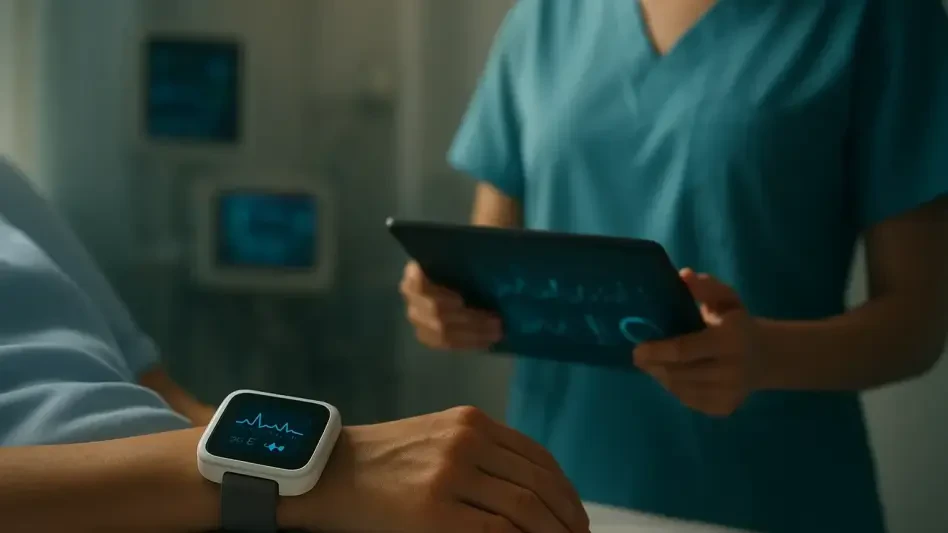
Clinical efficiency is often hindered by the manual collection of data and the constant noise of traditional paging systems. The facility addressed these issues by deploying medical-grade wearables and ambient listening technology that automatically syncs with the electronic health record. This shift provides continuous monitoring of vitals without the need for frequent, manual interruptions. Consequently, the data collected is more accurate and comprehensive, allowing the care team to detect potential health changes much earlier than would be possible with intermittent manual checks.
The impact on the nursing staff has been particularly significant, with data showing a dramatic reduction in workload. By automating vitals collection, nursing assistants save approximately three to four hours per shift, which allows them to focus on more complex patient needs. Moreover, ambient technology captures and synthesizes dialogue during patient encounters to assist with documentation. This reduction in manual data entry mitigates burnout and ensures that the care team remains present and focused during every interaction. These efficiencies demonstrate how a data-driven approach can improve both staff satisfaction and patient outcomes.
How Does the Architectural Design Support Future Growth?
The rapid pace of technological change often renders hospital buildings obsolete within a few years of their construction. To prevent this, the facility features an “infrastructure first” architectural design that utilizes flexible wall structures and easily accessible connectivity equipment. This modular approach ensures that as artificial intelligence and automation continue to evolve from 2026 toward the end of the decade, the building can integrate new hardware without requiring major structural renovations. The facility is essentially a platform that is designed to learn and adapt over time.
This focus on scalability allows the hospital to remain at the forefront of medical innovation without the typical costs of retrofitting. By avoiding the constraints of legacy systems, the site can rapidly deploy upgraded sensors, advanced cameras, and new communication tools. This foresight ensures that the facility remains a state-of-the-art center for care for many years. The architectural philosophy prioritizes long-term utility, ensuring that the physical space never becomes a bottleneck for the implementation of life-saving digital advancements.
Recap
The hospital serves as a definitive model for the next generation of healthcare delivery by prioritizing purposeful innovation and clinical efficiency. Through the use of ambient listening and automated monitoring, the facility successfully reclaims hours of time for staff, redirecting that energy toward direct patient care. The integration of hospitality-focused amenities and digital transparency ensures that patients remain empowered and informed throughout their stay. These elements work together to create a safer and more responsive environment for everyone within the building.
The strategic vision behind the facility emphasizes that technology is most effective when it remains invisible yet impactful. By focusing on solving real-world clinical problems and maintaining a flexible physical infrastructure, the organization sets a standard that other health systems look to emulate. The lessons learned here demonstrate that a smart hospital is not defined by its gadgets, but by its ability to foster stronger human connections and better health outcomes. This approach provides a clear roadmap for the evolution of the medical industry over the coming years.
Final Thoughts
The development of this facility represented a significant shift in how healthcare providers approached the integration of digital tools and physical space. By centering the design on the specific needs of the clinician and the patient, the organization proved that technology could actually enhance the human experience rather than detract from it. The initiative successfully reduced the administrative burdens that previously plagued the workforce, leading to a more engaged and satisfied staff. As the facility matured, it became clear that the true value of innovation lay in its ability to facilitate more face-to-face interaction at the bedside.
As the industry moves forward, the success of this project suggested that future investments must prioritize scalability and flexibility. Organizations that seek to replicate these results should consider how their own infrastructures might support the rapid adoption of AI and remote monitoring tools. Building for the future required a departure from traditional thinking and a commitment to long-term adaptability. The legacy of this hospital resided in its role as a living laboratory, proving that a more efficient, safe, and human-centric healthcare system was entirely achievable through thoughtful design.