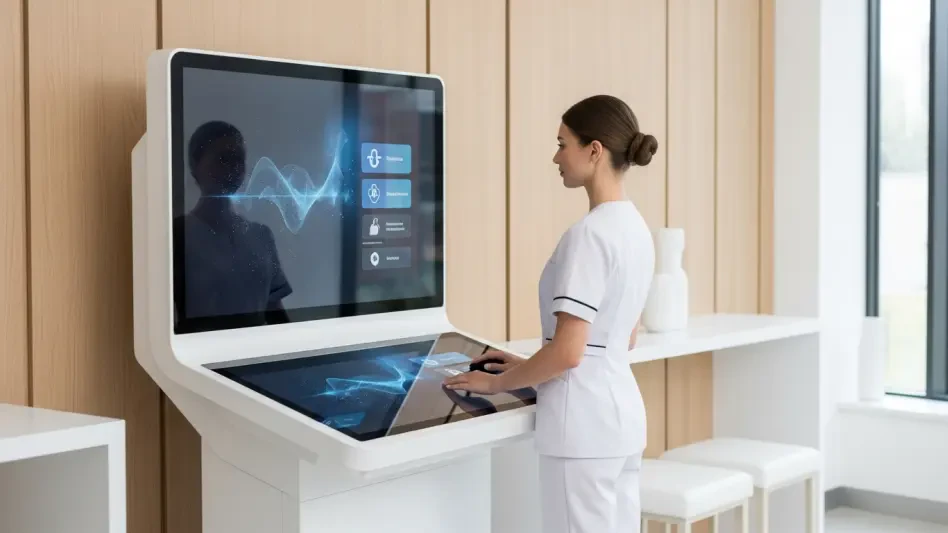

South Korea stands at a critical juncture where the rapid graying of its population coincides with a deepening divide in medical access between bustling metropolises and quiet rural villages. To address these systemic pressures, the government has officially unveiled the AI Basic Healthcare Strategy, a comprehensive policy framework designed to modernize the national medical landscape. This initiative serves as a strategic blueprint for embedding artificial intelligence into the core of public health services, ensuring that technological advancements do not remain confined to elite private hospitals in Seoul. By prioritizing digital transformation, policymakers aim to democratize high-quality diagnostic and treatment capabilities, offering a lifeline to underserved communities facing a shortage of specialized practitioners. As the country grapples with one of the fastest-aging demographics in the world, this strategy represents a necessary evolution in how the state fulfills its obligation to protect the health and well-being of all its citizens regardless of their geographic location.
Modernizing the National Medical Infrastructure
Building the Public Healthcare AI Highway: A Unified Network
The “Public Healthcare AI Highway” represents the centerpiece of the national digital infrastructure, designed to bridge the gap between primary health centers and large regional medical hubs. By establishing a shared digital network, the government allows smaller, resource-constrained facilities to tap into sophisticated artificial intelligence algorithms that were previously only available to major academic institutions. This initiative is currently rolling out several pilot programs across the country, with the explicit goal of extending coverage to all 72 regional medical institutions by 2029. Such a centralized framework ensures that a patient residing in a remote mountain village can receive the same level of diagnostic precision as an individual in the heart of the capital. Furthermore, this network facilitates the seamless transfer of medical records and imaging data, reducing the need for redundant testing and ensuring that specialists can provide consultation services remotely without the logistical hurdles of physical travel or data silos.
Optimizing Emergency Response: Reducing the ER Ping-Pong Effect
A critical challenge within the current system is the phenomenon known as “ER ping-pong,” where ambulances are forced to visit multiple hospitals because emergency rooms lack the capacity or specific staff to treat a patient. To mitigate this life-threatening inefficiency, the government is expanding the Emergency Integrated AI Platform to provide paramedics with real-time, data-driven insights. While in transit, emergency responders can utilize AI tools to analyze a patient’s vital signs and match their specific clinical needs with the current availability of hospital beds and specialized doctors. This system effectively transforms the ambulance into an extension of the hospital, allowing for early intervention and more informed triage decisions before the patient even reaches the door. By optimizing the allocation of emergency resources, the platform aims to drastically reduce wait times and improve survival rates for critical conditions such as strokes or cardiac arrests, which require immediate medical attention.
Strengthening Care in Vulnerable Sectors
Empowering Rural Clinics: Intelligent Automation for Outreach
In rural areas where the distance to the nearest specialist can be a significant barrier to care, the deployment of packaged AI solutions is becoming a cornerstone of medical outreach. These tools are specifically tailored to support visiting nurses and local practitioners who manage the health of elderly residents in isolated islands or mountainous regions. The AI software assists by automatically generating detailed medical records from patient interactions and providing preliminary interpretations of diagnostic images, such as chest X-rays or skin scans. This level of automation allows a single nurse to monitor a larger number of patients more effectively while ensuring that any anomalies are flagged for immediate review by an off-site physician. By integrating these intelligent tools into the daily workflow of rural clinics, the government is creating a safety net for vulnerable populations, ensuring that geographic isolation no longer translates to medical neglect or delayed treatment for chronic illnesses.
Reforming Compensation Models: Incentivizing Operational Efficiency
To ensure the long-term viability of this technological shift, South Korea is fundamentally reimagining the reimbursement models for medical providers who adopt artificial intelligence. Traditional payment systems, which often focus on the quantity of tests performed, are being replaced with a model that prioritizes overall operational efficiency and patient outcomes. Hospitals and small clinics that successfully integrate AI to reduce the administrative burden on their staff or to enhance the accuracy of their diagnoses are eligible for enhanced financial compensation. This is particularly vital for pediatric and women’s health clinics in rural areas, where a voucher program has been introduced to help cover the costs of acquiring advanced diagnostic software. By making the AI market more profitable for developers and more accessible for healthcare providers, this strategy incentivizes the continuous improvement of medical services. It alleviates the burnout of healthcare professionals while fostering a more resilient health ecosystem.
Overcoming Structural and Legal Hurdles
Navigating the Legislative Stalemate: The Telemedicine Conflict
Despite the clear technological potential of these AI-driven systems, the broader implementation of the national strategy remains hindered by a protracted legal stalemate concerning the regulation of telemedicine. The tension between the medical community, which expresses concerns over patient safety and liability, and the technology sector, which advocates for rapid innovation, has created a regulatory vacuum. Specifically, disputes over whether first-time patients should be permitted to use remote consultation services have stalled the passage of definitive legislation that would provide a clear framework for long-term operations. Without a stable legal environment, many healthcare providers are hesitant to fully commit to digital platforms, fearing sudden changes in policy or legal repercussions. This legislative gridlock acts as a significant bottleneck, preventing the full integration of remote monitoring tools that are essential for managing the health of the elderly and those living in underserved regions where physical access is limited.
Integrating Comprehensive DatPathways Toward System Sustainability
The success of the proposed AI Highway was intrinsically linked to the consistent availability of high-quality, real-time patient data, which was most efficiently gathered through remote monitoring services. When restrictions on remote healthcare persisted, AI algorithms lacked the diverse datasets necessary to refine their predictive capabilities and monitor the progression of chronic diseases accurately. Stakeholders recognized that a lack of comprehensive data integration meant the vision of a proactive healthcare system would remain an aspirational goal rather than a functional reality. Moving forward, it was imperative for the government to finalize a legislative framework that protected patient privacy while encouraging technical experimentation. Actionable steps involved the creation of a cross-industry regulatory body to mediate conflicts between tech developers and traditional medical associations. By establishing these clear guidelines and prioritizing a compromise on telemedicine, the state ensured that the digital transformation served the entire population effectively.