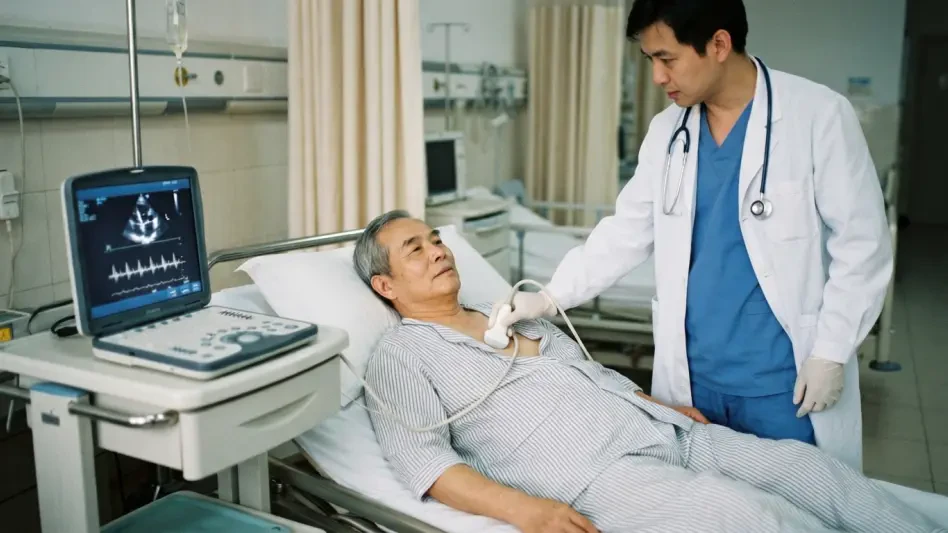

The detection of heart failure with preserved ejection fraction is often hindered by the fact that its symptoms, such as exertion-based breathlessness, mirror the baseline manifestations of severe COPD. In many cases, these overlapping clinical signs create a diagnostic “perfect storm” that obscures the presence of underlying cardiac dysfunction, particularly when chronic obstructive pulmonary disease has progressed to a state of chronic hypercapnia. As carbon dioxide levels rise, the physiological distinction between respiratory failure and heart failure becomes increasingly blurred, leading to a significant number of patients living with undiagnosed heart failure with preserved ejection fraction (HFpEF). Because these patients do not receive the targeted cardiac therapies they desperately need, their prognosis remains poor compared to those with isolated lung disease. The challenge is so pervasive in 2026 that researchers are looking beyond traditional diagnostic tools, turning instead to advanced computational models to identify the subtle signatures of heart failure within the noise of severe lung disease. By analyzing large sets of routine clinical data, these new machine learning frameworks are designed to spot specific patterns that would otherwise be invisible to even the most experienced clinicians, offering a potential lifeline to a vulnerable patient population that has long been difficult to manage effectively.
The Challenges: Why Conventional Diagnostic Methods Falter
Traditional methods for identifying heart failure often reach their breaking point when applied to patients with severe respiratory conditions like COPD. One of the primary obstacles is the physical impact of lung disease on the body’s internal structure; as the lungs become hyperinflated and the chest cavity changes shape, it creates what clinicians call “poor acoustic windows.” This physical distortion significantly degrades the quality of transthoracic echocardiography, which is the standard imaging tool used to assess heart function. In many hypercapnic patients, the ultrasound waves simply cannot provide a clear enough picture to accurately measure left ventricular filling pressures or structural remodeling. Without these precise measurements, doctors are left guessing whether a patient’s worsening breathlessness is due to their lungs, their heart, or a complex combination of both. This diagnostic fog often leads to delayed treatment and increased hospital readmission rates, as the underlying cardiac issue continues to worsen while the focus remains solely on respiratory management.
Furthermore, the biomarkers that doctors usually rely on to screen for heart failure, such as B-type natriuretic peptide (BNP) or its precursor NT-proBNP, lose their diagnostic precision in the presence of advanced lung disease. Chronic alveolar hypoxia and high carbon dioxide levels in hypercapnic COPD patients trigger significant pulmonary vasoconstriction, which naturally increases the workload on the right side of the heart. This added stress can cause natriuretic peptide levels to spike even when the left ventricle—the side typically associated with HFpEF—is functioning adequately. Because these standard thresholds are so easily skewed by respiratory failure, clinicians often face a high number of false positives that complicate the decision-making process. The inadequacy of single-variable markers underscores the urgent need for a more comprehensive approach that can account for the intricate interactions between the heart and lungs, rather than relying on tools that were never designed to handle the complexity of severe cardiopulmonary overlap.
Model Construction: Developing a Multidimensional Clinical Framework
To address these systemic diagnostic failures, researchers at Panzhihua Central Hospital initiated a detailed study involving 441 patients with hypercapnic COPD to train a series of supervised machine learning models. The study used the rigorous HFA-PEFF diagnostic algorithm as the “ground truth” to determine which patients truly had concurrent heart failure, providing a reliable baseline for the algorithms to learn from. By incorporating 16 distinct variables—including demographic information, arterial blood gas results, spirometry lung function tests, and specific echocardiographic markers—the researchers created a multidimensional dataset that captured the full clinical profile of each individual. This holistic approach was essential because it allowed the models to move beyond the limitations of isolated tests, instead focusing on the complex “big picture” of the patient’s physiology. By training the AI on such a diverse range of data, the researchers aimed to create a tool that could navigate the nonlinear relationship between lung impairment and heart health.
A major technical hurdle during the development phase was the inherent class imbalance of the study group, as the number of patients without heart failure significantly outnumbered those with the condition. To prevent the models from becoming biased toward the majority group, the team employed a specialized technique known as Random Over-Sampling Examples (ROSE). This method utilizes smoothed bootstrap kernel density estimation to generate synthetic examples of the minority class, effectively balancing the dataset without the risk of “data leakage” that often occurs with simpler oversampling methods. This ensured that the machine learning architectures could learn the specific nuances and subtle patterns of HFpEF with the same level of detail as the more common non-HFpEF cases. By refining the training data in this way, the researchers ensured that the resulting models were robust and capable of high-level performance across a wide range of patient profiles, setting a new standard for how AI can be applied to complex medical diagnosis in 2026.
Comparative Performance: The Superiority of Random Forest Architectures
The investigation compared five different machine learning architectures to determine which could most accurately detect hidden heart failure in this complicated patient group. The results highlighted a clear hierarchy in performance, with the Random Forest (RF) model emerging as the most effective tool, achieving an area under the receiver operating characteristic curve (AUC) of 0.940. This high level of accuracy demonstrated that the RF model was exceptionally consistent at distinguishing between isolated COPD and concurrent HFpEF. In contrast, simpler models like standard Logistic Regression performed significantly worse, recording an AUC of only 0.642. This disparity suggests that the physiological interactions between hypercapnic lungs and a failing heart are far too complex for linear modeling to capture, requiring the advanced, tree-based logic of ensemble methods to navigate the intricate web of clinical variables.
One of the most revealing aspects of the study was a “sensitivity ablation analysis,” where the researchers intentionally removed the most prominent cardiac markers, such as NT-proBNP and the E/e’ ratio, from the input data. Surprisingly, even when forced to rely only on respiratory data and demographic information, the Random Forest model maintained a high degree of accuracy with an AUC of 0.846. This finding is particularly significant because it proves the algorithm was not simply acting as a digital shortcut for existing blood tests or ultrasound measurements. Instead, the AI was identifying deeper, previously unrecognized patterns in how lung function and blood gas levels interact with cardiac health. This suggests that the model can serve as a vital safety net in clinical settings where advanced imaging or specialized biomarkers might not be immediately available, providing a reliable diagnostic signal based on routinely collected respiratory data alone.
Model Interpretability: Visualizing Clinical Logic with SHAP Analysis
In an effort to move away from the traditional “black box” reputation of artificial intelligence, the research team utilized SHapley Additive exPlanations (SHAP) to provide a clear window into how the models reached their conclusions. This tool allows clinicians to see the exact weight and influence each variable has on a specific patient’s risk score, making the AI’s logic transparent and medically justifiable. By quantifying the contribution of factors like airway obstruction (FEV1%) and arterial carbon dioxide tension (PaCO2), the SHAP analysis bridges the gap between complex computational math and the daily reality of clinical practice. This transparency is crucial for the adoption of such technologies in 2026, as it gives doctors the confidence to integrate AI recommendations into their treatment plans, knowing that the model is prioritizing the most relevant physiological indicators rather than hidden, irrelevant correlations.
The interpretability analysis also uncovered fascinating bivariate interactions that offer new insights into the “why” behind heart failure risk in COPD patients. For example, the data showed that the risk of HFpEF increased dramatically when high carbon dioxide levels were paired with a high Body Mass Index (BMI). This mathematical synergy points toward the existence of an “obesity-hypoventilation” profile, where the mechanical burden of excess weight and the chemical burden of respiratory failure combine to place an extraordinary, nonlinear stress on the heart. These types of insights allow clinicians to look at their patients through a more nuanced lens, recognizing that a patient with a specific combination of factors may be at much higher risk than their individual test scores might suggest. By highlighting these critical interactions, the machine learning framework does more than just diagnose; it helps define the underlying mechanisms of the disease for each individual patient.
Prognostic Phenotyping: Categorizing Patients for Better Survival Outcomes
The research extended beyond simple diagnosis to explore the diversity of the patient population through unsupervised learning and K-means consensus clustering. This approach allowed the researchers to identify three distinct clinical sub-phenotypes among the hypercapnic COPD group, each with its own unique risk profile and physiological characteristics. Phenotype 1 represented the least severe group, characterized by mild hypercapnia and lower body weight, while Phenotype 2 was defined by the obesity-hypoventilation profile mentioned earlier. Phenotype 3 was the most critical category, featuring patients with extreme elevations in cardiac biomarkers and significant dysfunction, even in cases where they did not have the high BMI seen in the second group. This classification system allows for a much more personalized approach to care, ensuring that the most intensive interventions are reserved for the patients who fall into the highest-risk categories.
The real-world importance of these phenotypes was confirmed through long-term survival tracking and multivariable Cox proportional hazards modeling. The analysis revealed that patients classified into Phenotype 3 faced a 3.20-fold increase in the hazard of adverse clinical outcomes, such as death or rehospitalization, compared to those in the more stable Phenotype 1. Even after adjusting for factors like age, smoking history, and the severity of airflow limitation, these machine-learned clusters remained powerful predictors of a patient’s future health. This confirms that the AI provides “additive prognostic value,” offering a window into the patient’s long-term outlook that traditional lung function tests alone simply cannot provide. By identifying these high-risk clusters early, healthcare providers can implement more aggressive monitoring and cardiac-focused therapies, potentially altering the trajectory of the disease and improving survival rates for those in the most dangerous categories.
Strategic Evolution: Navigating Towards Clinical Integration
The research conducted at Panzhihua Central Hospital established a new benchmark for the application of ensemble machine learning in the field of cardiopulmonary medicine. By achieving a high degree of diagnostic accuracy and providing interpretable clinical logic, the study demonstrated that computational frameworks can effectively bridge the gap between respiratory and cardiovascular assessments. The methodology successfully addressed historical barriers such as poor imaging quality and biomarker unreliability, proving that an integrated, multivariable approach was superior to traditional single-metric testing. Furthermore, the identification of distinct patient phenotypes provided a clear roadmap for more personalized treatment strategies, ensuring that clinicians could better allocate resources to those at the highest risk of adverse events. These findings showed that the integration of AI into the diagnostic pipeline was not just a theoretical improvement, but a practical necessity for managing the complexities of advanced COPD.
Looking forward, the transition of this technology from a research setting to a daily clinical tool required a focus on broader validation and multicenter testing to ensure its reliability across different populations. While the initial results were statistically significant, the reliance on a single-center cohort highlighted the need for prospective trials that could account for geographic and demographic variations in patient health. The path forward involved expanding the dataset to include diverse medical environments, which helped refine the models and reduce the risk of institutional overfitting. By building on the foundation of the Random Forest and SHAP analyses, the medical community moved closer to an automated triage system that could support specialists in real time. This evolution underscored the importance of continuous technical refinement and the necessity of maintaining a transparent, evidence-based approach as these advanced diagnostic tools became an essential part of integrated care for patients with complex cardiopulmonary diseases.