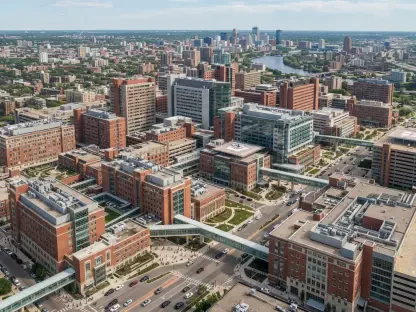

The construction of new treatment facilities in Bunia and Goma remains a top priority for infrastructure teams working to stay ahead of the virus’s geographical spread. This mission takes on renewed urgency as the Democratic Republic of the Congo grapples with a compounding humanitarian disaster, with the Ebola virus now confirmed in its eighth province. The expansion occurs within a region already devastated by long-standing conflict, mass displacement, and systemic poverty, creating an environment where health interventions cannot succeed in isolation. As the virus infiltrates new communities, it triggers a feedback loop of misery: the disease disrupts local markets and traditional livelihoods, making it nearly impossible for affected households to secure food while adhering to strict isolation protocols. This intersection of public health and food insecurity forces families into impossible choices between the risk of spreading a deadly virus and the certainty of starvation for their children and elders.
Integrating Nutrition: A Strategy for Stability
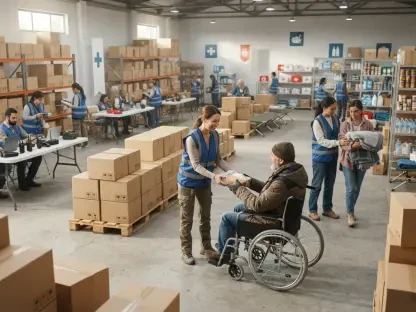
The World Food Programme has implemented a strategic intervention based on the foundational principle that food security is a prerequisite for any successful medical containment effort. By providing hot meals to patients within treatment centers and dry rations to their families at home, the organization creates a comprehensive support system that addresses immediate nutritional needs. This assistance serves a vital dual purpose; it meets the caloric requirements of vulnerable populations and acts as a significant incentive for individuals to comply with health guidance. When families are assured that their next meal is guaranteed, the pressure to travel or engage in high-risk economic activities in search of sustenance is dramatically reduced. This stability allows infected or exposed individuals to remain in quarantine, thereby severing the chains of transmission that would otherwise allow the virus to flourish in crowded urban centers and remote rural villages alike.
The scale of the hunger crisis across the impacted regions remains staggering, with data indicating that nearly 3.5 million people are currently facing crisis-level food insecurity or worse. Within the specific subset of the population directly touched by the Ebola outbreak, a remarkable 97 percent of individuals require external food assistance to survive the duration of the crisis. To meet this demand, the multi-faceted response has already facilitated the delivery of over 744,000 hot meals across 59 treatment and isolation facilities. Furthermore, more than 3,000 metric tons of food have been distributed to the relatives of those receiving medical care. Looking forward, the operational plan for the next six months focuses on providing dry rations to over half a million relatives and suspected cases, ensuring that domestic stability is maintained throughout the recovery period and preventing the socio-economic collapse of fragile communities.
Logistics: Strengthening the Operational Backbone
Beyond the direct delivery of nutritional support, the response serves as the logistical engine for the entire international community operating within the Democratic Republic of the Congo. Through the management of a sophisticated supply chain network, a major Forward Logistics Base has been established in Isiro, supported by nine smaller mini-bases strategically scattered throughout the Ituri and Haut-Uélé provinces. These hubs are essential for the storage, handling, and critical last-mile delivery of life-saving medical supplies and personal protective equipment. To date, this logistics cluster has managed over 3,417 metric tons of humanitarian cargo for more than 40 different partner organizations. By utilizing a combination of air and road transport, the operation ensures that medicines reach frontline workers even in areas where traditional infrastructure has crumbled, providing the necessary tools for doctors and nurses to perform their duties safely and effectively.
In a country where road networks are frequently non-existent or rendered impassable by seasonal weather and localized conflict, the United Nations Humanitarian Air Service plays a non-negotiable role in the containment strategy. Having conducted over 1,250 flights, the service has transported more than 10,000 frontline responders and nearly 500 metric tons of essential cargo to the heart of the outbreak. As the virus moves into previously unaffected territories, reconnaissance flights are being conducted to assess access to remote zones such as Bole-Bole and Biakato. These aerial evaluations are vital for determining whether health teams can safely reach emerging hotspots before the virus establishes a foothold. Additionally, specialized engineering teams have demonstrated remarkable speed by constructing Ebola Treatment Centres in less than two months, overcoming the challenges of heavy rains to provide the physical infrastructure needed for modern isolation and care.
Funding: Addressing the Resource Shortfall
Despite the robust nature of these integrated efforts, the entire containment operation is currently threatened by a significant funding shortfall that could derail progress. An estimated $214 million is required over the coming six months to sustain the current level of food assistance, logistics, and infrastructure development. This budget is carefully divided between direct nutritional support and the specialized air and engineering services that allow medical teams to function in high-risk environments. The organization warns that without timely and flexible funding, the logistical pipeline will eventually stall, leading to a breakdown in the transport of medical personnel and a halt in food deliveries to quarantined families. In a region where misinformation and mistrust can hamper medical interventions, the reliable and consistent presence of food aid helps build the community trust necessary to bring the outbreak under control and ensure cooperation.
The international community recognized that halting the spread of Ebola required a shift in focus toward the systemic vulnerabilities that allowed the virus to thrive in the first place. Donors and regional leaders identified that medical treatment alone was insufficient without a foundation of food security and logistical resilience. To ensure long-term stability, stakeholders prioritized the integration of nutritional support into every level of the health response, moving away from fragmented aid models. Future interventions leaned on the development of permanent logistics hubs and the training of local engineering teams to maintain health infrastructure beyond the immediate crisis. By securing the necessary capital and technical resources, the global response moved toward a model that empowered local communities to manage both health and economic shocks. This approach transformed the containment strategy from a reactive medical mission into a proactive program of regional fortification.