
A primary learning objective of the simulation was for students to recognize the limits of their own professional expertise and seek help from other specialized fields. On October 10, 2026, the University of Texas at Arlington hosted an expansive Interprofessional Education disaster simulation that effectively shattered the traditional boundaries of academic training. By gathering participants from the School of Social Work, the College of Nursing and Health Innovation, and the Texas Tech University Health Sciences Center, the university created a high-stakes environment where theoretical knowledge met the chaotic reality of a tornado emergency. This large-scale exercise moved beyond the sterile confines of lecture halls, forcing future healthcare and social service professionals to manage complex shelter operations under intense pressure. The event served as a critical reminder that in the wake of a catastrophe, no single professional can operate in a vacuum without compromising safety or victim care.
Breaking Professional Silos: The Power of Collaborative Learning
The fundamental philosophy driving this initiative was the intentional dismantling of the professional silos that frequently hinder effective emergency response. Organizers established interprofessional tables where students from pharmacy, nursing, public health, and social work were required to coordinate their actions in real time. This structural choice highlighted the reality that a medical assessment is only one component of a successful recovery effort. For instance, nursing students gained a deeper understanding of the necessity for mass feeding and mental health support, while social work participants learned the intricacies of pharmaceutical logistics and rapid triage. Tracy Orwig, the UTA School of Social Work Director of Interprofessional Education, emphasized that the simulation aimed to prove that collective success depends on mutual respect and shared data. This integrated approach ensures that when these students enter the workforce, they possess a holistic view of the care continuum.
The simulation was meticulously structured into two distinct phases to mirror the escalating nature of a real-world disaster. The first phase focused on immediate crisis response, thrusting students into a scenario where they faced a sudden flood of simulated victims suffering from various injuries. This stage required rapid medical interventions and quick decision-making, testing the participants’ ability to remain calm amidst the surrounding chaos. The environment was designed to be deliberately overwhelming, forcing students to prioritize care while communicating vital information to their peers across different disciplines. This trial by fire illustrated that technical proficiency is insufficient without the ability to function as part of a synchronized team. By confronting the physiological and psychological stresses of an emergency early in their education, students developed the grit necessary to handle the opening moments of a disaster where every second counts.
Operational Logistics: From Crisis to Long-Term Stabilization
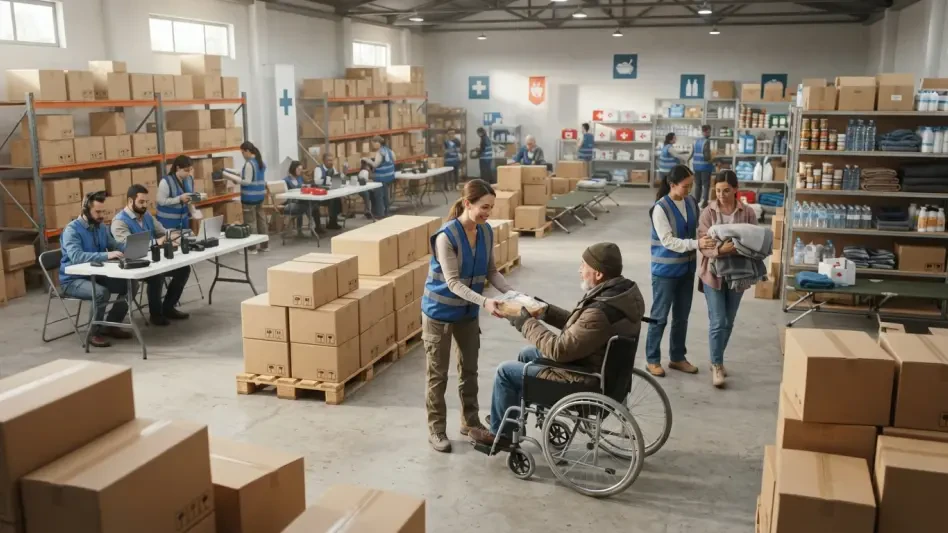
Once the initial medical emergencies were addressed, the simulation transitioned into the second phase, which concentrated on the complexities of shelter operations. This shift moved the focus from immediate trauma care toward long-term stabilization and resource management. Students were assigned to manage various functional stations, including communication hubs, logistics centers, and medical oversight units. This phase emphasized that the survival of a community in the days following a disaster depends on the organized distribution of essential supplies and the strategic deployment of personnel. Participants had to grapple with the reality of finite resources, learning how to manage the needs of a displaced population while maintaining order and safety. By simulating these extended operations, the university provided a comprehensive view of the disaster lifecycle, showing that the work of a responder continues long after the initial storm has passed to ensure a safe recovery.
Central to the success of the shelter phase was the integration of trauma-informed engagement and disability-inclusive practices. Students were tasked with recognizing that survivors often carry invisible psychological wounds that require just as much attention as physical trauma. To add another layer of realism, the Movin’ Mavs Wheelchair Basketball team participated in the exercise, challenging students to ensure that shelter resources were fully accessible to individuals with mobility issues. This inclusion was not merely a logistical hurdle but a vital lesson in equity; it forced students to rethink their approach to facility design and resource allocation in real time. The participation of the athletes highlighted the gaps in standard emergency protocols that often overlook the specific needs of vulnerable populations. By addressing these challenges now, future responders learned that true professional competence involves advocating for an inclusive response that leaves no community member behind.
Fostering Leadership: Bridging Education and Professional Growth
The comprehensive nature of the IPE simulation served as a bridge between classroom theory and the demanding realities of professional practice. Many participants, including social work student Patrick Williams, observed that the experience fostered a sense of intellectual humility. Students learned the value of active listening, discovering that the most effective leaders are those who know when to defer to the expertise of others. This realization is often difficult to teach in a traditional academic setting where students are conditioned to focus solely on their own field of study. By stepping out of their comfort zones, they gained a nuanced perspective on how their specific roles fit into a larger humanitarian machine. The exercise cultivated a sense of shared responsibility and reinforced the idea that professional identity is strengthened, not diluted, by collaboration. This shift in mindset is essential for modern graduates who will navigate complex social and medical landscapes.
The disaster simulation at the University of Texas at Arlington successfully provided a roadmap for future interprofessional education. It moved students beyond technical skills by fostering the adaptability required for real-world crises. To build on this momentum, academic institutions should consider integrating similar large-scale simulations into their core curricula every year, ensuring that collaborative training becomes a standard rather than an exception. Moving forward, educators could incorporate more advanced technologies, such as wearable health monitors or real-time digital tracking systems, to further enhance the realism of these exercises. The event demonstrated that the path to resilient communities lies in the early development of mutual respect among diverse professional groups. By prioritizing these collaborative strategies, the university prepared its graduates to act as cohesive units capable of restoring stability. Ultimately, the lessons learned in this environment established a foundation for life-saving advocacy.