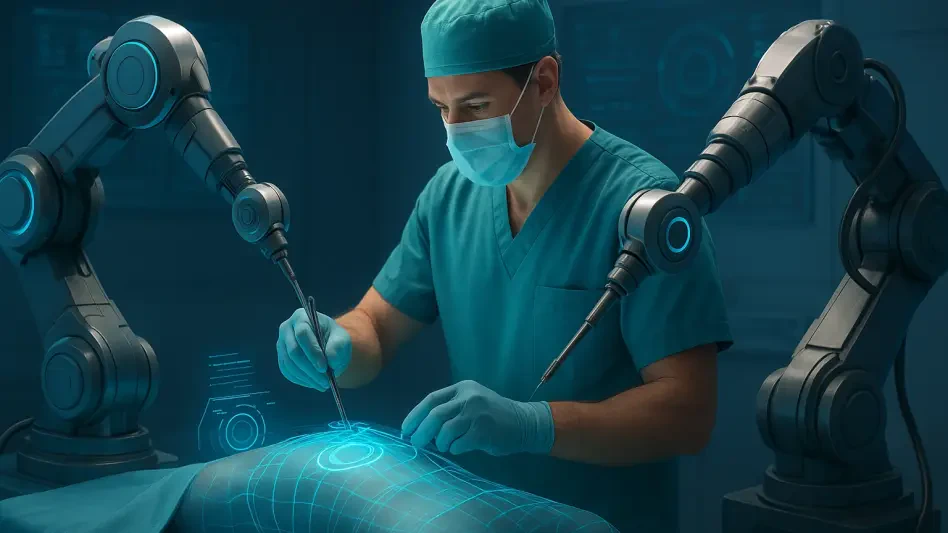

A strategic partnership with the Faculty of Veterinary Sciences allows surgeons to gain haptic familiarity through advanced training using porcine models in Villeta. This collaborative effort underpins the newly inaugurated CER Training Center at the Universidad Católica Nuestra Señora de la Asunción, marking a transformative shift in the medical landscape of Paraguay. The facility serves as the first dedicated environment in the country for mastering robotic-assisted surgical systems, moving the national focus from simple equipment procurement toward the systematic cultivation of specialized human capital. By institutionalizing this form of education, the center ensures that experienced surgeons can transition into the digital age of medicine with precision and confidence. The primary goal is to standardize a high level of proficiency among specialists, thereby enhancing the safety and effectiveness of minimally invasive procedures across the national healthcare landscape while establishing a foundation.
Educational Advancement: Evolution of Training
Institutionalizing Advanced Medical Training
The curriculum developed for the CER Training Center represents a significant departure from the fragmented learning models that often accompany the introduction of new medical technologies. It is specifically designed for established specialists who already possess a solid foundation in laparoscopic techniques but require a distinct set of cognitive and motor skills to master robotic-assisted platforms effectively. This training follows a rigorous, multi-staged methodology that ensures maximum proficiency before a surgeon ever enters a human operating room. The process begins with ten hours of digital preparatory evaluations, which test theoretical knowledge and spatial reasoning. Following this, participants undergo an intensive three-day practical phase that includes virtual simulations designed to mimic high-stakes surgical scenarios. This structured pipeline ensures that by the time a surgeon interacts with a physical system, they have navigated hours of virtual challenges carefully.
Transitioning from Laparoscopy to Robotics
Mastering robotic platforms like the Revo-i or Versius requires more than just manual dexterity; it demands a total recalibration of how a surgeon perceives the operative field. Traditional laparoscopy provides a two-dimensional view, but robotic systems offer immersive three-dimensional visualization that requires unique spatial awareness and specialized depth perception. At the new center, the training environment is engineered to bridge this gap, allowing specialists to practice intricate maneuvers with anatomical models that replicate human tissue response. This focus on haptic feedback and spatial orientation is critical for procedures such as urological reconstructions or complex organ transplants where precision is measured in millimeters. By centralizing this education, Paraguay is creating a sustainable ecosystem of expertise. No longer is the use of such advanced technology dependent on individual initiative; instead, it is becoming an institutionalized standard that elevates the profession.
National Integration: Technological Impact
Strategic Partnerships and Global Cooperation
The establishment of this facility is the result of long-term international cooperation, most notably involving South Korea’s Meere Company and local partners like Droguepar. These collaborations have been essential in securing the hardware and the technical knowledge necessary to operate a world-class training site in Asunción. While robotic systems were previously available in select private institutions, such as Sanatorio Santa Bárbara and Sanatorio La Costa, the lack of a centralized educational framework meant that their full potential remained untapped for the broader population. The CER Training Center fills this critical void by providing a localized, formal curriculum that is accessible to a wider range of medical professionals. This synergy between global manufacturers and local academic institutions ensures that the technology is not merely an imported luxury but a well-integrated tool for progress. This collaborative model facilitates continuous updates to training protocols for surgeons.
Future Perspectives on Healthcare Accessibility
The expansion of robotic surgery training was designed to redefine the public health sector, with strategic discussions aimed at integrating the Instituto de Previsión Social into the center’s ecosystem. By granting public-sector surgeons access to this elite training, the Ministry of Industry and Commerce sought to democratize advanced healthcare, ensuring that life-saving technology was not restricted to private facilities. This initiative also served a broader economic purpose by positioning Asunción as a specialized hub for medical tourism within Latin America. The ability to offer high-tech surgical education and services created a competitive advantage that attracted patients and professionals from across the continent. Ultimately, the focus on streamlining complex urological systems and transplant procedures through robotic assistance was expected to improve recovery times and reduce long-term costs. This strategic shift successfully transitioned Paraguay into an active regional provider of expertise.