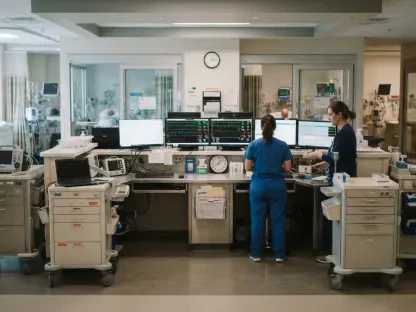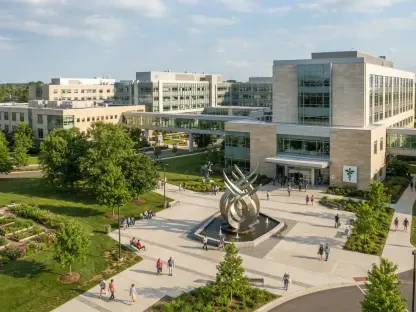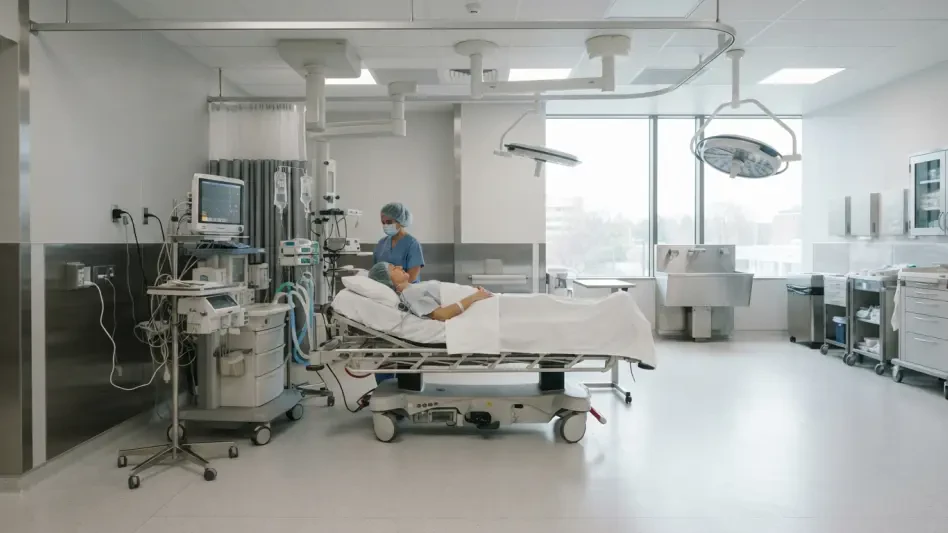

Advocating for physician-led management, Dr. Guertin utilizes his business education to navigate the complex financial and operational landscape of modern academic medicine. To understand the magnitude of this challenge, one must consider the delicate orchestration required in a facility like The Ohio State University Wexner Medical Center, where over one hundred operating rooms function simultaneously. Managing such a vast ecosystem is less about individual surgical skill and more about the synchronized rhythm of a global airline. Efficiency in this context is not merely a corporate metric; it is a life-saving necessity. When schedules are mismanaged, patients wait longer, staff burn out, and resources are squandered. Dr. Guertin has spent nearly four decades mastering these logistics, serving as the inaugural chief perioperative medical director. By applying rigorous business principles to clinical workflows, he has redefined how academic centers view the relationship between administrative strategy and patient outcomes, ensuring that every minute in the operating room is used to its fullest potential.
Refining Operational Efficiency in High-Stakes Environments
The Intersection of Logistics and Patient Care
A primary technical achievement in this operational overhaul was the development of the Comprehensive Peri-Anesthesia Systems and Solutions, known as ComPASS. This framework functions as a roadmap for surgical readiness, standardizing the myriad tasks that must occur before a patient even enters the operating room. By creating a unified protocol for patient preparation, the system reduces last-minute cancellations and ensures that surgical teams are equipped with all necessary data and resources well in advance of the procedure.
This shift toward standardization reflects a broader movement within healthcare to treat surgical episodes as integrated processes rather than isolated events. The implementation of ComPASS allowed for a higher degree of predictability in scheduling, which directly translated to a more stable environment for both medical staff and patients. By reducing the variability that often plagues large-scale medical operations, the system fostered a culture of reliability. This methodical approach proved that technical mastery in medicine extends far beyond the scalpel to the systems that support it.
Integrating Technological Solutions With Human Oversight
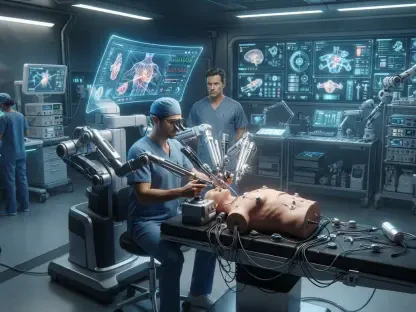
In the modern landscape of 2026, technology is often viewed as a panacea, yet its application requires a discerning eye to remain effective. Dr. Guertin famously likens artificial intelligence and advanced digital tools to power drills: they are incredibly efficient at driving progress, but if used without proper calibration, they risk stripping the screw and causing structural damage. This philosophy guides the center’s use of predictive analytics to forecast surgical case lengths with unprecedented accuracy. By leveraging historical data, these tools can identify patterns that human observation might miss, allowing for tighter scheduling and reduced wait times.
However, the human element remains the indispensable driver of this technology, ensuring that data insights are applied with clinical nuance. While AI can calculate the average time for a procedure, it cannot account for the unique complexities of an individual patient’s physiology or the sudden shifts in an emergency scenario. By maintaining this balance, the institution uses digital innovation to enhance human expertise rather than replace it. This synergy creates a dynamic where technology speeds up the workflow, while medical professionals provide the critical oversight necessary to maintain the highest standards of safety and care quality.
Cultivating the Next Generation of Medical Executives
Transitioning From Clinical Practice to Strategic Leadership
The transition from a full-time clinical role to an executive position was driven by a realization that systemic leadership could amplify an individual doctor’s impact. While a surgeon can help one patient at a time, a physician-leader can implement changes that improve care for thousands of individuals across an entire health system. This perspective led to the pursuit of an MBA, bridging the divide between the operating room and the boardroom. Today, this dual expertise is vital for navigating the economic pressures of healthcare, where clinical excellence must be balanced with fiscal responsibility to ensure the long-term sustainability of medical institutions.
Building on this foundation, the focus shifted toward empowering other clinicians to take on leadership roles through initiatives like the Faculty Leadership Institute and MD-MBA programs. These programs are designed to provide doctors with the financial literacy and organizational skills necessary to lead effectively in an increasingly complex industry. By formalizing this path, the center has created a pipeline of leaders who understand both the nuances of patient care and the mechanics of large-scale administration. This evolution ensures that the future of medical management is guided by those who have firsthand experience at the bedside.
Sustaining Excellence Through Philanthropy and Mentorship
Throughout this tenure, the commitment to professional development was mirrored by a deep focus on emotional intelligence and interpersonal dynamics. After receiving feedback on leadership styles, the decision to engage with executive coaching became a turning point, eventually leading to a pursuit of official coaching certification to mentor others. This journey emphasized that leadership was not a static skill set but a continuous process of self-refinement and listening. By adopting a coaching mindset, it became possible to help other physicians discover their own solutions, fostering a more collaborative and resilient healthcare culture that prioritized the well-being of the workforce.
Beyond the clinical and administrative achievements, a significant legacy was established through the founding of the nonprofit A Day Away, which provided terminally ill patients with meaningful family experiences. As retirement approached in late 2026, the focus shifted toward ensuring these philanthropic and mentorship efforts would continue to thrive under new leadership. The roadmap for future healthcare executives was defined by the necessity of balancing technical mastery with genuine compassion. This multifaceted career demonstrated that true innovation in medicine required a blend of operational precision, a dedication to community service, and a constant drive to elevate the next generation of medical professionals.