The pilot initiative launched in 2020 specifically addresses the healthcare workforce shortage by inspiring rural students to pursue professional degrees in medicine and therapy. This collaborative effort between Western University of Health Sciences and the MIKE Program serves as a powerful catalyst for community health transformation throughout Oregon. By connecting medical and physical therapy students with local youth, the initiative moves beyond traditional clinical boundaries to foster genuine health advocacy. In rural areas like Sweet Home, these mentors act as vital bridges, addressing educational gaps and unique healthcare challenges often overlooked in urban-centric models. University leadership views this engagement as a strategic tool that shapes future providers into civic leaders. Through hands-on leadership, graduate students from the Heatherington College of Osteopathic Medicine gain real-world experience that standard clinical rotations cannot replicate. This ensures that the next generation of doctors and therapists is equipped to handle the complexities of diverse social environments while promoting health literacy.
Bridging Gaps: Curriculum and Community Integration
Empowering Youth: Holistic Health Education
The curriculum for the MIKE Program is meticulously designed to align with Oregon Department of Education Health Standards while remaining flexible enough to address specific local needs. Rather than focusing solely on biology or basic anatomy, the framework encompasses a broader view of wellness including nutrition and physical exercise. By educating students on the physiological benefits of a healthy lifestyle, the program empowers rural youth to take charge of their own health outcomes. These lessons are not merely academic exercises; they are practical guides that students can share within their own households to improve family wellness. Mentors work closely with students to demystify complex medical topics, making the science of health accessible and engaging. This foundation is crucial for building a community that values preventative care and understands the long-term impacts of daily habits. By starting with the youth, the program creates a ripple effect of health consciousness that can eventually transform the entire public health landscape of the region.
In addition to physical health, the program places a significant emphasis on mental health awareness and psychological well-being. Mentors help students understand that mental health is a critical component of overall health, providing them with tools to recognize and address psychological challenges. This holistic approach ensures that students are not just physically fit but also emotionally resilient. By discussing these topics openly, the program reduces the stigma often associated with mental health issues in rural communities. Students learn to advocate for their own well-being and support their peers, creating a safer and more informed school environment. This focus on the whole person aligns with the osteopathic philosophy of treating the mind, body, and spirit. As these young people grow, they carry this integrated understanding of health into adulthood, fostering a more compassionate and health-literate society. The program thus serves as a long-term investment in the community’s social fabric, ensuring that the next generation is better prepared to face modern life’s stressors.
Social Determinants: Navigating Environmental Factors
A critical component of the mentorship involves helping students understand the environmental and social factors that influence community wellness. Mentors guide youth through the complexities of social determinants, explaining how geography and resource access impact long-term health outcomes. In rural areas, factors such as limited transportation, fewer grocery stores with fresh produce, and a scarcity of specialized medical facilities play a major role in population health. By identifying these barriers, students begin to see health not just as a personal choice but as a product of their surroundings. This awareness is the first step toward advocacy and community-led change. Mentors use local examples to make these abstract concepts tangible, encouraging students to think critically about how their town could be improved to support better health for all residents. This educational pillar transforms students from passive recipients of healthcare into active participants in their community’s development, providing them with the analytical tools to address systemic issues effectively.
The collaborative triad—comprising medical mentors, local teachers, and students—ensures that the lessons are culturally relevant and integrated into the daily lives of the participants. Teachers at partner schools work alongside the mentors to weave these health lessons into existing classroom structures, ensuring the content resonates with the students’ specific cultural contexts. This integration is vital for building a sustainable foundation for community-wide health improvements. By working together, the mentors and educators create a cohesive learning environment where students feel supported and understood. This partnership also allows the program to adapt to the unique challenges of each school year, ensuring that the information remains timely and impactful. The mentors provide the specialized medical knowledge, while the teachers offer pedagogical expertise and a deep understanding of their students’ backgrounds. This synergy maximizes the program’s effectiveness, making health literacy a shared goal that transcends the classroom and becomes a cornerstone of the local community’s identity and future growth.
Practical Leadership: Professional Inspiration
Clinical Simulation: Empathy in Physical Therapy
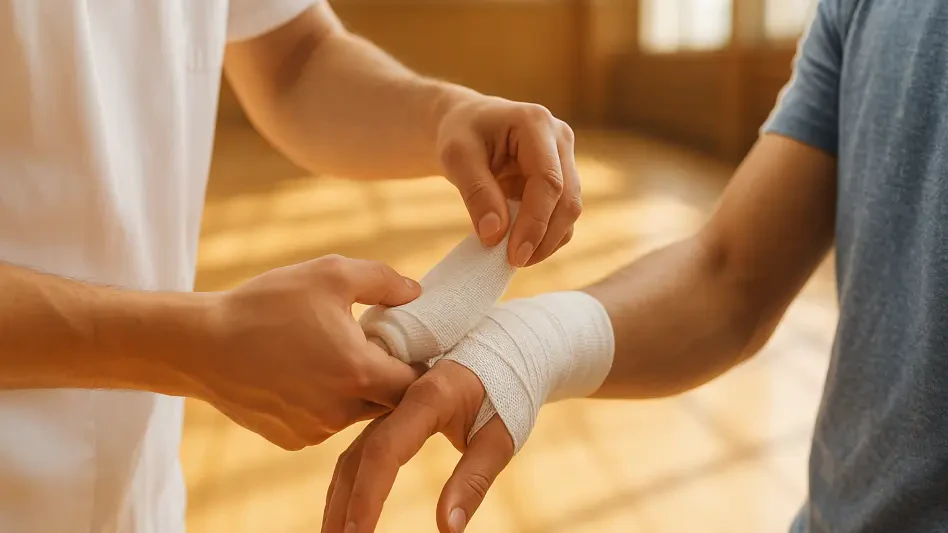
Hands-on activities, such as the ‘impairment creating’ simulations, allow high schoolers to experience physical restrictions firsthand, fostering deep empathy for those living with disabilities. In these sessions, students might have popsicle sticks taped to their fingers to simulate limited dexterity or use other tools to mimic visual or mobility impairments. These interactive experiences provide a platform for physical therapy students to demonstrate the broad scope of their profession, moving the conversation far beyond simple injury treatment. By feeling the frustration and challenges of physical limitations, students develop a more profound respect for the resilience of individuals with disabilities. This simulation-based learning makes complex medical and rehabilitative concepts tangible and accessible to a younger audience. It transforms abstract theories into lived experiences, which is often much more effective than traditional lecturing. For many students, these activities are the highlight of the program, offering a fun yet educational way to learn about the human body.
Beyond fostering empathy, these simulations spark curiosity in students who might never have considered a career in rehabilitation sciences or physical therapy. Seeing the direct impact of therapeutic interventions and understanding the science behind mobility can be a turning point for a young person’s career aspirations. Mentors use these moments to explain the various pathways available within the healthcare field, showing that there are many ways to help others besides becoming a doctor. This exposure is particularly important in rural areas where students may have limited contact with specialized health professionals. By making the profession visible and approachable, the program helps to diversify the future healthcare workforce. Students begin to see themselves in these roles, realizing that their own experiences and empathy could make them excellent therapists or medical providers. The interactive nature of the program ensures that these lessons stick, providing a lasting impression that can guide a student’s educational choices throughout high school and into their college years.
Workforce Pipeline: Opportunities for Rural Areas
By organizing campus tours and facilitating regular high school visits, the program demystifies the path to a medical career for rural students. These interactions bridge the gap between distant academic institutions and local communities, making a healthcare education feel attainable rather than out of reach. For many students in rural Oregon, the idea of attending a medical university can seem like a distant dream, but seeing the facilities and meeting current students makes the goal concrete. Mentors provide practical advice on college applications, prerequisite courses, and the daily realities of medical school life. This transparency helps to lower the barriers to entry for students from underrepresented backgrounds. By bringing the university to the community, and vice-versa, the program builds a pipeline that encourages local talent to stay in the region or return after their studies. This strategy is essential for addressing the long-term physician and therapist shortage in rural areas, as local students are more likely to practice in familiar environments where they understand the culture.
The relationship between the mentors and the community is described as a ‘constant giving circle’ that benefits both parties involved. While the high schoolers gain a clear roadmap for their professional future and improved health literacy, the medical students gain perspective and gratitude from the communities they serve. This mutual exchange is a core strength of the MIKE Program, as it prevents the mentorship from being a one-sided lecture. Graduate students learn to communicate complex medical ideas in simple, relatable terms, a skill that is vital for their future careers as clinicians. They also gain a deeper appreciation for the unique challenges faced by rural populations, which can inform their future practice and advocacy efforts. The gratitude expressed by the students and teachers provides a sense of purpose that can be a powerful antidote to the rigors of medical school. This reciprocal relationship ensures that the program is sustainable and impactful, as both mentors and mentees are motivated to continue their engagement. It fosters a sense of unity and shared mission.
Humanizing Medicine: Democratizing Clinical Knowledge
Personal Resilience: The Power of Authenticity
A central pillar of the MIKE Program is the ‘whole self’ philosophy, which encourages mentors to share their personal struggles and non-linear career paths. By moving away from a sterilized image of the perfect medical student, mentors build genuine trust with their mentees. They speak openly about the times they failed an exam, the financial hurdles they faced, or the moments they doubted their ability to succeed. This transparency regarding setbacks and academic hurdles humanizes the medical profession, proving to youth that resilience is just as important as intelligence when pursuing a career in health. When a high school student sees that a future doctor also faced challenges, the path to a similar career becomes much less intimidating. This approach breaks down the ivory tower image of medicine and replaces it with a more realistic and inclusive narrative. Mentors show that being a healthcare professional is about persistence and a commitment to learning, rather than innate perfection. This realization can be incredibly empowering for students who may have faced their own hardships.
Building trust in rural communities is essential for improving public health, and this trust is often rooted in authenticity. By bringing their whole selves to the classroom, mentors demonstrate that they are real people who care about the community, not just experts passing through. This connection is particularly important in regions where there may be a historical disconnect from the medical establishment. The MIKE Program’s focus on genuine human connection helps to bridge this divide, making the healthcare system feel more accessible and less bureaucratic. As students form bonds with their mentors, they become more comfortable asking questions and seeking advice about their own health. This increased comfort level can lead to better health-seeking behaviors in the future, as students learn to view medical professionals as partners in their well-being. The humanization of medicine thus serves as a powerful tool for community engagement and health promotion. It ensures that the information being shared is not just heard, but also trusted and acted upon, leading to real improvements in health.
Information Access: Breaking Barriers in Rural Regions
Medical information often remains trapped behind academic and financial barriers, but mentorship democratizes this knowledge by bringing it directly to the people. For graduate students, this process provides a grounding experience that serves as an antidote to the high-stress environment of medical school. By translating their specialized knowledge into accessible lessons for high schoolers, mentors ensure that vital health information reaches those who need it most. This ‘information medicine’ approach is particularly effective in rural regions where access to specialists and health educators may be limited. For the graduate students, the act of teaching reinforces their own understanding of the material and reminds them of why they chose to enter the healthcare field in the first place. It allows them to step out of the library and into the community, where their knowledge can have an immediate and positive impact. This democratization of information empowers students to become health advocates in their own right, sharing what they have learned with friends and family members.
The process of sharing knowledge also reinforces the idea that medicine is fundamentally a partnership between a provider and a community. It shifts the focus from a top-down model of clinical diagnosis to a more collaborative approach to wellness. Mentors learn that their role is not just to treat illness, but to educate and empower their patients. This perspective is a critical part of their professional development, as it prepares them to be more effective and empathetic clinicians. By engaging with the community in this way, graduate students develop a more nuanced understanding of the social factors that influence health. They see firsthand how a lack of information can lead to poor health outcomes and how education can change that trajectory. This experience stays with them as they move into their residency and beyond, shaping the way they interact with patients and communities throughout their careers. The program thus creates a more socially conscious and community-oriented generation of healthcare providers who are dedicated to breaking down barriers to health.
Long-Term Impact: The Role of Consistency
Unlike one-time volunteer events, the recurring nature of these mentorship visits allows for the development of stable, long-term relationships. This consistency is vital for rural youth who may lack professional role models, providing them with a reliable source of guidance and inspiration throughout the school year. By meeting twice a month, mentors and mentees have the time to move beyond surface-level interactions and build a real rapport. This long-term engagement allows mentors to track the progress of their students and provide personalized support as they navigate their academic and personal lives. For the mentors, this consistency helps to develop essential soft skills like communication, empathy, and patience. These skills are just as important for a successful medical career as clinical knowledge, yet they are often harder to teach in a classroom setting. The stability of the program ensures that its impact is not fleeting but becomes a permanent part of the students’ lives. It creates a sense of belonging and community that can be a powerful motivator for both the mentors and the mentees.
The collaborative efforts between Western University and the MIKE Program established a successful framework for addressing the rural healthcare crisis through education and mentorship. By integrating clinical knowledge with community engagement, the initiative provided a clear pathway for future doctors and therapists to serve underserved populations effectively. Throughout the program’s expansion from 2026 to 2028, organizers focused on scaling these peer-to-peer models to reach even more remote regions of Oregon. The medical students who participated gained invaluable insights into the social determinants of health, which reshaped their approach to patient care and advocacy. Meanwhile, the high school participants moved closer to achieving their professional goals, armed with increased health literacy and the confidence to pursue advanced degrees. As the initiative grew, it demonstrated that the most effective way to transform public health was through sustained human connection and the democratization of medical expertise. This partnership ultimately laid the groundwork for a more resilient and informed rural healthcare workforce.