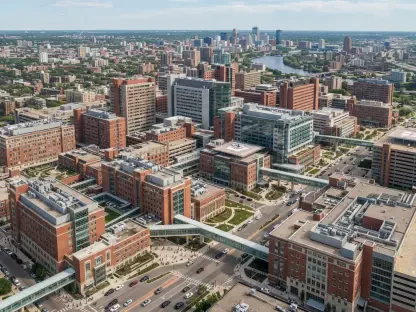

Recent government policy reforms are focusing on incentivizing specialized medical training to ensure that Nigerian-trained professionals remain within the domestic healthcare system. This strategic orientation has culminated in the commissioning of the Redeemer’s Health Village (RHV) Robotic Surgery Academy, a groundbreaking facility that represents a synergy between RoboMed Global, the National Postgraduate Medical College of Nigeria, and Redeemer’s University. By establishing this pioneering institution, the nation is signaling a decisive departure from traditional surgical methods toward a future defined by high-tech medical integration. The academy serves as a central hub for training specialists in robotic interventions, ensuring that Nigerian surgeons can access world-class education without the need for expensive international travel. This development is not merely a technological upgrade but a transformative milestone that positions the country as a burgeoning leader in specialized healthcare services across the West African region.
Strategic Framework for Medical Advancement
Human Capital: Economic Incentives and Growth
The Federal Government has demonstrated its commitment to this evolution by allocating approximately N250 billion over the current two-year cycle to revitalize medical education and institutional infrastructure. This financial infusion is a direct response to the historical stagnation in medical personnel production, where student quotas remained static despite significant population growth. Officials have now set an ambitious target to expand annual medical program enrollment to 20,000 students by 2028, ensuring a robust pipeline of future healthcare providers. To facilitate this expansion, the government is leveraging policy reforms that prioritize domestic talent retention and the localization of advanced skills. By providing the necessary resources and infrastructure, the state aims to create an environment where medical professionals see a viable and prestigious career path within their home borders, effectively countering the long-standing challenge of human capital flight.
Technical Ecosystem: Training for Operational Self-Sufficiency
A sustainable transition to robotic surgery requires more than just skilled surgeons; it demands a comprehensive ecosystem where every member of the surgical team is proficient in the digital landscape. The academy has made a significant investment of $4 million in state-of-the-art robotic systems to provide hands-on experience for its trainees. This whole-ecosystem approach includes specialized training modules for operating theater personnel, biomedical engineers, and even hospital administrators. For the technology to deliver its full potential, the staff responsible for maintaining and managing these complex machines must operate at the same high standard as the clinicians themselves. This strategy ensures that the robotic units remain operational and efficient, minimizing downtime and maximizing patient throughput. By addressing the technical and administrative aspects of surgical innovation, the academy is building a foundation for long-term operational resilience and clinical excellence.
Safety Standards and Future Innovations
Precision Methodologies: Aviation Principles and Remote Care
The methodology employed at the RHV Robotic Surgery Academy is rooted in the rigorous safety principles derived from the aviation industry, emphasizing precision and risk mitigation. Trainees undergo intensive simulation exercises and structured assessments before transitioning to supervised clinical practice, ensuring that every movement is deliberate and safe. This framework prioritizes effective communication and teamwork, which are critical when managing the complexities of robotic-assisted procedures. By utilizing simulation technology, surgeons can refine their techniques in a controlled environment, significantly reducing the learning curve and improving patient outcomes during actual surgeries. This commitment to safety standards reflects a broader shift toward data-driven and evidence-based medical practices that minimize human error. The integration of these high-level protocols ensures that the adoption of robotic technology enhances, rather than complicates, the safety of the surgical environment for all patients.
Continental Leadership: Scaling the Model for Global Standards
The successful launch of the robotic surgery academy established a clear pathway for the future of Nigerian medical education and clinical practice. To maintain this momentum, stakeholders prioritized the continuous updating of surgical software and the expansion of training facilities to accommodate more medical disciplines. It was essential that the government maintained its financial commitments through TETFund to ensure that the cost of entry for specialized training remained low for qualified professionals. Furthermore, the integration of these advanced systems into public teaching hospitals was identified as a critical next step to democratize access to high-tech care. Medical professionals were encouraged to pursue international collaborations to keep pace with global technological shifts while remaining rooted in local healthcare needs. By fostering an environment of continuous learning and technological adaptation, the nation secured its place at the forefront of African surgical innovation and built a resilient healthcare system.