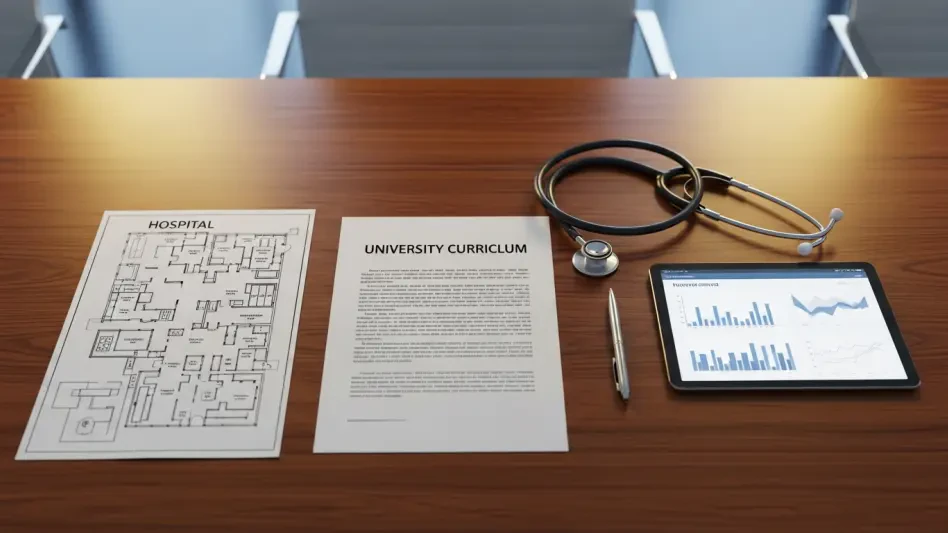

The rapid evolution of medical technology and patient care protocols has created an urgent need for healthcare education systems that move beyond the static confines of traditional textbooks. As hospitals integrate artificial intelligence and high-precision diagnostics into daily workflows, the disparity between academic curricula and real-world clinical demands has become increasingly apparent to industry observers. To address this widening chasm, Galgotias University and Felix Hospital have established a strategic partnership centered on a comprehensive Memorandum of Understanding. This collaboration does not merely offer internships; it integrates the School of Allied Health Sciences and the School of Nursing directly into a high-functioning clinical ecosystem. By prioritizing early immersion, the program seeks to eliminate the steep learning curve typically faced by new graduates entering the workforce. This model represents a pivot toward a competency-based education framework, where success is measured by a student’s ability to navigate complex medical environments while adhering to the highest standards of patient safety.
The Convergence: Classroom Theory and Clinical Practice
Accredited Training: Navigating Hospital Quality Benchmarks
Students entering the halls of Felix Hospital find themselves in a multispecialty environment that operates under the rigorous quality benchmarks mandated by the National Accreditation Board for Hospitals & Healthcare Providers. This 400-bed facility serves as a living laboratory where theoretical concepts regarding hospital administration and patient management are put to the test every hour. Exposure to such an accredited environment is critical because it introduces students to the nuances of administrative ethics and quality control measures that are often omitted from standard classroom lectures. By observing and participating in the daily operations of a large-scale medical center, learners develop a granular understanding of how various departments, from oncology to cardiology, interact to provide holistic patient care. This immersive experience ensures that when these students eventually transition into permanent roles, they carry a sophisticated understanding of the organizational culture and the strict safety protocols required to maintain international healthcare standards.
Simulation Pathways: Bridging Labs and Patient Bedside
The pedagogical transition from abstract theory to physical practice is further bridged through an innovative simulation-to-bedside methodology that leverages sophisticated medical technology. Galgotias University has invested heavily in state-of-the-art simulation labs where students encounter high-fidelity mannequins designed to mimic a vast array of physiological responses and medical emergencies. These controlled environments allow students to practice invasive procedures and complex diagnostic sequences repeatedly until technical precision is achieved without any risk to human lives. This preparatory phase is essential for building the muscle memory and clinical confidence necessary for the high-stakes atmosphere of an active hospital ward. Once students move to the bedside at Felix Hospital, they are no longer novices struggling with basic mechanics; instead, they function as capable members of the medical team. This two-step training process ensures that technical proficiency is matched by psychological readiness, creating a workforce that is prepared to handle the pressures of modern medicine from their very first day on the job.
Institutional Growth: Specialization and Community Impact
Specialized Competencies: Tailored Pathways for Allied Health
Beyond the foundational aspects of nursing and general medicine, this strategic partnership encompasses a diverse spectrum of allied health disciplines including Physiotherapy, Cardiovascular Therapy, and Medical Radiology. Each field requires specific clinical rotations and mandatory practical hours to satisfy the certification requirements set by the National Commission for Allied and Healthcare Professions. By aligning the university’s academic rigor with the hospital’s multispecialty infrastructure, students receive specialized mentorship from seasoned practitioners navigating the current medical landscape. From 2026 to 2028, the program will increase the enrollment of specialized technicians to meet the growing demands of modern diagnostic centers. This direct mentorship allows for the transfer of tacit knowledge—those subtle clinical insights that are vital for professional mastery. For the School of Nursing, this arrangement provides the clinical hours necessary for Indian Nursing Council certification, ensuring that graduates are functionally superior in their respective medical niches.
Community Engagement: Strengthening Regional Healthcare Roots
The impact of this collaboration extends far beyond the borders of the university campus, manifesting in significant contributions to regional healthcare infrastructure and community well-being. A primary example of this broader social commitment is the modernization of the Community Health Centre at Dadha, which serves as a vital resource for the residents of Greater Noida. By integrating student rotations into these public health settings, the partnership facilitates a dual benefit: students gain experience in community-based medicine while the local population receives enhanced care through the influx of trained personnel and modern resources. This initiative has bolstered Galgotias University’s reputation, contributing to its notable ascent in the QS World University and Times Higher Education rankings. This synergy between academic excellence and public service demonstrates that a university’s role in the healthcare landscape is not limited to granting degrees but extends to serving as a catalyst for societal improvement. Such a holistic ecosystem ensures that the training provided is socially relevant and capable of addressing the multifaceted healthcare challenges of a growing population.
Strategic Outcomes: Future-Proofing the Medical Workforce
The strategic alignment between Galgotias University and Felix Hospital demonstrated that a symbiotic relationship between academia and clinical practice was the most effective way to produce high-caliber professionals. This initiative highlighted the necessity for educational institutions to actively seek partnerships with accredited facilities to remain competitive in a shifting market. Future collaborations should focus on integrating tele-health training and data-driven diagnostic tools into the curriculum to reflect sector digitalization. For universities looking to replicate this success, the priority shifted toward securing MoUs that emphasize clinical hours over theoretical credits. Decision-makers recognized that graduate quality correlated with the sophistication of training facilities. Moving forward, the industry adopted robust simulation standards and community health initiatives as the baseline for excellence. Stakeholders focused on creating sustainable pathways for employment, ensuring the transition from trainee to practitioner was supported by professional development. This model transformed care by elevating entry-level competency.