

Accessing professional medical consultation in the remote reaches of the Karamoja sub-region or the deep valleys of the Rwenzori Mountains has historically required arduous journeys spanning several days and significant financial strain on impoverished households. The arrival of integrated digital health platforms has begun to dismantle these geographical barriers by offering virtual consultations that connect patients directly with qualified medical professionals in urban centers. This transformation is not merely about convenience; it is a life-saving shift that addresses the critical shortage of doctors in rural districts where the physician-to-patient ratio has long been a major concern. By leveraging widespread mobile phone penetration, health providers now facilitate real-time video calls and secure messaging for diagnostic purposes. These digital interventions have successfully reduced the need for unnecessary travel while ensuring that emergency cases are identified and triaged with much greater speed than was possible under previous traditional models of care delivery.
Digital Infrastructure: Bridging the Connectivity Divide
The deployment of solar-powered health kiosks has emerged as a fundamental component of the technological infrastructure supporting rural medical services in regions with limited electricity. These specialized hubs are equipped with high-speed satellite internet and basic diagnostic hardware, such as digital stethoscopes and blood pressure monitors, which allow for a comprehensive examination from a distance. Local community health workers are trained to operate this equipment, serving as the essential physical link between the patient and the remote clinician. This hybrid approach ensures that even individuals with limited digital literacy can benefit from advanced medical advice without leaving their immediate communities. Furthermore, the integration of 5G connectivity in secondary towns has significantly reduced data latency, enabling smoother video transmissions and faster uploads of large medical files like X-rays or laboratory reports. This localized technological support has effectively turned small village clinics into sophisticated points of care that are fully integrated into the national health network.
Accessibility is further enhanced through the utilization of USSD-based systems and voice-recognition software that caters to users who do not possess smartphones or consistent internet data plans. These text-based services allow patients to complete initial symptom assessments and receive guidance on whether a condition requires an in-person visit or can be managed through home-based care. To bridge the linguistic divide, developers have implemented AI-driven interfaces that understand and respond in multiple local dialects, ensuring that vital health information is understood by diverse ethnic groups across the country. This focus on inclusivity prevents the digital divide from exacerbating existing health inequalities and allows for a more democratic distribution of medical resources. Additionally, the synchronization of these platforms with mobile money accounts has simplified the payment process for prescriptions and consultation fees, creating a transparent and efficient financial workflow. This system incentivizes private healthcare providers to expand their digital footprint into underserved northern and eastern territories with confidence.
Clinical Impact: Redefining Care through Implementation
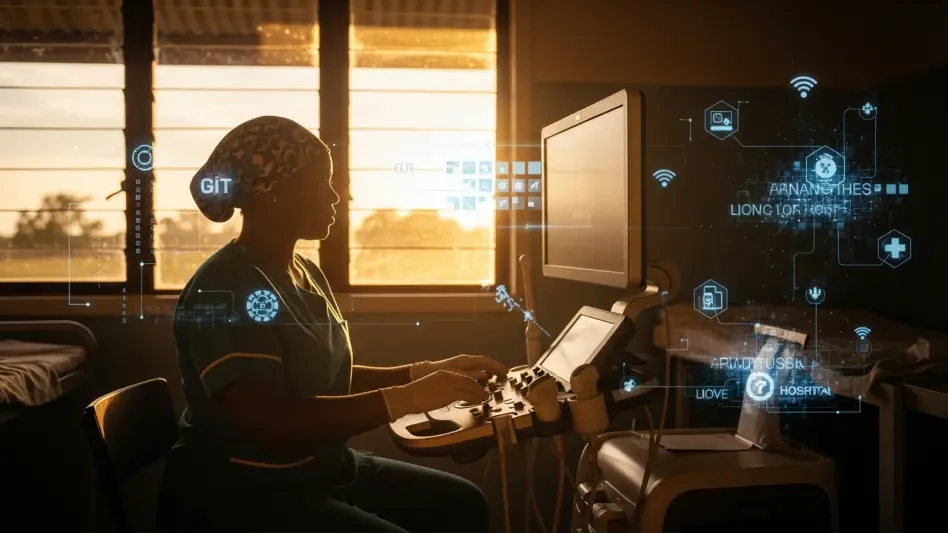
Clinical outcomes have seen a marked improvement, particularly in specialized fields such as maternal health and cardiology, which were previously inaccessible to most rural residents. Midwives at rural outposts now use portable ultrasound devices that transmit live feeds to expert obstetricians in Kampala, allowing for the early detection of high-risk pregnancy complications that would otherwise go unnoticed until a crisis occurs. This collaborative model has played a significant role in lowering maternal and neonatal mortality rates by ensuring that specialized interventions are planned well in advance of delivery. Similarly, patients with chronic conditions like hypertension are monitored through wearable devices that send periodic data to district hospitals, enabling doctors to adjust medications remotely. This proactive management prevents acute episodes, such as strokes or heart failure, by addressing physiological changes before they escalate into emergencies. The ability to consult with specialists without the logistical burden of travel has revolutionized the standard of care available to the most vulnerable.
The successful implementation of these digital strategies required a coordinated effort between government regulators and private innovators to establish a secure and sustainable framework. Legislative bodies took action to pass comprehensive data protection laws that secured patient confidentiality while allowing for the interoperability of electronic health records across different service providers. The Ministry of Health also incorporated telehealth services into the national insurance scheme, which stabilized funding and ensured that rural clinics remained financially viable. To maintain this progress, healthcare institutions prioritized the continuous training of medical staff in digital ethics and technical troubleshooting. By reflecting on the lessons learned during the initial rollout, it was clear that the key to long-term success resided in community-led initiatives and the localization of technological tools. These past efforts established a resilient foundation that will support the further expansion of remote surgical assistance and advanced genetic screening, ensuring that the gap in healthcare quality continues to narrow.







