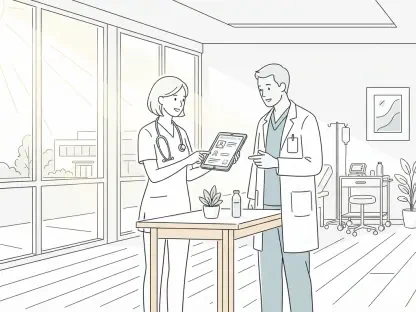

The foundational pillars of the Scottish healthcare system are currently undergoing a period of unprecedented scrutiny as political factions debate the most effective methods for modernizing a service under immense strain. While the National Health Service in Scotland remains a source of national pride, the reality of aging demographics and stagnant productivity has forced a consensus that the status quo is no longer tenable. Every major political party has signaled a commitment to keeping the service free at the point of delivery, yet the mechanisms proposed to achieve sustainability vary significantly in their scope and radicalism. The debate has moved beyond mere funding levels, focusing instead on a total structural overhaul that seeks to move healthcare out of the hospital and into the local neighborhood.
Current Landscape of the Scottish Healthcare System and the Call for Change
As a devolved public service, the Scottish NHS operates with a degree of autonomy that allows for tailored regional solutions, yet this decentralized nature has also led to significant administrative fragmentation. Healthcare consistently ranks as the highest priority for the Scottish electorate, serving as a primary barometer for governmental success. This public pressure has created a rare moment of political alignment regarding the preservation of public ownership. However, the existing reliance on large acute hospitals has created a bottleneck that prevents efficient patient flow, highlighting a desperate need for a more agile, community-centered delivery model.
Technical infrastructure remains a glaring weakness within the current framework, as disparate systems often fail to communicate across different health boards. This technological gap, combined with a workforce that is frequently overextended, has led to a widespread call for a system that prioritizes prevention over crisis management. The influence of consumer behavior is also shifting, with patients increasingly expecting digital-first interactions that mirror the efficiency of modern private-sector services. Consequently, the political discourse has shifted toward evaluating how wellness-focused governance can address long-term health inequalities before they necessitate expensive clinical interventions.
Strategic Visions for Transformation and Growth Projections
Emerging Trends in Reform: Shifting the Balance of Care
There is a universal move among policy planners to prioritize primary care as the primary defense against systemic collapse. The “Hospital at Home” model has emerged as a centerpiece for reform, designed to provide acute-level monitoring and treatment within a domestic setting to reduce the physical strain on hospital wards. By leveraging remote monitoring technology, the system can manage chronic conditions more effectively, preventing the readmissions that currently clog the pipeline. This shift represents a fundamental change in the consumer-clinician relationship, where the focus is on proactive maintenance rather than reactive treatment.
Furthermore, long-term health inequality prevention is being integrated into broader governance strategies. This wellness-focused approach recognizes that social factors like housing and employment are intrinsic to public health outcomes. By redirecting resources toward these preventative measures, the projected demand for emergency services is expected to stabilize over the next decade. This strategy also aligns with the rising demand for digital healthcare interactions, allowing clinicians to intervene earlier through virtual consultations and automated health tracking, which streamlines the patient journey from the initial point of contact.
Performance Indicators and Forward-Looking Financial Forecasts
Financial projections suggest a significant reallocation of the health budget toward general practice and community services. Currently, the “funding follows the patient” model is being analyzed as a mechanism to incentivize productivity across different regions, ensuring that resources are distributed based on actual service delivery rather than historical benchmarks. There is a strong push for a nationalized procurement strategy, often referred to as a “once for Scotland” approach, which aims to leverage the collective buying power of the NHS to drive down the costs of medical supplies and pharmaceuticals.
The economic impact of streamlining back-office operations could be substantial, particularly if the number of administrative boards is reduced. By consolidating corporate functions, the government hopes to redirect hundreds of millions of pounds from management overhead to the clinical frontline. These financial forecasts indicate that while the total health budget may continue to rise, the percentage spent on administration must decrease to ensure the longevity of the service. This fiscal discipline is seen as essential for funding the transition to a more modern, tech-enabled infrastructure without necessitating tax increases.
Navigating Structural Obstacles and Operational Bottlenecks
One of the most complex hurdles facing reform is the administrative duplication across fourteen territorial health boards, which often leads to inconsistent patient experiences. Strategies to tackle rising waiting lists now include a greater emphasis on regional cooperation and, in some cases, cross-border treatment options to utilize available capacity more effectively. However, these moves are often met with skepticism by those who fear that such measures are merely austerity disguised as efficiencies. To counter this, some parties are advocating for worker-led reform programs that empower clinicians to identify and eliminate bureaucratic redundancies.
Logistical hurdles also persist in the integration of disparate IT systems into a unified national platform. The transition from localized databases to a centralized patient record system is fraught with concerns over data security and the sheer scale of the migration required. Moreover, the push for regionalizing services often clashes with the desire for local accountability, creating a political tension that must be managed carefully. Resolving these bottlenecks requires a balance between the efficiency of centralization and the responsiveness of local healthcare providers, a task that remains a significant challenge for any sitting government.
The Regulatory Framework and the Push for Modernization
The proposed administrative restructuring will necessitate a complete overhaul of current compliance and reporting standards. A potential Scottish Healthcare Reform Commission could be established to provide independent oversight of workforce planning and social care funding, ensuring that political cycles do not disrupt long-term strategic goals. This regulatory evolution is also being driven by the shift from paper-based systems to digital prescriptions, which requires robust new legal frameworks to handle sensitive patient data. Ensuring that these digital systems are both secure and user-friendly is a top priority for regulators.
As the NHS explores utilizing private sector capacity to supplement its delivery, the legal implications of these partnerships are under intense scrutiny. Regulations must be tightened to ensure that any private involvement does not undermine the core principle of a service that is free at the point of use. Modernization also involves updating professional standards to reflect the changing roles of nurses, pharmacists, and paramedics, who are increasingly taking on tasks traditionally reserved for doctors. This regulatory flexibility is essential for creating a workforce that is capable of operating within a more integrated and technologically advanced environment.
Innovation, AI, and the Future of Digital Healthcare Delivery
The transition to a “One NHS” IT platform is expected to revolutionize how patients interact with the healthcare system through the rollout of unified patient portals. These portals will allow individuals to book appointments, view test results, and manage their prescriptions in one place, significantly reducing the administrative burden on GP surgeries. Furthermore, the disruptor potential of artificial intelligence is being harnessed to improve diagnostic imaging, where AI algorithms can detect abnormalities in scans faster and often more accurately than human eyes alone. This innovation is a key component of reducing diagnostic backlogs.
Wearable technology is also set to play a larger role in clinical settings, providing doctors with real-time, proactive patient data that can alert them to potential issues before they become emergencies. This shift toward community-based care, supported by cutting-edge innovation, will ultimately redefine the role of the traditional hospital, turning it into a center for specialized surgery and intensive care rather than a catch-all facility. By embracing these digital tools, the Scottish NHS aims to create a more resilient and responsive system that can adapt to the needs of a modern population.
Summarizing the Political Path Forward for Scottish Health
The various party manifestos converged on a vision for a centralized, tech-driven healthcare system that prioritized community intervention over hospital reliance. Policymakers recognized that the transition from a reactive model to a proactive framework required not only financial investment but also a fundamental reorganization of administrative structures. The debate settled on the necessity of reducing management boards to maximize frontline clinical resources, while the integration of AI and digital portals became the cornerstone of future productivity gains. Leaders across the spectrum acknowledged that preserving the NHS required bold departures from traditional operational methods.
Final perspectives focused on the delicate balance between rationalizing the bureaucracy and maintaining the quality of patient care. The move toward a “once for Scotland” procurement strategy and the implementation of a national digital record system were identified as critical steps for eliminating regional disparities. Ultimately, the political path forward was defined by a shared understanding that the survival of the Scottish NHS depended on its ability to evolve. These reforms provided a blueprint for a more sustainable healthcare landscape, where innovation and administrative efficiency served the primary goal of improving public health outcomes across the nation.