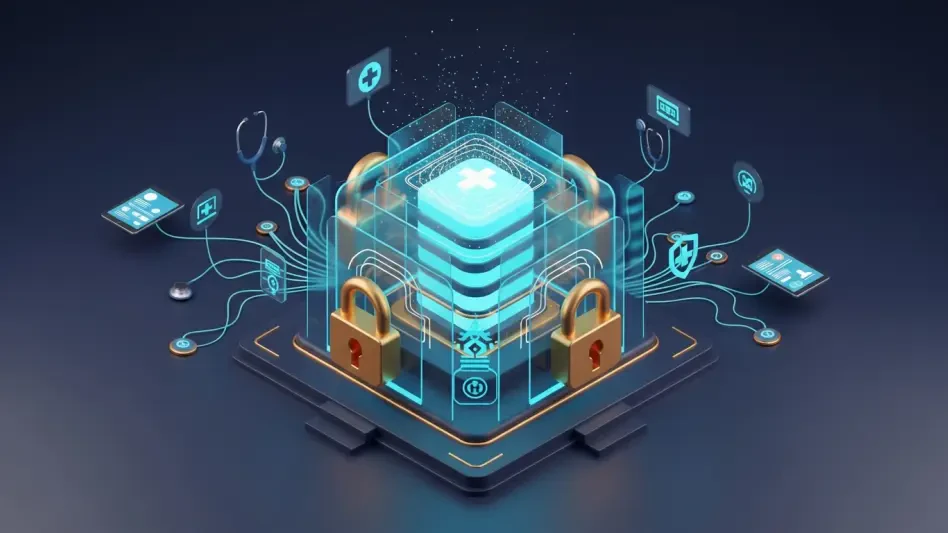

The silent transition from physical paper files to high-speed digital pixels has turned modern hospital servers into some of the most contested battlegrounds in the global landscape of information security. For decades, the primary focus of medical administration was the physical housing of records, but the rapid integration of Electronic Health Records (EHR) has moved the entire sector toward a centralized, interconnected database model. While these systems have undeniably streamlined clinical workflows and enabled life-saving speed in emergency scenarios, they have simultaneously created an unprecedented surface area for sophisticated cyber adversaries. Today, protecting these records is no longer viewed as a peripheral IT task delegated to a back-office team; it has emerged as a fundamental pillar of patient safety. When a digital system fails or is held hostage, the integrity of the medical infrastructure collapses, proving that in the modern era, the security of data is inextricably linked to the physical well-being of the patient. The complexity of these systems requires a fundamental shift in how hospitals perceive their digital borders and how they manage the vast amounts of sensitive intelligence they hold.
High Stakes: Why Medical Intelligence is the Ultimate Digital Currency
The intrinsic value of Electronic Health Records on the global black market stems from the fundamental fact that medical data is permanent, whereas traditional financial information is inherently transient. If a consumer’s credit card number is stolen in a breach, the financial institution can simply cancel the card and issue a new one within minutes, effectively neutralizing the threat to the account holder. In stark contrast, a patient’s genetic profile, chronic diagnoses, and social security number are immutable identifiers that cannot be refreshed or replaced once they are exposed to unauthorized parties. This permanency allows cybercriminals to engage in long-term identity theft and elaborate insurance fraud schemes that can persist for years without detection. Because medical records often contain a comprehensive narrative of a person’s life, they provide a much richer dataset for social engineering than a simple bank statement, making the healthcare sector a top-tier target for groups specializing in high-value data exfiltration and long-range extortion tactics.
Building on this inherent data value, the healthcare industry remains uniquely vulnerable to extortion due to the life-critical nature of its daily operations. Ransomware attackers specifically target clinical systems because they understand that every minute of downtime in a hospital translates into delayed surgeries, diverted ambulances, and potential loss of life. This creates an environment of extreme urgency that attackers exploit to demand higher payments, knowing that administrators are under immense pressure to restore functionality at any cost. Furthermore, the proliferation of the Internet of Medical Things (IoMT) has introduced a web of interconnected devices—ranging from smart infusion pumps to remote heart monitors—that often prioritize clinical utility over robust security protocols. Many of these devices are designed with long lifecycles and lack the processing power required for modern encryption or frequent software patching. This creates a fragmented security environment where a single unpatched monitor can serve as an unsecured gateway to the core EHR database, allowing attackers to move laterally through the hospital network.
Defensive Architectures: From Least Privilege to Network Segmentation
Establishing a resilient defense against these evolving threats requires healthcare providers to move beyond simple firewall protections and adopt more sophisticated administrative controls. One of the most effective strategies is the implementation of the Principle of Least Privilege, which dictates that every staff member is granted only the minimum level of access necessary to perform their specific job functions. In a traditional system, a compromised administrative account might give an attacker full access to every record in the hospital, but under a least-privilege model, the “blast radius” of a security breach is significantly restricted. By isolating specific departments and limiting record access to those directly involved in a patient’s care, organizations can prevent a single phishing victim from becoming a catalyst for a facility-wide data catastrophe. This structural approach ensures that even if a breach occurs, the volume of data at risk remains manageable rather than systemic, providing a vital layer of insulation around the most sensitive patient intelligence.
Parallel to user-level access controls, medical institutions are increasingly relying on advanced network segmentation to isolate their most critical digital assets from general-purpose hospital traffic. In a typical hospital environment, the guest Wi-Fi used by patients and visitors should never share the same underlying architecture as the servers housing the EHR database. By dividing the hospital’s network into distinct, isolated zones, administrators can ensure that an attacker who successfully infiltrates a peripheral system cannot easily migrate to the core medical infrastructure. This practice of “zoning” is complemented by rigorous patch management cycles, which address the known software vulnerabilities that cybercriminals frequently exploit to gain initial entry. When combined with secure, offline backups that are physically separated from the main network, these infrastructure-level defenses provide a safety net against ransomware. Having a reliable, uncorrupted version of the data stored in a secure cloud or an air-gapped server allows hospitals to maintain operational continuity and refuse the demands of extortionists who aim to paralyze clinical care.
Technical Barriers: The Roles of Encryption and Identity Control
The actual protection of the data itself relies heavily on the implementation of sophisticated encryption protocols that render information unreadable to anyone without the proper authorization keys. Best practices in modern healthcare security require that encryption be applied both “at rest,” while the data resides on local servers or portable devices, and “in transit,” as it moves between primary care providers, specialized labs, and insurance entities. This creates a fail-safe mechanism where, even if an adversary manages to intercept a data stream or physically steal a hard drive, the underlying medical records remain a scrambled mess of characters that are useless for fraudulent purposes. High-level encryption standards serve as the final line of defense for patient privacy, ensuring that the confidentiality of a medical history is maintained regardless of the physical or digital path the data takes through the broader healthcare ecosystem. This technical layer is essential for maintaining the integrity of the data, as it prevents unauthorized modifications that could lead to dangerous clinical errors.
Managing the identities of those who interact with these encrypted datasets has led to the adoption of Multi-Factor Authentication (MFA) as a non-negotiable industry standard. In a landscape where stolen passwords are a primary vector for breaches, MFA adds an essential layer of verification by requiring a combination of something the user knows, such as a password, and something they possess, like a biometric scan or a physical token. Modern identity management systems are also beginning to incorporate behavioral analytics, which use sophisticated algorithms to monitor how and when a user typically accesses the EHR system. If a surgeon suddenly attempts to download a thousand records at three in the morning from a foreign IP address, the system can automatically flag the activity as suspicious and suspend access. This shift from static password protection to dynamic identity monitoring allows healthcare organizations to detect compromised credentials in real-time. By verifying the identity of every user continuously rather than just at the initial login, the organization builds a formidable barrier against the social engineering tactics that continue to dominate the threat landscape.
Compliance and Resilience: Turning Regulation into Active Protection
Regulatory frameworks like the Health Insurance Portability and Accountability Act (HIPAA) and the General Data Protection Regulation (GDPR) have evolved from simple checklists into comprehensive roadmaps for building a security-first culture. These legal mandates establish the minimum technical and administrative standards that every healthcare entity must meet to protect patient privacy, but their true value lies in how they encourage a proactive approach to risk management. Organizations that view compliance as a living process rather than a one-time audit are much better positioned to identify and mitigate vulnerabilities before they are exploited by external actors. Failure to maintain these standards results in more than just heavy financial penalties; it leads to a catastrophic erosion of the trust that is essential for the patient-provider relationship. When a hospital demonstrates a commitment to these standards through regular staff training and rigorous internal audits, it transforms security from a technical requirement into a core institutional value that every employee understands and supports.
Resilience in the face of an active threat is further strengthened by the use of Security Information and Event Management (SIEM) systems, which aggregate and analyze vast amounts of network traffic to find hidden anomalies. These systems provide the visibility necessary to detect a breach in its earliest stages, allowing security teams to intervene before the attacker can achieve their objectives. Coupled with a well-defined and regularly tested incident response plan, this level of monitoring ensures that a hospital is never caught off guard when a crisis occurs. An effective response strategy outlines exactly how to isolate affected servers, which regulatory bodies must be notified, and how to communicate the situation to the public to maintain transparency. By conducting “tabletop exercises” that simulate various attack scenarios, healthcare administrators ensure that their staff can react with precision and calm during a real emergency. This operational readiness reduces the duration of a breach and minimizes the clinical impact on patients, proving that preparation is just as important as the technology used to defend the network.
Moving Forward: AI Integration and the Zero Trust Philosophy
The next phase of EHR protection is being defined by the integration of Artificial Intelligence and Machine Learning to provide predictive security capabilities that were previously impossible. These AI-driven tools possess the ability to scan millions of data points across the network in seconds, identifying subtle patterns that might indicate a coordinated attack long before a human analyst would notice anything unusual. In the current landscape, these systems have enabled medical facilities to move from a reactive posture to a proactive one, where threats are neutralized in their infancy. This technological evolution is increasingly centered around the Zero Trust security model, which operates on the foundational premise that no user or device is trusted by default, regardless of whether they are inside or outside the hospital’s physical walls. Every attempt to access a medical record is continuously authenticated, authorized, and validated, ensuring that the movement of data is always justified and secure.
The shift toward cloud-native EHR platforms has provided hospitals with the scalability needed to handle modern data demands, but it has also shifted the security focus toward specialized cloud configurations. Security experts emphasized the importance of maintaining high standards for medical data as systems became more flexible. It was determined that the most successful organizations were those that treated cybersecurity as an ongoing medical necessity rather than a one-time expense. Professionals recommended that hospitals conduct quarterly penetration tests to find weak points before attackers could. They also highlighted the need for continuous training sessions to keep staff aware of the latest phishing techniques. Administrators focused on creating air-gapped backups as a standard procedure to ensure that no single attack could permanently destroy patient history. This holistic strategy ensured that as medicine evolved, the digital systems supporting it remained a safe and reliable environment for both clinicians and those under their care.