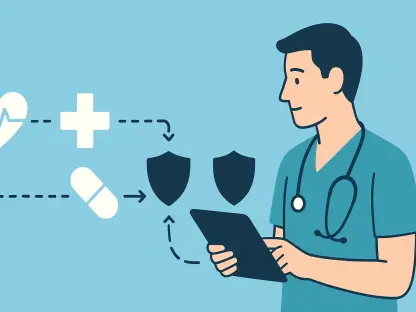

The persistent threat of workplace violence in clinical settings has necessitated a fundamental shift from passive observation toward a more sophisticated, technologically integrated approach to facility safety. For years, the healthcare sector struggled to balance open access for patients with the rigid security required to protect staff and visitors. Traditional methods, such as manual bag checks or standard walk-through metal detectors, often proved insufficient in high-pressure environments where speed is a prerequisite for survival. The emergence of AI-driven security frameworks represents a significant departure from these reactive models, offering a proactive shield that anticipates threats before they manifest in clinical areas. By blending imaging radar with multi-agent artificial intelligence, modern systems are now capable of closing long-standing security gaps that once left specific entrance points, like ambulance bays, vulnerable to the introduction of concealed weapons.
The Evolution of Intelligent Safety in Clinical Environments
Clinical environments present a unique challenge for security because they must remain welcoming and functional while simultaneously screening for high-risk items. Historically, hospital security relied heavily on human intuition and reactive protocols, which often failed during peak hours or emergency surges. The transition toward intelligent safety involves the integration of imaging radar and multi-agent AI frameworks to automate the detection process. These core principles allow for a non-intrusive screening experience, where the technology identifies threats based on material density and shape rather than just the presence of metal. This context is vital for addressing hospital security vulnerabilities, where the objective is to secure the facility without creating a fortress-like atmosphere that could distress patients.
The broader technological landscape is moving away from manual screening toward a state of pervasive, automated threat detection. This shift is driven by the need for consistency that human operators cannot always provide. While a guard might become fatigued after hours of monitoring a checkpoint, an AI-integrated system maintains the same level of vigilance around the clock. Moreover, the integration of these systems into the hospital’s digital infrastructure allows for a more holistic view of safety. It enables the facility to move beyond catching weapons at the door to analyzing behavioral patterns and environmental risks, creating a comprehensive safety ecosystem that adapts to the specific needs of a medical campus.
Architectures of Modern Healthcare Security Systems
Specialized Imaging Radar for Emergency Intake
One of the most significant technical breakthroughs in recent years is the development of specialized imaging radar designed specifically for emergency intake zones. Traditional screening methods fail in ambulance bays because patients typically arrive on metal stretchers, which trigger constant false alarms in standard magnetometers. The advanced imaging radar overcomes this hurdle by using high-frequency waves to distinguish between the structural equipment of the medical transport and potential threats concealed on a patient’s person. This capability allows the system to scan individuals whether they are conscious, unconscious, or obscured by medical blankets, providing a layer of protection that was previously impossible to implement in emergency scenarios.
The performance of this technology in high-pressure environments is a testament to its precision. By analyzing the dielectric properties of various materials, the radar can identify weapons made of metal, plastic, or ceramic, even when they are hidden amidst the complex geometry of a stretcher. This ensures that the continuity of care is never compromised, as medical teams do not have to pause life-saving efforts to facilitate a security check. The ability to perform such high-fidelity screening in motion is a critical development that addresses the “ambulance bay loophole,” ensuring that the most volatile entry point in a hospital is as secure as the main lobby.
The Apollo 500 Multi-Agent AI Framework
The architecture of the Apollo 500 system introduces a redundant security model that utilizes five to eight distinct AI agents to monitor checkpoints simultaneously. Unlike single-layer systems that may have a single point of failure, this multi-agent framework ensures that different aspects of the security process are overseen by specialized digital entities. Each agent is tasked with a specific function, such as identifying a weapon, verifying that a human operator is following protocol, or monitoring for bypass attempts. This division of labor allows for a much higher degree of accuracy and reduces the likelihood of a threat going unnoticed due to environmental noise or technical glitches.
Technical aspects such as the “Self-Healing” agent represent a new frontier in system maintenance. This agent constantly monitors the health of the sensors and the alignment of the radar, automatically recalibrating the system to compensate for minor shifts or technical wear. Meanwhile, the “Anti-Bypass” agent uses behavioral analysis to detect visitors who may be attempting to avoid the scanners. Furthermore, the “Operator-Performance” agent acts as a quality control mechanism, ensuring that security staff are performing secondary screenings correctly. This layered approach creates a self-sustaining security environment where the AI not only detects threats but also ensures that the entire security operation is functioning at its theoretical peak.
Emerging Trends in Automated Threat Detection
The current trajectory of the industry is defined by a move toward sophisticated “patent-pending” AI frameworks that prioritize data quantification over simple alerts. One emerging trend is the integration of holographic visitor instructions, which serve to guide individuals through the screening process without the need for constant human intervention. These holograms can provide clear, multilingual directions, reducing confusion and preventing bottlenecks at busy entrances. This move toward automation helps to standardize the visitor experience, ensuring that every person entering the facility is treated with the same level of scrutiny and professional courtesy.
Another significant shift is the attempt to quantify “deterrence factors” as a metric for security success. In the past, the effectiveness of a security system was measured by how many weapons it confiscated, but this metric ignores the threats that never reached the door. Modern AI systems now track individuals who approach a checkpoint and then turn away upon seeing the scanners. By analyzing this data, hospital administrators can gain a clearer understanding of how many potential threats are being prevented through the mere presence of advanced technology. This data-driven approach allows for a more nuanced evaluation of ROI, moving the conversation from incident response to long-term risk mitigation.
Real-World Applications Across the Medical Sector
The deployment of these AI-driven systems has seen immediate results in ambulance bays and hospital main entrances, where workplace violence is a persistent concern. By securing these high-traffic areas, hospitals can significantly reduce the risk of clinical staff being targeted by individuals carrying concealed weapons. The real-time nature of the detection ensures that security teams are alerted to a potential threat before the individual has a chance to enter a treatment room or a waiting area. This proactive stance is essential for maintaining a safe work environment, which in turn helps to improve staff morale and patient outcomes.
Unique use cases have also emerged, such as the implementation of “Person-of-Interest” agents. These agents can cross-reference individuals against internal watchlists or external databases in real-time, allowing security to be notified immediately if someone with a history of violence or a specific trespass order enters the facility. This application is particularly useful in large urban medical centers where managing the flow of people is a constant challenge. By automating the identification of known risks, the system allows security personnel to focus their attention on immediate threats, rather than spending their time manually checking IDs or monitoring countless video feeds.
Implementation Challenges and Industry Obstacles
Despite the clear benefits, the adoption of sophisticated radar and AI systems faces significant logistical and financial hurdles. The high investment cost, often reaching hundreds of thousands of dollars per entrance, can be a barrier for smaller community hospitals or facilities operating on tight margins. Furthermore, retrofitting older hospital infrastructures with the necessary power and network capabilities to support high-fidelity sensors is often a complex undertaking. Engineers must often find creative ways to install large scanner frames in lobbies that were never designed for such equipment, which can lead to increased installation costs and timelines.
Regulatory pressure is also a major factor, with upcoming legislation such as California’s AB 2975 setting new standards for hospital safety. This mandate requires hospitals to implement stricter screening protocols, pushing many institutions to adopt AI-driven solutions to remain compliant. However, navigating the intersection of privacy laws and security monitoring remains a delicate task. Hospitals must ensure that their use of AI agents for person identification and behavioral analysis does not violate patient confidentiality or civil liberties. Balancing these legal requirements with the need for a secure environment is an ongoing challenge for the industry.
The Future of the Smart Hospital Security Ecosystem
The future of hospital safety lies in the deeper integration between security AI and broader hospital management software. We are likely to see systems that not only screen for weapons but also communicate directly with electronic health records to provide security staff with context regarding a patient’s behavioral history. Potential breakthroughs in non-intrusive sensor technology could lead to scanners that are even smaller and more powerful, allowing them to be embedded directly into walls or doorways. This would create a truly “invisible” security layer that protects the facility without altering its aesthetic or functional flow.
The long-term impact of these systems extends beyond the prevention of physical violence; it plays a crucial role in reducing healthcare worker burnout. When staff feel safe in their work environment, they are better able to focus on patient care and are less likely to experience the chronic stress associated with safety concerns. As the technology continues to mature, it will likely become a global standard for hospital safety, transforming the medical center into a data-rich environment where security decisions are made based on empirical evidence rather than anecdotal reports. This evolution will fundamentally redefine what it means to provide a safe space for healing.
Comprehensive Assessment of AI-Driven Security
The review of current AI-driven security frameworks demonstrated that the closing of the “ambulance bay loophole” is a watershed moment for hospital safety. By successfully applying imaging radar to the screening of patients on stretchers, technology providers have addressed a vulnerability that was once thought to be an unavoidable risk of emergency medicine. The transition toward a data-driven security model, supported by multi-agent AI frameworks, has shifted the focus from simple weapon detection to a comprehensive understanding of risk and deterrence. These systems provided a level of redundancy and precision that human-only security teams cannot match, effectively creating a more resilient safety infrastructure.
The overall assessment of this technology suggests that while the initial costs are high, the long-term benefits in terms of staff safety and legislative compliance are undeniable. The move toward a smart hospital security ecosystem is not merely a technical upgrade but a necessary evolution in response to a more complex threat landscape. As these systems become more integrated into the daily operations of medical facilities, they will likely set the benchmark for global standards in healthcare security. The investigation concluded that the integration of AI and radar technology offers the most viable path forward for protecting both providers and patients in an increasingly volatile world.