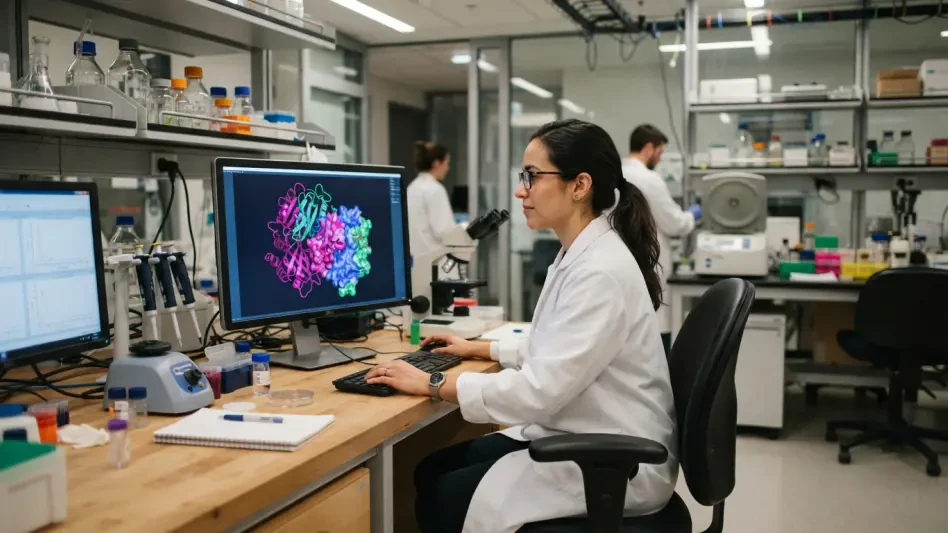

The FINGERS-7B foundation model utilizes high-dimensional biological data to identify the subtle molecular signals associated with preclinical Alzheimer’s disease long before symptoms appear. This pioneering technology serves as the technical engine for General Biology, a specialized biotechnology spin-off designed to reshape the landscape of chronic disease management. Originating from the FINGERPRINT project at the Massachusetts Institute of Technology, the venture represented a significant collaborative effort to bridge the gap between complex computational modeling and real-world clinical application. By leveraging years of foundational research conducted at MIT and the Broad Institute of MIT and Harvard, General Biology aimed to revolutionize the understanding of neurodegenerative disorders through a methodology known as precision prevention. This shift prioritized identifying risks in the earliest stages, moving away from reactive treatments that only address the brain after significant damage has occurred.
Institutional Collaboration and Technical Innovation
Foundations of the FINGERPRINT Project
The emergence of General Biology was the direct result of a multidisciplinary consortium involving several of the world’s leading research institutions. This partnership brought together a unique combination of clinical researchers, data scientists, engineers, and neuroscientists from the Picower Institute for Learning and Memory at MIT and the Karolinska Institutet. The project’s roots are deeply embedded in the academic ecosystem, having received initial support from the Aging Brain Initiative. This early funding, provided through philanthropic seed grants, allowed the team to explore the intersection of artificial intelligence and neurological health in a way that was previously impossible. By combining the mechanical engineering expertise of MIT with the clinical insights of European geriatric research, the group built a foundation for a new type of biotechnology company that prioritizes the early detection of cognitive decline through sophisticated data analysis and high-resolution biological modeling.
The initiative gained significant momentum through its association with the Alzheimer’s Disease Data Initiative, which helped transition the research from a purely academic proof of concept into a translational biotechnology entity. This transition was essential for scaling the project’s impact, as it provided the necessary infrastructure to manage and analyze massive quantities of patient data. The collaboration was spearheaded by prominent figures in neuroscience and mechanical engineering who recognized that traditional, siloed research models were no longer sufficient to tackle the complexities of the aging brain. By establishing a formalized spin-off, General Biology was able to secure the resources required to refine its computational tools and prepare them for clinical validation. This institutional support system ensured that the transition from a laboratory setting to a commercial entity remained grounded in rigorous scientific evidence and a commitment to long-term patient outcomes across different demographics.
Mechanics of the FINGERS-7B Model
At the core of General Biology’s technical capabilities is FINGERS-7B, a pioneering AI foundation model featuring 7 billion parameters specifically engineered for the prevention of Alzheimer’s disease. Unlike narrow AI systems designed for single, isolated tasks, FINGERS-7B is a large-scale computational framework that synthesizes and interprets vast, heterogeneous datasets encompassing the entire spectrum of human biology and lifestyle factors. The model’s architecture is uniquely designed to process multiomic data, which involves the simultaneous analysis of various biological layers, including the genome, the proteome, and the metabolome. By integrating these molecular signals with longitudinal clinical data, the model can identify subtle patterns that traditional analytical methods frequently miss. This holistic approach enables the identification of novel biomarkers associated with the earliest preclinical stages of disease progression, offering a new level of diagnostic precision.
The sophisticated nature of this foundation model allows it to navigate the complex relationships between genetic predispositions and environmental influences. By utilizing a systems-biology perspective, FINGERS-7B can map how various biological variables interact over time to contribute to the development of neurodegeneration. This capability is a significant departure from older models that focused on single biomarkers or isolated risk factors. The model was trained on diverse datasets to ensure its findings are applicable across different populations, reducing the risk of bias in its predictive outputs. This technical breadth makes it a versatile tool for researchers attempting to understand the underlying mechanisms of cognitive decline. By providing a high-dimensional view of patient health, the framework allows clinicians to visualize the trajectory of a disease long before it reaches a symptomatic stage, making the goal of prevention more attainable through data-driven insights.
Data Integration and Personalized Intervention
Evidence from the Landmark FINGER Study
A defining characteristic of the FINGERS-7B model is the exceptional quality and depth of the data used for its training. The system draws heavily upon the results of the landmark FINGER study, which provided the first randomized controlled trial evidence that multidomain lifestyle interventions can prevent cognitive decline in at-risk populations. These interventions included specific dietary protocols, physical exercise, and cognitive training, all of which were meticulously documented over several years. By incorporating evidence from the World-Wide FINGERS Network, General Biology created a model that does more than just predict risk; it predicts how different individuals will respond to specific preventive measures. This capability is essential for tailoring interventions to the specific needs of an individual, effectively moving away from the outdated one-size-fits-all approach that has long characterized public health strategies for aging.
The integration of clinical trial data into a 7-billion-parameter model represents a major step forward in translating lifestyle research into actionable medical advice. By analyzing how different biological profiles responded to the multidomain interventions in the FINGER study, the model can now simulate potential outcomes for new patients based on their unique molecular signatures. This allows for the creation of highly personalized prevention plans grounded in empirical evidence rather than general health guidelines. The computational framework evaluates the synergy between different lifestyle factors, determining which combination of activities is most likely to preserve cognitive function for a specific person. This data-driven approach ensures that the preventive strategies recommended by clinicians are optimized for efficacy, thereby maximizing the impact of early interventions and helping to maintain the cognitive health of populations as they age.
Transitioning from Assessment to Clinical Action
Traditional biomedical research has long been characterized by a reductionist approach that examines individual molecular signals or biological variables in isolation. However, the methodology adopted by General Biology addresses the critical need to determine which specific interventions can meaningfully alter a patient’s long-term disease trajectory. This shift from merely identifying high-risk individuals to providing actionable, personalized prevention strategies is the cornerstone of the company’s mission. By providing a platform to map disease progression patterns and evaluate the efficacy of prospective preventive therapies, the venture sought to establish a new standard for precision medicine. The objective was to move beyond simple risk assessment and toward a model where every data point contributed to a tangible clinical decision, ensuring that patients received the most effective care possible based on their biological data.
The implementation of these advanced computational tools helped bridge the gap between empirical clinical findings and proactive healthcare management. By utilizing the FINGERS-7B model, healthcare providers were able to transition from a reactive posture to a proactive one, where interventions were introduced at the optimal moment to delay or prevent the onset of symptoms. This evolution in clinical practice was supported by the commitment of the FINGERPRINT consortium to share a version of the model with the international research community. Hosted on the open-access AD Workbench, the model allowed for global cross-validation and the discovery of new biomarkers across different geographical regions. This collaborative environment ensured that the innovations developed at MIT had a widespread impact, facilitating the development of preclinical intervention pipelines that could be adapted to the specific needs of diverse global populations.