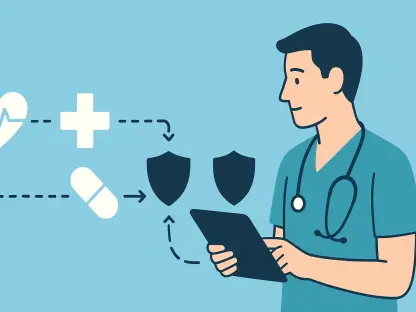

While billions of dollars in venture capital continue to flow toward the digital health care landscape in 2026, the industry remains blind to its most potent source of operational alphthe frontline nurse. The health care sector is currently undergoing a massive digital transformation, yet a critical segment of its most experienced innovators remains sidelined. While investment floods into health tech, it often gravitates toward founders with prestigious MBAs or medical degrees, overlooking the five million registered nurses who keep the system running. This analysis explores why the nursing workforce represents a “mispriced asset class” in the startup world. By examining the unique intersection of clinical expertise and operational problem-solving, the discussion aims to uncover why the next generation of high-return health care companies will likely be led by those who have spent their careers at the bedside.
Historical Foundations: The Legacy of Invisible Innovation
The concept of nursing innovation is far from new, though it has historically lacked the formal recognition of the venture capital ecosystem. For decades, nurses have been the silent architects of the modern hospital environment. In the late 1960s, a nurse created the “crash cart” to save precious seconds during cardiac arrests, and later, other clinical pioneers implemented bar-code medication scanning to reduce errors. These were not just clinical improvements; they were foundational shifts in health care logistics and safety protocols that became industry standards.
Despite these contributions, many historical nursing innovations occurred outside the “startup machinery.” Because these solutions were often born of necessity within the walls of a hospital, they frequently lacked the patents, seed funding, and institutional backing afforded to their physician or engineer counterparts. Understanding this historical exclusion is vital for recognizing today’s missed opportunities. The “workarounds” nurses perform daily are not merely temporary fixes; they are the prototypes for scalable, venture-backed companies that the market has yet to fully value.
Structural Barriers: The Economics of Clinical Credentialing
The Credential Paradox: Signaling in Venture Capital
In the world of high-stakes investing, credentials serve as shorthand for potential success. However, in American health care, the registered nurse (RN) credential is often misinterpreted. While a Medical Doctor (MD) title is viewed as a signal of high-level leadership and deep expertise, an RN title is frequently reduced to a signal of task-oriented labor. This information asymmetry creates a significant barrier where nurse-founders often feel compelled to engage in “credential stripping,” removing their clinical titles from pitch decks to avoid being pigeonholed. This bias represents a market failure, as it discounts the very domain knowledge required to navigate complex clinical workflows and regulatory environments.
De-risking Investments: The Value of User-Led Design
The greatest risk in health care technology is not the science, but the adoption. If a tool disrupts the delicate flow of a nursing unit, it will be ignored or bypassed. Nurses spend an average of 42 minutes per shift compensating for failed technology and poor operational design. A nurse-founder is uniquely positioned to de-risk an investment because they serve as the inventor, the primary user, and the ultimate decision-maker regarding a product’s utility. By building for the actual user rather than an idealized workflow, nurse-led startups significantly reduce the likelihood of post-deployment failure—a massive financial advantage that traditional investors often overlook.
Market Intelligence: Leveraging Untapped Purchasing Power
The nursing workforce represents the largest clinical body in the United States, and their collective influence over hospital spending is immense. Chief Nursing Officers and nurse managers are the primary buyers of the tools that facilitate patient care. Furthermore, many of these leaders have reached income levels that qualify them as accredited investors, yet they remain an untapped source of capital. This oversight suggests that the market is missing two things: a pool of founders who understand what hospitals will actually buy, and a pool of investors who understand the true value of those solutions.
Emerging Trends: The Shifting Landscape of Health Care Entrepreneurship
A new era is beginning where the “outsider” perspective of the tech-heavy founder is no longer enough to solve systemic health care crises. Future trends suggest a shift toward “operational alpha,” where value is generated by solving the most expensive problems in the system: nurse turnover, hospital-acquired infections, and inefficient discharge processes. As labor costs rise and health systems move toward value-based care, the expertise of the nurse—who manages the “last mile” of patient delivery—becomes the most valuable currency in innovation. Regulatory shifts and the rise of nurse-specific venture funds are beginning to signal a market correction, where the RN credential will soon be viewed as a premium signal of success.
Strategic Integration: Capitalizing on Nursing Innovation
To capture the value of this underpriced asset class, the investment community must move beyond familiar résumés and look for functional expertise. For investors, this means actively seeking out nurse-led teams that demonstrate a deep understanding of clinical bottlenecks. For health systems, it involves creating internal incubators that allow nurses to patent and scale their “workarounds” into commercial products. Best practices for professionals in this space include focusing on workflow integration as a primary value proposition. When a product solves a fundamental operational pain point for the nurse, market adoption becomes a natural byproduct rather than an uphill battle.
A Future Defined by Clinical Domain Expertise
The systematic undervaluation of nurse-founders was never a reflection of their capability, but rather a failure of the financial landscape to accurately price deep domain knowledge. This analysis highlighted how nurses possess a unique vantage point that allows them to identify and solve the most expensive problems in medicine. Recognizing the RN credential as a mark of leadership and innovation served as a strategic economic opportunity rather than just a matter of professional equity. The investors and health systems that acted first to empower nurse-founders were the ones that defined the current landscape of high-impact, operationally sound health care. Moving forward, the integration of clinical insight into the earliest stages of product development will remain the primary differentiator between failed tech and essential health care infrastructure.