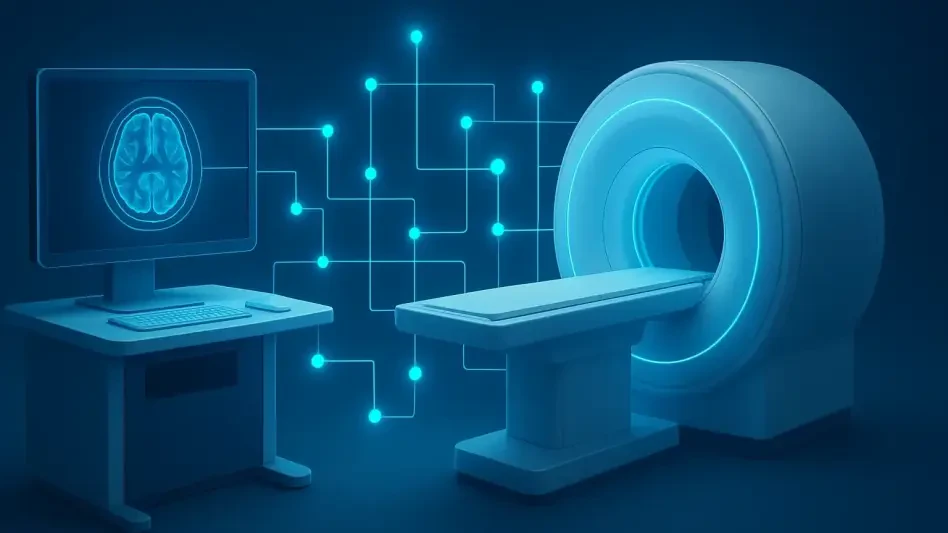

Relying on cloud scalability for high-resolution cardiac MRIs creates significant operational expenses and latency issues due to the inherent gravity of healthcare data. This reality forces a confrontation with the current industry obsession regarding raw silicon power and the latest graphics processing units. While procurement departments often compete to secure the most advanced hardware, the actual success of clinical intelligence depends on a much deeper architectural alignment. Modern medical facilities are discovering that simply bolting on a large language model or a diagnostic algorithm without considering the underlying data flow leads to fragmented care and prohibitive costs. The shift toward a workload-centric strategy represents a fundamental change in how technology is integrated into patient care. By treating artificial intelligence not as an experimental sidecar project but as a foundational pillar of hospital operations, administrators can build systems that are both resilient and responsive. This approach requires focusing on the practicalities of how these tools interact with existing clinical systems and daily routines.
Shifting Focus: Moving Toward Practical Integration
The transition from a hardware-centric procurement mindset to a workload-centric architectural strategy represents the most significant shift in healthcare technology management this decade. Historically, IT departments focused on acquiring the best individual components—the fastest servers or the latest switches. However, the unique demands of artificial intelligence require a holistic view of how these components work together to support clinical tasks. Instead of asking which GPU is the fastest, leaders are now asking where the data is being generated and how quickly it needs to be processed to impact patient care. This shift in perspective ensures that technology serves the clinical workflow rather than forcing medical professionals to adapt to the limitations of the hardware. By prioritizing the workload, healthcare organizations can design systems that are inherently more flexible and capable of handling the diverse array of AI applications being introduced into modern medicine, from administrative automation to real-time diagnostic support.
Strategic Decision-Making and Data Placement
Deciding where a specific workload resides—whether in a centralized data center, a public cloud, or directly on a local server—is now a more critical clinical decision than the choice of the AI model itself. Healthcare organizations frequently generate terabytes of data daily through imaging, telemetry, and electronic health records, most of which originates at the edge of the network. Attempting to shuffle all this information to a remote server for analysis introduces delays that clinicians cannot afford during critical diagnostic windows. Therefore, the strategy must prioritize workload placement based on the urgency of the task and the sensitivity of the data involved. This architectural shift ensures that low-latency requirements are met while keeping operational costs manageable. When the workload dictates the infrastructure rather than the other way around, the healthcare system gains the flexibility to scale specific services without overcommitting resources to hardware that may become obsolete within a few years.
Clinical Workflow and Model Normalization
As we move further into the decade, the integration of artificial intelligence is transitioning from a competitive advantage to a basic standard of care for modern medical facilities. This normalization means that the individual identity of a large language model or a specialized diagnostic algorithm is becoming secondary to the robustness of the system that hosts it. Successful integration depends on how well these tools fit into the existing clinical workflow, ensuring that medical professionals can access insights without disrupting their focus on the patient. For instance, an AI tool that assists with clinical documentation must be as reliable and invisible as the hospital’s internal network. By focusing on the workload’s specific operational needs, IT leaders can design environments that favor high availability and security over experimental features. This methodology creates a stable environment where new tools can be swapped in or out as clinical requirements evolve, preventing the common trap of being locked into a proprietary ecosystem.
Modernizing Infrastructure: Planning for AI Readiness
A common misconception among healthcare executives is that the path toward an AI-driven future requires an immediate and total replacement of all existing IT infrastructure. This forklift upgrade mentality often leads to paralysis, as the financial and operational costs of a complete system overhaul appear insurmountable. In reality, the most successful organizations are those that utilize their standard equipment refresh cycles to build a modern, AI-ready foundation over time. By incorporating high-performance compute and advanced networking capabilities into regular hardware updates, hospitals can gradually transform their environment without the shock of a single, massive expenditure. This strategic approach allows for a more measured and ROI-focused integration of new technologies, ensuring that each upgrade provides immediate value to clinical operations. Furthermore, it provides the IT team with the opportunity to refine their architecture in stages, learning from each deployment and adjusting their strategy to better support the evolving needs of the medical staff.
Incremental Upgrades and Equipment Refresh Cycles
The process of incremental modernization allows healthcare providers to target specific pain points within their facility, such as an overworked radiology department or a congested administrative office. By deploying specialized AI-ready hardware at the edge, these organizations can demonstrate clear improvements in efficiency and patient care before expanding the technology hospital-wide. This phased rollout minimizes risk and allows the staff to become comfortable with new tools at a manageable pace. Additionally, it ensures that the infrastructure remains compatible with the latest medical devices, which are increasingly coming equipped with their own AI-driven features. The focus on a gradual transition also allows for better alignment between capital expenditures and the actual operational benefits realized by the staff. By viewing infrastructure as a long-term, evolving asset rather than a one-time purchase, healthcare leaders can maintain a technological edge while remaining fiscally responsible and focused on the primary mission of providing high-quality care to their community.
Balancing Cloud Scalability and Edge Reality
The persistent tension between cloud scalability and local processing power remains a central theme in medical infrastructure design. While the public cloud offers nearly infinite flexibility for massive data processing, the reality of data gravity in healthcare makes moving large datasets like three-dimensional imaging both expensive and inefficient. An effective architectural design utilizes the edge for initial processing, allowing for immediate inferencing while only transmitting the most critical results to the cloud for archival or secondary analysis. This hybrid model minimizes the bandwidth costs associated with moving high-resolution cardiac scans and reduces the latency that can hinder real-time surgical assistance or patient monitoring. By building resilience at the edge, healthcare providers ensure that their AI applications remain functional even during network interruptions, a necessity for life-critical environments. This strategic design recognizes that governing data through policy is insufficient; the architecture must be agile and located where the information is actually produced.
Preparing for Change: The Rise of Autonomous Systems
Looking toward 2027 and the next phase of digital health, the industry is witnessing a transition from reactive AI tools to what experts call agentic AI. These autonomous systems do not wait for a human to type a query; instead, they operate continuously in the background to monitor patient vitals, manage administrative scheduling, and flag potential drug interactions. This shift toward autonomy represents a paradigm change for network infrastructure, as these agents require constant connectivity and high-speed data access to function effectively. Traditional network designs that were built to handle intermittent bursts of traffic from human users are often overwhelmed by the persistent demands of these active digital agents. The sheer volume of network traffic generated by an agentic system can be many times greater than that of a standard chatbot, requiring a more robust and scalable Wide Area Network. Preparing for this influx of data involves moving beyond simple bandwidth upgrades and toward intelligent traffic management that can prioritize these critical, autonomous workloads.
The Emergence of Agentic AI in Operations
The deployment of autonomous agents within a clinical setting requires a fundamental rethink of how hospital operations are managed and monitored. These agents are designed to perform complex, multi-step tasks that traditionally required manual oversight, such as cross-referencing patient history with real-time laboratory results to predict potential health declines. For these systems to be effective, they must have unfettered access to high-quality data and the computational power to process it without delay. This necessitates an infrastructure that can support continuous, 24/7 workloads without performance degradation. As these agents become more integrated into the care team, their reliability becomes a matter of patient safety, requiring redundant systems and robust cybersecurity protocols. The shift toward agentic AI is not just a technological upgrade; it is an operational evolution that allows healthcare providers to move from a reactive model of care to a proactive, preventive approach. By automating routine monitoring and administrative tasks, these digital agents free up clinicians to focus on the most complex aspects of patient care.
Managing Network Demands for Continuous Workloads
For healthcare organizations operating across multiple geographic regions, the rise of autonomous agents poses a significant challenge for wide-area connectivity. These systems often need to synchronize data between local clinics and central repositories in real-time, creating a continuous load on the network that never truly subsides. Success in this era will be defined by the ability to maintain consistent, low-latency connections that can support 24/7 operations without degradation in service quality. Infrastructure teams are now prioritizing the deployment of software-defined networking and advanced edge gateways to handle this specialized traffic. By creating a foundation that can sustain these high-level autonomous workloads, healthcare providers ensure that their AI agents can provide meaningful assistance to clinical staff without introducing new bottlenecks. The goal is to create a seamless environment where the AI acts as an invisible member of the care team, constantly processing information. This requires a shift in perspective from managing devices to managing the continuous flow of digital agency.
Actionable Steps for Infrastructure Excellence
To achieve operational excellence, medical institutions prioritized a thorough assessment of their current network throughput before deploying autonomous agents. They implemented tiered storage solutions that differentiated between immediate clinical needs and long-term archival requirements, ensuring that data was always accessible at the point of care. Furthermore, IT departments established performance benchmarks that focused on workload completion times rather than just the clock speed of individual processors. This approach allowed teams to identify bottlenecks within the clinical workflow and address them through targeted infrastructure enhancements rather than broad-spectrum hardware replacements. Organizations also developed specialized training programs for their technical staff to manage the complexities of edge computing and software-defined networking. These initiatives successfully bridged the gap between raw technological capability and practical medical utility. By focusing on these pillars, healthcare systems transitioned toward a more resilient future, ensuring that their digital tools remained as flexible as the medical professionals who utilized them to save lives.