
The landscape of global medical safety underwent a transformative shift on August 12, 2026, as Radar Healthcare finalized its acquisition of the patient-reporting specialist Cemplicity. This strategic expansion represents a cornerstone of a broader “buy and build” initiative orchestrated by Marlin Equity Partners, aimed at synthesizing a fragmented health management market into a cohesive, high-performance ecosystem. By integrating the advanced capabilities of Cemplicity into its existing framework, Radar Healthcare is positioning itself as a global leader in clinical governance, risk management, and meaningful patient engagement. This transition signals a departure from traditional, siloed software models, moving toward a future where healthcare providers utilize a single, unified intelligence engine to oversee every aspect of the medical journey. The move follows the successful integration of EIDO Healthcare in early 2025, effectively closing the loop on a system that now manages everything from pre-treatment digital consent to long-term recovery outcomes. This evolution is not merely about corporate scaling; it is about fundamentally restructuring how healthcare data serves the human experience.
The integration strategy addresses a significant historical deficit in the healthcare industry, where administrative risk tracking and patient feedback have operated on parallel but disconnected tracks. By merging these streams, the newly expanded platform allows for a comprehensive understanding of the patient experience that was previously unattainable. Providers no longer have to reconcile disparate datasets to understand why a certain clinical outcome occurred; instead, they can see the direct correlation between governance protocols and the actual lived experiences of their patients. This level of visibility is essential for modern health systems that are increasingly under pressure to deliver higher standards of safety while managing complex, high-volume operations. The acquisition of Cemplicity provides the final piece of the puzzle, ensuring that the voice of the patient is not treated as a secondary metric but as a primary driver of operational change and clinical improvement. This alignment of risk management and patient sentiment marks a turning point in the industry’s ability to provide proactive, rather than reactive, care.
Analyzing the Three Pillars of the Integrated Platform
Radar Healthcare, headquartered in Leeds, serves as the architectural foundation of this new digital ecosystem by specializing in Enterprise Governance, Risk, and Compliance. Its software is currently deployed across some of the most complex health networks in the world, providing a robust framework for tracking clinical incidents, managing organizational risks, and maintaining stringent compliance with evolving regulatory standards. The platform functions as a centralized intelligence engine, utilizing sophisticated algorithms to identify patterns in safety data that might otherwise go unnoticed by human administrators. When specific safety thresholds are met or unusual trends emerge, the system automatically alerts relevant staff, allowing for immediate corrective action. This systematic approach to governance ensures that every incident is recorded and analyzed, creating a culture of transparency and accountability that is vital for maintaining public trust and operational efficiency in modern medical environments.
Cemplicity introduces a specialized and highly sophisticated layer to this ecosystem by focusing exclusively on the qualitative aspects of care through real-time feedback and outcome measures. Based in New Zealand but operating across thousands of facilities internationally, Cemplicity has built a reputation for capturing the patient’s voice in a way that is both actionable and meaningful for clinicians. The company’s tools track how patients perceive their treatment and, more importantly, how they are recovering functionally, such as monitoring pain levels, mobility, and general well-being post-discharge. This focus on Patient-Reported Outcome Measures (PROMs) is a critical component of value-based healthcare models, which prioritize the quality and durability of medical results over the sheer quantity of procedures performed. By quantifying the subjective experience of the patient, Cemplicity provides the nuanced data necessary to evaluate the true effectiveness of clinical interventions across various demographics and specialties.
EIDO Healthcare completes this integrated trio by addressing the critical pre-treatment phase through its industry-leading digital informed consent platform. Before a patient even enters a treatment room, EIDO ensures they are provided with standardized, accessible, and comprehensive information about their upcoming procedures. This digital-first approach to consent facilitates a shared decision-making process between doctors and patients, ensuring that individuals are fully aware of the risks and benefits associated with their care. Beyond improving the patient experience, this system serves as a powerful risk mitigation tool for healthcare organizations, protecting them from the legal and financial vulnerabilities that often arise from inadequate or poorly documented communication. By standardizing the consent process, EIDO helps to build a foundation of trust and clarity that sets the stage for a safer and more collaborative medical journey, bridging the gap between clinical intent and patient understanding.
Bridging Functional Silos for Proactive Care
Historically, healthcare organizations have suffered from a persistent fragmentation where administrative safety data and patient feedback are trapped in separate functional silos. This separation has often led to a reactive approach to quality management, where patient grievances are only addressed months after an incident has occurred, if they are addressed at all. In many cases, a patient might report a negative experience through a survey that is never cross-referenced with the internal incident reports filed by the clinical staff. This lack of communication between departments makes it incredibly difficult for leadership to identify systemic flaws before they lead to serious harm or legal disputes. The integration of Cemplicity’s feedback tools directly into Radar Healthcare’s risk management workflows represents a significant technological leap, enabling these two traditionally separate streams of information to finally converge into a single, actionable narrative.
In this newly unified system, the entire patient journey is treated as a continuous stream of interconnected data points rather than a series of isolated events. For example, if a patient uses a Cemplicity-powered tool to report a sudden decline in their functional health or expresses a specific concern about the care they received, the system can be configured to automatically trigger an immediate risk management workflow within the Radar platform. This automation ensures that clinical managers are notified in real time, allowing them to intervene before a minor complication escalates into a major medical emergency or a hospital readmission. By treating patient sentiment as a legitimate safety signal, healthcare providers can move toward a truly proactive model of care. This shift not only improves clinical outcomes but also helps to resolve patient concerns at the point of care, significantly reducing the likelihood of formal complaints or expensive litigation later down the line.
The transition from reactive monitoring to proactive quality assurance is further supported by the platform’s ability to correlate qualitative patient data with quantitative clinical metrics. When a hospital identifies a spike in post-operative infections, the integrated platform can immediately pull relevant patient feedback from that specific ward or surgical team to see if there were earlier warnings, such as reports of poor hygiene or communication breakdowns. This holistic view allows administrators to pinpoint the root causes of safety issues with unprecedented precision. Instead of guessing which factors are contributing to a decline in performance, they can look at the evidence provided by both the staff and the patients. This level of integration transforms the way healthcare organizations approach quality improvement, making it a data-driven process that is deeply informed by the people who are actually receiving the care.
Technical Innovation and Global Market Expansion
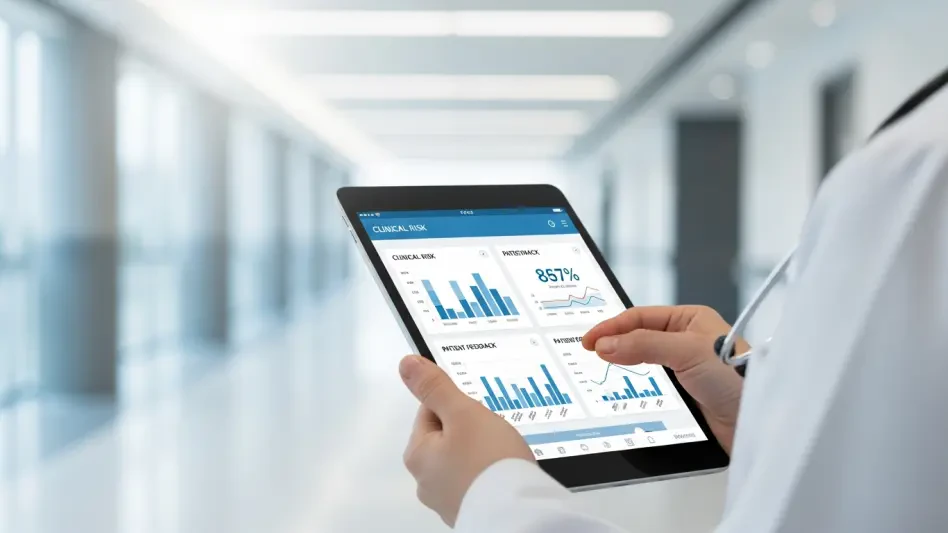
The operational success of this merger is deeply rooted in its technical interoperability, achieved through a sophisticated infrastructure of shared data layers and automated API connectors. By leveraging advanced data integration techniques, Cemplicity’s qualitative feedback can be instantly processed and analyzed by Radar’s machine-learning algorithms to detect emerging trends across multiple facilities or even entire national health systems. This allows organizations to move beyond looking at individual cases and instead identify systemic issues, such as recurring communication failures or specific equipment problems, that may be impacting patient safety at an institutional level. The technical synergy between these platforms ensures that data flows seamlessly from the patient’s mobile device directly into the executive dashboard, providing a level of real-time oversight that was previously impossible to achieve with manual reporting methods.
From the patient’s perspective, the merger results in a streamlined and intuitive digital “front door” for all their interactions with a healthcare provider. Instead of being forced to navigate a confusing array of different websites and apps for digital consent forms, educational materials, and post-discharge surveys, patients can now access all these services through a single, unified interface. This seamless experience is more than just a matter of convenience; it has been shown to significantly increase response rates and improve the overall quality of the data collected. When patients feel that their feedback is easy to provide and is being taken seriously by their care team, they are more likely to stay engaged with their recovery plan. This increased engagement leads to better adherence to post-treatment instructions, which is a primary factor in preventing complications and ensuring a successful long-term medical outcome.
The acquisition also dramatically strengthens Radar Healthcare’s global footprint, combining its established presence in Europe and the Middle East with Cemplicity’s extensive reach in the Asia-Pacific region and South Africa. This geographic synergy is a critical asset in a market where health systems are increasingly looking for vendors who can support large-scale, international operations while remaining sensitive to local regulatory requirements. By offering a comprehensive suite of tools that are already compliant with various international standards, the expanded company is uniquely positioned to compete for major government and private healthcare contracts. This global scale also allows Radar Healthcare to aggregate and anonymize safety data from around the world, providing unique insights into global healthcare trends and allowing providers to benchmark their performance against international peers in a way that was never before possible.
Delivering Measurable Results and Investment Value
The practical effectiveness of this integrated model is already becoming evident in large-scale applications where real-time feedback has fundamentally transformed hospital operations. In several recent implementations, healthcare providers have reported that their patient response rates increased by over thirty percent after migrating to a unified digital platform that combined consent and feedback tools. This influx of high-quality data provides hospital leadership with a much clearer picture of their organizational strengths and weaknesses, allowing them to allocate resources more effectively to the areas where they will have the greatest impact on patient safety. Furthermore, the ability to track longitudinal data—monitoring a patient’s health over several months or even years—has allowed clinical researchers to evaluate the long-term success of specific surgical techniques and medical devices with much greater accuracy than traditional follow-up methods.
This aggressive expansion strategy is a textbook example of a private equity playbook executed by Marlin Equity Partners, designed to significantly increase a company’s total addressable market by offering a more comprehensive product suite. By providing a platform that covers the entire lifecycle of a patient interaction—from the initial legal consent to the final outcome assessment—Radar Healthcare is able to capture a larger portion of a health system’s information technology budget. These integrated platforms are particularly valuable to investors and healthcare executives alike because they become deeply embedded in multiple departments, from legal and compliance to clinical operations and patient experience. This level of cross-departmental integration makes the software “sticky,” reducing the likelihood that a customer will switch to a competitor and ensuring a stable, long-term revenue stream for the company while providing consistent value to the health system.
Beyond the immediate financial gains, the integration of these technologies delivers substantial economic benefits to the healthcare providers themselves by reducing the costs associated with avoidable harm and administrative inefficiency. When a hospital can use real-time patient feedback to catch a brewing infection or a medication error before it becomes a major incident, they are saving hundreds of thousands of dollars in extended hospital stays and potential legal fees. Moreover, the automation of compliance reporting and risk management tasks frees up clinical staff to focus more of their time on direct patient care rather than manual paperwork. This improvement in operational efficiency is a critical factor for health systems that are struggling to manage rising patient volumes and staffing shortages. The unified platform essentially acts as a force multiplier, allowing smaller teams to maintain higher safety standards through the intelligent use of data and automation.
Long-Term Implications: The Future of Patient Safety
As the global healthcare industry continues its decisive shift toward value-based care models, the ability to demonstrate safety and quality through objective data has become a mandatory requirement for success. Health systems are no longer being judged solely on their clinical capabilities during a procedure; they are now being held accountable for the patient’s overall recovery and long-term quality of life. The combination of clinical governance and the direct patient voice helps institutions meet these new standards by creating a safety net that extends far beyond the walls of the hospital. Identifying subtle signs of complication, such as a slight decline in mobility or a change in pain levels after a patient returns home, allows for early intervention that can prevent a catastrophic failure. This focus on the “post-acute” phase of care is where the greatest gains in patient safety are expected to be made over the coming years.
The move toward a unified platform also provides healthcare leaders with an unprecedented “single source of truth” for all regulatory and compliance matters. Instead of spending weeks manually gathering data from various spreadsheets, emails, and disconnected software systems, executives can now use real-time dashboards to demonstrate exactly how they are utilizing patient feedback to drive clinical improvements. This level of transparency is becoming increasingly important as regulators and insurance providers demand more evidence of proactive safety cultures within medical organizations. An integrated approach ensures that patient safety is not treated as a static policy on a piece of paper but as a dynamic, living part of daily operational excellence. It creates a feedback loop where every patient interaction provides an opportunity to learn, adapt, and improve the standard of care for everyone who follows.
Healthcare administrators and clinical directors finalized their transition to this integrated framework by prioritizing data transparency and cross-departmental collaboration. They recognized that the acquisition of Cemplicity was not merely a technical upgrade but a mandate to rethink how the patient voice informs clinical risk. Moving forward, health systems should focus on training their staff to interpret qualitative feedback as a primary clinical indicator, ensuring that alerts from the platform are met with the same urgency as a traditional medical alarm. They also found it beneficial to establish multidisciplinary committees that regularly review the combined safety and sentiment data to identify long-term strategic opportunities for improvement. By treating patient-reported data as a cornerstone of their safety strategy, these organizations have set a new benchmark for what it means to provide truly patient-centered, high-quality care in a complex and rapidly changing global environment.