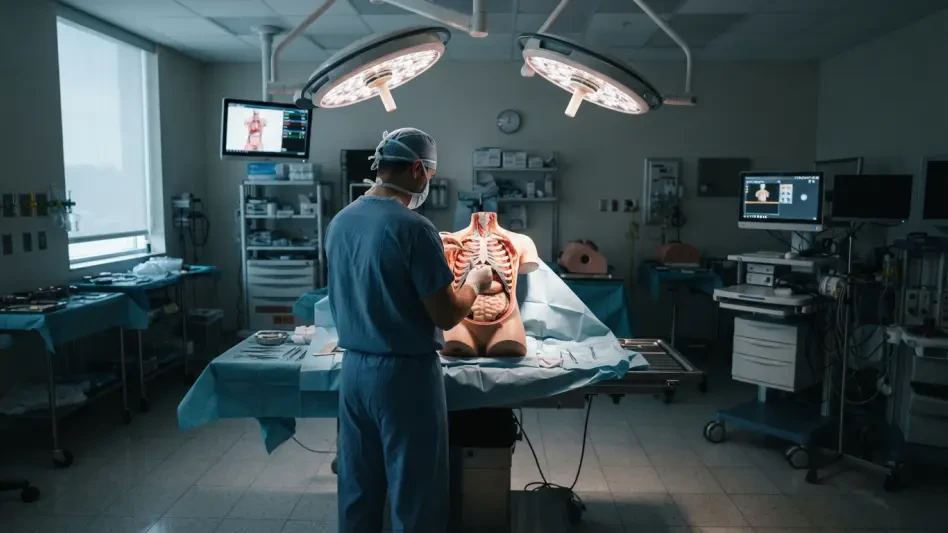

Self-reported surgeon confidence in managing hepatic crises increases substantially after participants engage in hands-on practice with realistic anatomical models. This finding is particularly relevant for general surgeons practicing in community hospitals where high-grade liver injuries are statistically rare. While these practitioners possess significant expertise in common emergency procedures, the specific technical demands of a massive hepatic hemorrhage require a level of precision that can only be maintained through consistent exposure. In the current medical landscape of 2026, the consolidation of trauma care into specialized centers has inadvertently created a proficiency gap for those in lower-volume facilities. When a critical patient arrives, the surgeon must act as a bridge to definitive care, executing maneuvers that are often outside their weekly routine. The risk of skill degradation is a constant concern for hospital administrators who must ensure that life-saving interventions remain high-quality. Consequently, integrating simulation has become a standard approach to bolster the readiness of surgical teams.
Educational Framework for Trauma Mastery
Targeted Participant Selection
The training initiative focused on a cohort of forty-two general surgeons, a demographic specifically chosen because they represented the backbone of regional emergency care. These participants were not novices; most had been practicing for five to twenty years, yet they shared a common challenge: limited exposure to complex liver trauma in their daily clinical duties. This selection underscored the reality that professional maturity does not prevent the erosion of specialized technical skills. The study demonstrated that even seasoned veterans require structured interventions to maintain high-acuity, low-frequency skills. By targeting established practitioners, the program addressed a critical vulnerability in the healthcare system where clinical experience in general surgery does not always translate to readiness for rare trauma scenarios. This approach highlights the necessity of lifelong learning and the role of objective assessment in identifying areas where even expert surgeons may benefit from additional focused practice.
Multi-Modal Instructional Design
The curriculum was designed with a multi-modal philosophy, starting with comprehensive video-based tutorials that allowed surgeons to synchronize their theoretical knowledge with modern standards of care. By observing high-definition procedural footage, the surgeons could mentally rehearse the steps of an emergency laparotomy and identify anatomical variations before physically engaging with the simulator. This transition from passive learning to active simulation ensured that every participant entered the hands-on phase with a clear, evidence-based roadmap of the necessary interventions for liver stabilization. Such a dual-layered instructional design is critical because it addresses both cognitive recognition and physical execution. Theoretical foundations provide the logic behind each maneuver, while video demonstrations offer a visual guide that bridges the gap between textbooks and the operating table. This preparatory phase reduced the learning curve once surgeons began working with physical models, allowing them to focus on precision.
Intensive Hands-On Practice
During the hands-on portion of the training, the curriculum prioritized the most critical maneuvers in damage-control surgery for hepatic injuries. Surgeons focused heavily on the Pringle maneuver, which requires the rapid identification and clamping of the hepatoduodenal ligament to control catastrophic bleeding. Mastery of this single step is often the difference between patient survival and intraoperative mortality in a crisis. Additionally, the sessions included intensive practice of five-point abdominal packing, where participants learned to apply consistent and effective pressure across the quadrants. Beyond simple hemorrhage control, the training covered advanced techniques such as deep liver suturing and the application of topical hemostatic agents. Surgeons also practiced the temporary closure of the abdominal cavity, a vital skill for stabilizing patients before transferring them to a specialized trauma unit. By performing these high-stakes tasks repeatedly in a low-risk environment, participants refined their manual dexterity and speed.
Measuring Performance and Long-Term Retention
Analysis of Technical Gains
The effectiveness of the simulation was measured through a series of quantitative metrics that provided a clear picture of skill acquisition. One of the most telling results was the improvement in technical scores as measured by the Abdominal Trauma Objective Structured Assessment of Technical Skills. The initial baseline median score for the surgeons was 26.5, but this figure rose dramatically to 39 immediately after the simulation sessions. This improvement was mirrored in the knowledge tests, where median scores increased from four to seven points, demonstrating that the training effectively bridged both cognitive and physical gaps. These data points suggest that simulation is not merely a supplementary tool but an essential component of professional mastery. The significant jump in scores across all participants indicates that the curriculum was universally effective, regardless of an individual’s prior years of experience. This quantitative validation provides hospital leadership with the confidence to invest in such programs.
Psychological Impact and Confidence
Perhaps the most significant qualitative finding was the marked increase in self-reported confidence among surgeons after the training concluded. In the chaos of a real-world trauma bay, the psychological readiness of the surgeon is just as important as their technical skill. By proving to themselves that they could successfully execute complex maneuvers on a realistic model, the participants reduced the cognitive load associated with these rare procedures. This psychological stabilization allows for clearer decision-making and better team leadership during future clinical emergencies. When a surgeon is confident in their manual skills, they can focus more of their mental energy on managing the overall situation and communicating effectively with the staff. The simulation environment provides a safe space to fail and correct mistakes, which is a luxury not afforded in the operating room. This iterative process of refinement builds a level of professional assurance that is vital for handling the immense pressure of emergency surgery.
Durability of Surgical Competence
Follow-up assessments conducted several months later confirmed that while some decay in technical proficiency occurred, surgeons retained a significant portion of their skills. Specifically, the median scores settled at 34 after fifteen to twenty weeks, remaining substantially higher than the original baseline. These results demonstrated that simulation-based education established a durable foundation of competence. To maintain these gains, healthcare systems began integrating semi-annual refresher courses into their standard professional development requirements. This proactive maintenance strategy ensured that high-acuity skills remained sharp even in low-volume environments. Moving forward, the adoption of low-cost anatomical models offered a scalable solution for community hospitals looking to enhance trauma capabilities. By prioritizing regular, synthetic practice, the medical community successfully shifted the focus toward a state of constant operative readiness. These initiatives proved that targeted simulation was the most effective way to safeguard patient outcomes in 2026.