
The Transformation of the Domestic Sphere into a Clinical Hub
The historical reliance on centralized hospitals is rapidly dissolving as specialized technology platforms prove that the domestic environment can function as a high-acuity medical hub. As the global population continues to age and the prevalence of chronic conditions rises, the home is emerging as a critical setting for medical care and long-term health management. This transition is not merely a matter of convenience; it is a strategic response to the escalating costs and systemic inefficiencies of institutional care. Innovative platforms and strategic funding, such as the nine million dollars recently secured by Rosarium Health, are turning private residences into safe, clinical-grade environments.
The Evolution of Home-Based Care and Aging-in-Place
For decades, home-based care was largely limited to basic nursing visits or informal family caregiving. However, several industry shifts have fundamentally altered this landscape. The concept of aging-in-place—the ability to live in one’s own home and community safely and comfortably—has moved from a niche preference to a central pillar of healthcare policy. Historically, the fragmentation of services made this difficult because patients needed separate entities for clinical assessments and home modifications. Today, the rise of specialized healthcare technology startups is bridging these gaps by creating a cohesive infrastructure that integrates medical expertise with physical environmental changes.
Scaling the Infrastructure of the Home-as-Healthcare Model
Bridging Clinical Insight and Physical Modifications
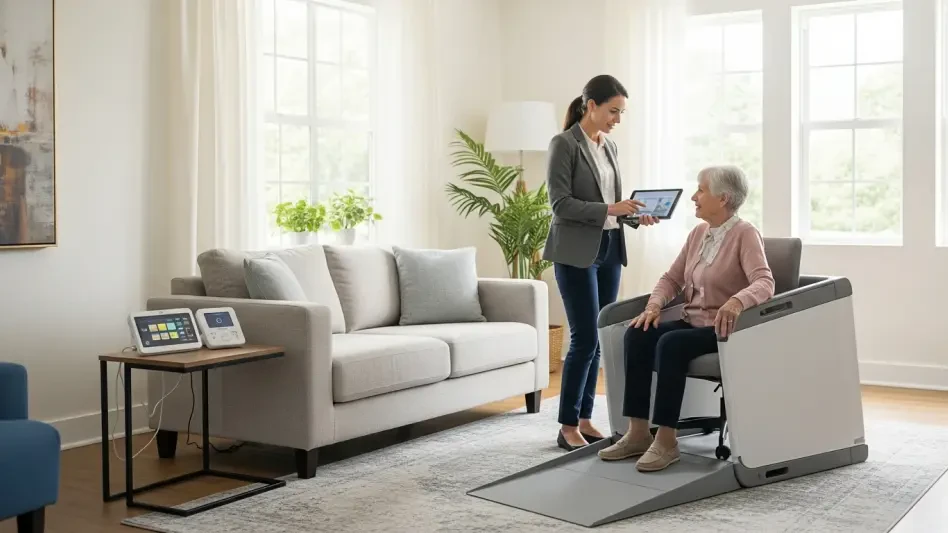
One of the most significant challenges in home-based care is the disconnect between medical necessity and the physical environment. A critical aspect of modern solutions involves the coordination of a vast network of clinical professionals and skilled contractors. By utilizing occupational and physical therapists to conduct assessments, the healthcare system can identify precise modifications—like stair lifts or ramps—that directly impact a patient’s safety. This integrated approach ensures that the “hospital-at-home” model is supported by a physical foundation that mitigates risk, such as the 40% reduction in falls associated with professional modifications.
Streamlining the Administrative and Regulatory Burden
Beyond physical renovations, the viability of the home as a primary care setting depends on the automation of healthcare administration. Historically, the difficulty of obtaining prior authorizations and managing insurance claims has been a barrier to home-based interventions. Emerging proprietary platforms are now automating these workflows, allowing for a seamless integration with Managed Medicaid and Medicare Advantage plans. By reducing the documentation burden on providers and payers, these technologies allow the healthcare system to scale more rapidly, reaching millions of covered lives and proving that home-care logistics can be as efficient as those in a traditional hospital setting.
Addressing Economic Value and Systemic Cost Savings
A major misconception regarding home-based care is that it is an expensive luxury. In reality, the data suggests it is a powerful tool for cost containment. Industry insights reveal that every dollar invested in essential home repairs and accessibility can potentially save nineteen dollars in future Medicaid spending. This massive return on investment is driven by the prevention of acute events, such as hip fractures or secondary infections, which often lead to high-cost emergency room visits. As payers recognize the economic value of preventive care, the market is shifting toward a model where the home is the first line of defense in long-term health management.
The Future of Decentralized Health Management
The trajectory of this movement suggests a future where the home is fully integrated into the clinical continuum. There is an increasing trend toward strategic partnerships between technology platforms and government-backed insurance programs to expand care to underserved populations. Innovations in remote patient monitoring and artificial intelligence will further enhance the ability of clinicians to manage high-acuity patients in a domestic setting. As regulatory frameworks evolve to favor home-based outcomes, the distinction between a residence and a care facility will continue to blur, making decentralized health management the global standard.
Strategies for a Successful Shift to Home-Based Care
To capitalize on this shift, stakeholders should focus on the integration of clinical assessments with executable home modifications to ensure a holistic care plan. Best practices include leveraging automated platforms to handle the complexities of claims and authorizations, which minimizes delays in care delivery. For consumers and caregivers, early assessments are preferable to waiting for a medical crisis. Proactive modifications remained the most effective way to ensure long-term independence and reduce the overall burden on the family support system. Organizations that prioritized these integrated models saw improved patient outcomes and lower overhead.
Establishing the Home as the Future of Medicine
The transition toward the home as the primary setting for healthcare represented a fundamental realignment of the medical industry. By addressing the physical, administrative, and economic barriers to home-based care, innovative organizations proved that the domestic environment delivered superior clinical outcomes at a fraction of the cost of traditional settings. This movement was not just a trend; it was a necessary evolution to support an aging society with dignity and efficiency. Ultimately, the future of healthcare was not found in larger hospitals, but in the intelligent and safe adaptation of the places people already called home.