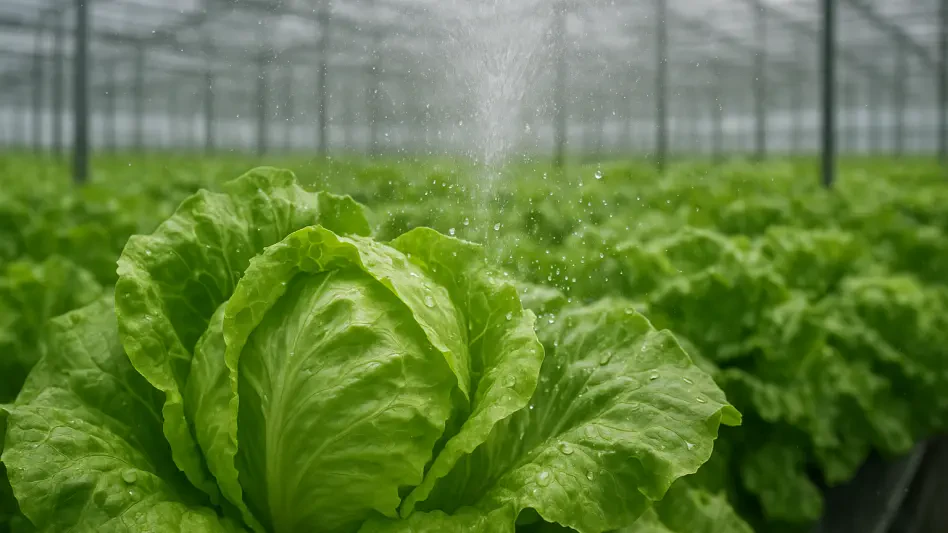

Unlike many foodborne pathogens, Cyclospora is spread exclusively through human feces, meaning traditional animal manure management protocols offer no protection to the consumer. The formal conclusion of the massive 2026 outbreak, which federal health authorities declared over on September 11, has left the American public health infrastructure grappling with a crisis of unprecedented proportions. Linked to iceberg lettuce sourced from Taylor Farms de Mexico, the event resulted in a final tally of 12,883 laboratory-confirmed illnesses across twenty-one states, including 570 hospitalizations and two deaths in Michigan. This historic event serves as a grim milestone, highlighting how vulnerable the modern food supply remains despite decades of technological advancement in safety protocols. As health officials analyzed the data, it became clear that the seasonal surge in domestic cases, which rose from 1,180 in 2025 to nearly 20,000 this year, indicates a systemic failure that extends far beyond a single facility. Even after accounting for cases tied directly to the iceberg lettuce, approximately 6,700 confirmed illnesses remained without a known food source, suggesting that the contamination was either more widespread or originated from multiple environmental vectors that were not fully captured by current surveillance methods.
Understanding the Parasitic Threat
Biological Resilience: The Challenge of Persistence
The parasite Cyclospora cayetanensis presents a unique set of challenges that distinguish it from common bacterial threats like E. coli or Salmonella. Because it is a protozoan parasite, its lifecycle requires a period outside the human host to become infectious, often thriving in tropical or subtropical environments where water and soil provide the necessary conditions for maturation. This biological quirk means that the parasite does not originate in the gut of cattle or poultry, making the agricultural industry’s longstanding focus on livestock separation and manure management largely irrelevant in this context. Instead, the presence of the parasite in the food supply is a direct indicator of human fecal contamination, either through infected workers in the field or contaminated irrigation water. This realization necessitates a complete shift in how safety auditors evaluate farm environments, moving away from animal-centric checks toward more rigorous human hygiene and water quality standards that are currently difficult to monitor in real-time.
Furthermore, the physical resilience of Cyclospora makes it nearly impossible for consumers to eliminate through standard kitchen practices. The parasite’s oocysts are encased in a protective wall that resists many common disinfectants, including the chlorine washes frequently used in commercial produce processing facilities. While these washes are effective at reducing bacterial loads, they often fail to dislodge or neutralize the parasite. For the average American consumer, even thorough washing of individual lettuce leaves under tap water provides no guarantee of safety. This stubborn persistence shifts the entire burden of protection back to the point of origin. If the parasite enters the supply chain at the farm or during the initial cooling phase, it remains a threat all the way to the dinner table. This inherent durability is why health officials have focused so heavily on agricultural water quality, as the sheer volume of water used in modern irrigation can distribute the parasite across thousands of acres in a very short period.
Prevention Strategies: Managing Agricultural Risks
Addressing the threat of Cyclospora requires a sophisticated understanding of the “supply shed,” the complex network of farms and water sources that feed into a single processing plant. In the 2026 outbreak, the contaminated lettuce was traced back to large-scale operations where products from numerous growers were mixed before distribution. This industrial aggregation, while efficient for the market, creates a “needle in a haystack” scenario for investigators. To effectively manage these risks, the industry must transition toward more granular oversight of every water source, including the canals and reservoirs that may be susceptible to runoff from areas with poor sanitation infrastructure. Without a clear map of these water sources and their proximity to human activity, the agricultural sector remains reactive rather than proactive. This lack of visibility is a primary reason why massive recalls often occur weeks after the peak of an outbreak, as the complexity of the supply chain delays the identification of the specific source.
Innovation in detection technology is the only viable path forward for securing the produce supply against such resilient parasites. Currently, the Food and Drug Administration utilizes highly specialized laboratory methods to detect Cyclospora in produce samples, but these tools are not readily available to the average grower or small-scale processor. There is an urgent need for the development and validation of commercial-scale testing kits that can provide rapid results for soil, sediment, and irrigation water. If growers could test their water on a weekly or even daily basis during high-risk seasons, they could halt production before contaminated products ever leave the farm. However, the current lack of affordable, routine testing means that many producers are operating in the dark, relying on luck and general hygiene protocols rather than scientific data. Funding and deploying these diagnostic tools across international borders must become a top priority for both government agencies and the global produce industry to prevent the next seasonal surge.
Evaluating the Federal Response
Regulatory Limitations: Moving Beyond Bureaucracy
In the immediate aftermath of the iceberg lettuce crisis, the regulatory response focused heavily on administrative reminders and the restatement of existing laws. The Food and Drug Administration issued formal communications to the produce industry, highlighting obligations under the Produce Safety Rule and the Foreign Supplier Verification Programs. While these regulations are comprehensive on paper, critics point out that the largest outbreak in history occurred while these very rules were supposedly in effect. This suggests that a gap exists between regulatory compliance and actual field-level safety. Simply reminding growers of their legal duties after nearly 13,000 people have fallen ill is viewed by many as a bureaucratic gesture that fails to address the underlying reasons for the contamination. To be effective, federal oversight must move beyond the issuance of letters and toward more frequent, unannounced onsite inspections that prioritize the specific risks associated with parasites in the supply chain.
Moreover, the regulatory framework currently faces significant hurdles due to legislative restrictions on how funds are spent. Existing appropriations laws have occasionally barred the agency from enforcing certain agricultural water requirements and traceability rules that are crucial for managing outbreaks of this scale. This creates a contradictory environment where the government asks the industry to follow safety standards that the regulatory body itself is prohibited from fully monitoring. Without the ability to enforce strict traceability from the field to the fork, investigators are often forced to rely on paper records that may be incomplete or inaccurate, leading to the “root cause” of the outbreak remaining a mystery. To protect public health, there must be a concerted effort to align federal funding with the actual needs of the food safety system, ensuring that inspectors have the legal and financial backing to hold both domestic and foreign suppliers accountable for the safety of their products.
Investigation Gaps: The Search for a Root Cause
One of the most troubling aspects of the investigation into the Taylor Farms de Mexico incident was its conclusion without the identification of a definitive root cause. Federal officials conducted onsite inspections and collected numerous samples, yet they were unable to pinpoint the exact moment or mechanism of contamination. This follows a frustrating pattern seen in previous years, such as the 2020 bagged salad crisis, where investigations were closed before the source was found. Without knowing whether the contamination came from a specific well, a breach in hygiene protocols at a processing plant, or a broader environmental event, the industry is left without the actionable data needed to implement permanent fixes. This lack of closure not only leaves consumers at risk but also creates an environment of uncertainty for growers who may unknowingly be repeating the same mistakes that led to the initial problem.
The discrepancy in state-level reporting further complicated the federal government’s ability to map the outbreak’s impact accurately. While the contaminated iceberg lettuce was distributed to thirty-one states, only twenty-one reported confirmed cases linked to the outbreak. Major population centers like Florida and New York received the product and reported hundreds of unrelated Cyclospora cases, yet none were officially tied to the Taylor Farms strain. This inconsistency suggests that the public health infrastructure at the state level is unevenly equipped to handle large-scale parasitic events. Some states may lack the laboratory resources or the funding to perform the necessary genotyping and patient interviews required to link local illnesses to a national outbreak. Strengthening this infrastructure is vital for creating a cohesive national response that can identify trends in real-time, rather than months after the contaminated product has been consumed and the damage has been done.
A Roadmap for Systemic Reform
Enhancing Transparency: The Need for Open Data
To rebuild public trust and improve industry safety, the federal government must adopt a policy of radical transparency regarding its investigation findings. This includes not only sharing where contamination was found but also where it was not found. Currently, negative sample results are rarely published, yet this information is incredibly valuable for local growers and safety researchers. If investigators can confirm that certain water sources or geographic regions were free of the parasite during an outbreak, it allows the industry to narrow its focus and identify the unique variables that led to the contamination in other areas. Transparency should also extend to the supply chain itself, with processors providing clearer data on the number of individual farms contributing to a single batch of product. Understanding these connections is essential for identifying systemic vulnerabilities and ensuring that a single failure does not compromise the reputation of an entire agricultural region.
Technological advancement must be paired with this transparency to create a modern safety net. The Centers for Disease Control and Prevention successfully utilized genotyping this summer to link illnesses, proving that molecular tools are the future of outbreak detection. However, for genotyping to be effective on a national scale, it must be standardized and made a routine part of state-level surveillance. This requires a dedicated funding stream to ensure that every state laboratory has the equipment and training to process samples quickly. Reducing the current six-week lag between the onset of an illness and its inclusion in the federal count is a critical goal. When data is delayed by more than a month, the contaminated produce has often been consumed or discarded long before a recall is issued. By shortening this window through automated reporting and better laboratory integration, the government can move from documenting history to actively preventing ongoing infections.
Strengthening Oversight: A Collaborative Future
The human reality of the 2026 outbreak is far more severe than the official numbers suggest, as many victims of Cyclospora never seek medical attention or receive a proper diagnosis. Based on current underdiagnosis multipliers, the true number of Americans affected by this event could potentially reach into the hundreds of thousands. This massive hidden burden of illness carries a significant economic cost, not only in healthcare expenses and lost productivity but also in the damage to the reputation of the produce industry. This summer, sales of iceberg lettuce declined significantly across the country, affecting even those growers who maintained the highest safety standards. The industry has a vested interest in supporting more rigorous federal oversight, as a faster and more accurate traceback process protects innocent producers from the economic fallout of a competitor’s failure. Clearer diagnostic boundaries and faster recalls are the only ways to insulate the broader market from localized contamination events.
The path forward required a formalized and verifiable partnership between the United States and international suppliers, particularly those in regions with high export volumes like Mexico. This partnership looked beyond informal meetings and instead established concrete frameworks with specific deliverables and deadlines for safety improvements. Regulators focused on restoring defunded programs, such as the Microbiological Data Program, which once provided a robust early warning system by testing thousands of produce samples annually. By making the reporting of Cyclospora mandatory within the FoodNet system once again, health officials ensured a more accurate baseline of domestic illness. The industry eventually adopted commercial detection tools as a standard part of their quality control, allowing for real-time monitoring of agricultural water. These coordinated efforts transformed the response from a reactive bureaucratic process into a proactive scientific defense of the food supply, ensuring that the lessons of the historic 2026 crisis were translated into lasting protection for the public.