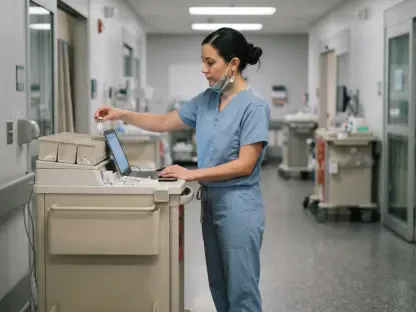

Blockchain-based prescription registries allow physicians to securely write and update medication histories while preventing unauthorized alterations. This foundational shift in medical informatics represents a departure from centralized data storage, which historically left sensitive health information vulnerable to single-point-of-failure breaches and administrative silos. In the current landscape of 2026, the medical community has moved beyond the experimental phases of distributed ledger technology to adopt standardized protocols that prioritize data sovereignty and cryptographic security. By spreading records across a decentralized network of nodes, healthcare institutions ensure that medical histories remain tamper-proof and verifiable by all authorized parties. This evolution not only protects the privacy of individuals but also facilitates a level of interoperability that was previously unattainable within the fragmented software ecosystems of traditional hospital management. As healthcare practitioners and administrators seek more resilient ways to coordinate care, blockchain technology provides the necessary infrastructure to manage complex data exchanges with unprecedented precision and institutional accountability.
1. Core Principles: Decentralized Ledgers and Patient Record Management
In the medical field, blockchain functions as a distributed ledger system designed to document and secure healthcare processes across a vast, decentralized network. Unlike traditional legacy databases that rely on a central administrator, this technology fragments information across various nodes, making it nearly impossible for malicious actors to alter records without detection. This system grants patients true ownership of their information, generating unchangeable logs that support safe collaboration between doctors, insurance providers, and research scientists. The three pillars of this technology—permanence, decentralization, and openness—work in tandem to create a solid audit path. Once a medical event or diagnostic result is entered into the registry, it cannot be edited or erased, ensuring that the historical truth of a patient’s journey remains intact. This transparency ensures that authorized users can track every transaction, which promotes a culture of institutional accountability and drastically reduces the likelihood of administrative fraud or medical errors.
Building on these core principles, blockchain significantly upgrades record-keeping by returning data ownership to the patient and enabling secure sharing across institutional boundaries. Advanced platforms such as MedBlock and MediBchain utilize these protocols to give users granular control over who can view or share their medical history. Through the use of pseudonymity, patients are linked to cryptographic keys rather than personal identification numbers, which significantly lowers the risk of identity leaks in the event of a system inquiry. Individuals have the power to grant granular consent, choosing exactly which portions of their health files a specific provider can access for a designated period. Every instance of data access is recorded on the ledger, providing a clear, verifiable history of use that empowers the patient to monitor their privacy. For instance, a patient seeing different specialists can grant each doctor access only to relevant files, and if they switch providers, they can instantly revoke that access, keeping their data synchronized and secure.
2. Versatile Applications: From Prescriptions to Diagnostic Imaging
The most significant applications for decentralized ledgers in this sector target specific gaps in trust and data integrity, covering everything from prescription tracking to the storage of high-resolution diagnostic images. In the realm of imaging, secure cloud vaults now store massive files like MRIs and CT scans, ensuring that only verified medical professionals can retrieve them via unique digital identifiers. This prevents the unauthorized distribution of sensitive visual data while ensuring that surgeons and radiologists have immediate access to the high-quality files they need. Furthermore, drug validation systems have become essential for authenticating pharmaceuticals in real time, stopping counterfeit medications from entering the patient supply chain. Insurance audits have also been streamlined through automated verification steps, allowing for faster claims handling and a reduction in the bureaucratic friction that often delays patient care. These applications demonstrate how blockchain serves as a unifying layer that bridges the gap between different facets of the healthcare ecosystem.
The management of prescriptions has been particularly transformed through decentralized registries that track medication use under strict patient authorization. These systems utilize advanced encryption so that only verified pharmacists and physicians can update or view a patient’s medication history, effectively curbing errors and the potential for drug abuse. Modern models frequently integrate the InterPlanetary File System (IPFS) and HL7 FHIR standards to manage the data load efficiently. In this setup, the actual medical data is stored “off-chain” to maintain performance, while the blockchain itself holds a content identifier that acts as a secure reference link. This hybrid approach protects privacy while remaining fully compatible with existing hospital software. The workflow begins when a doctor generates a digital script and signs it with a private key; the document is then uploaded to decentralized storage and linked to the ledger. Pharmacists use the patient’s specific key to find and confirm the order, and every interaction is timestamped and logged for regulatory oversight.
3. Workflow Optimization: Supply Chains and Clinical Research
Processes that demand high transparency and fraud prevention benefit the most from the implementation of decentralized technology, particularly in supply chain logistics. Blockchain enables a comprehensive “track and trace” capability that monitors a medication’s journey from the manufacturing facility to the clinic pharmacy. This is vital for temperature-sensitive items like vaccines, where the ledger can record environmental data at every stage to ensure the product was handled correctly and remained effective. This level of oversight makes it nearly impossible for substandard or fake products to be introduced into the system without triggering an immediate alert. Beyond drug tracking, professional credentialing has seen a significant boost in efficiency. By using a ledger to verify medical licenses and professional certifications, hospitals can accelerate the hiring process and ensure that every practitioner on their staff is fully qualified. This reduces administrative overhead and eliminates the risks associated with fraudulent credentials in the high-stakes environment of medical care.
Clinical research also stands as a primary beneficiary of these secure documentation methods, as the integrity of research data is paramount for scientific progress and regulatory approval. By using smart contracts to record clinical trial results in real time, researchers can guarantee that data has not been cherry-picked or altered after the fact to suit a specific outcome. This guarantees the honesty of scientific findings and provides regulatory bodies with a transparent, immutable record of every trial phase. The decentralized nature of the ledger allows multiple research institutions to collaborate on large-scale studies without the fear of data silos or conflicting records. Every adjustment to a study protocol or a patient entry is logged and timestamped, creating a level of scientific accountability that was difficult to achieve with manual or centralized digital logs. This transition to decentralized research documentation has fostered a more collaborative and trustworthy environment for pharmaceutical innovation and public health studies across the globe.
4. Economic Evolution: Market Trends and Operational Hurdles
The blockchain healthcare sector is currently experiencing a period of significant expansion, with market analysts observing a projected annual growth rate exceeding 60 percent. While the global market valuation was approximately $640 million back in 2022, current expert data points toward a valuation reaching nearly $7 billion by 2027. This growth is largely driven by a massive increase in investment across North America and the Asia-Pacific region, which are expected to hold the majority of the market share as we approach 2035. Despite this rapid financial growth, adoption remains somewhat localized, with regions like the United States and the United Kingdom exploring high-impact niches such as drug discovery and provider credentialing. Other regions are integrating these systems more slowly, often focusing on foundational infrastructure before moving to complex patient-facing applications. This economic landscape suggests that while the technology is maturing, its widespread impact depends on the ability of different markets to standardize their legal and technical frameworks.
However, several significant obstacles remain that prevent universal adoption, ranging from technical debt in aging hospital systems to the complexities of international data laws. Merging modern decentralized ledgers with old hospital databases is a difficult and often expensive endeavor that requires specialized IT expertise. Furthermore, any blockchain implementation must strictly adhere to evolving legal requirements such as HIPAA in the United States and GDPR in Europe, which create high hurdles for data privacy and “the right to be forgotten” on an immutable ledger. Throughput issues also persist, as handling massive amounts of medical data across a distributed network can lead to latency if the system is not properly architected. Finally, the challenge of interoperability remains a primary concern; different blockchain platforms must be able to communicate and exchange data seamlessly to be truly effective. Without universal standards, the risk of creating new, decentralized silos remains a possibility that the industry must work proactively to avoid through collaborative consortiums.
5. Implementation Pathways: Strategies and Critical Inquiries
Medical organizations looking to adopt these tools effectively focus their efforts on high-value pilot programs before attempting any full-scale network rollout. The initial step for administrators involves pinpointing specific requirements, such as whether the facility needs to improve drug tracking or if the priority was secure patient data sharing. Once these needs were identified, organizations collaborated with technology partners who possessed a deep understanding of both cryptographic protocols and medical legal frameworks. Executing small, controlled pilot projects allowed these groups to test the software’s performance and impact on workflow speed without disrupting critical patient care. Following these trials, administrators analyzed the results to check for improvements in data safety and administrative efficiency. Once the technology was proven effective in a specific department, it was then rolled out more broadly across other clinics and hospital networks, ensuring a stable and reliable transition to decentralized management.
Ultimately, the transition to these digital systems answered several critical questions regarding the balance between transparency and confidentiality. Most medical institutions preferred private or “permissioned” blockchains because they offered better control over sensitive files while meeting strict legal requirements for data access. Patients found that their confidentiality was maintained through robust encryption, realizing that no one could view their history without explicit permission. These live platforms, including FHIRChain and MedBlock, were successfully used to manage digital records and verify the credentials of practitioners. Supply chain tracking was prioritized because it allowed for the comprehensive authentication of pharmaceuticals, preventing the sale of fake medications and ensuring life-saving drugs were handled correctly. Although the cost of replacing legacy IT systems and the need for specialized training were significant barriers, the industry moved steadily toward an integrated future where data integrity served as the primary functional requirement for all medical transactions.