
Medical records generated from electronic health records, wearable sensors, and genomic databases frequently use conflicting codes that prevent a holistic view of a patient’s history. This persistent fragmentation represents a critical bottleneck in modern clinical research, where vast “data lakes” intended for life-saving analysis often degrade into disorganized “data swamps” due to incompatible terminologies and inconsistent metadata. Even as we operate in 2026, healthcare institutions struggle to synchronize information across platforms that might use SNOMED CT for clinical findings while relying on ICD-10 or ICD-11 for billing and administrative purposes. As the volume of medical data continues to accelerate, the necessity for a sophisticated layer of semantic understanding has moved from a technical luxury to a foundational requirement. The current landscape requires more than just high-capacity storage; it demands a structured, machine-readable framework that can reconcile these disparate data streams into a coherent and actionable narrative of human health, ensuring that every byte of information contributes to better outcomes.
Establishing a Unified Language for Medical Information
The Mechanics: Semantic Management via Ontologies
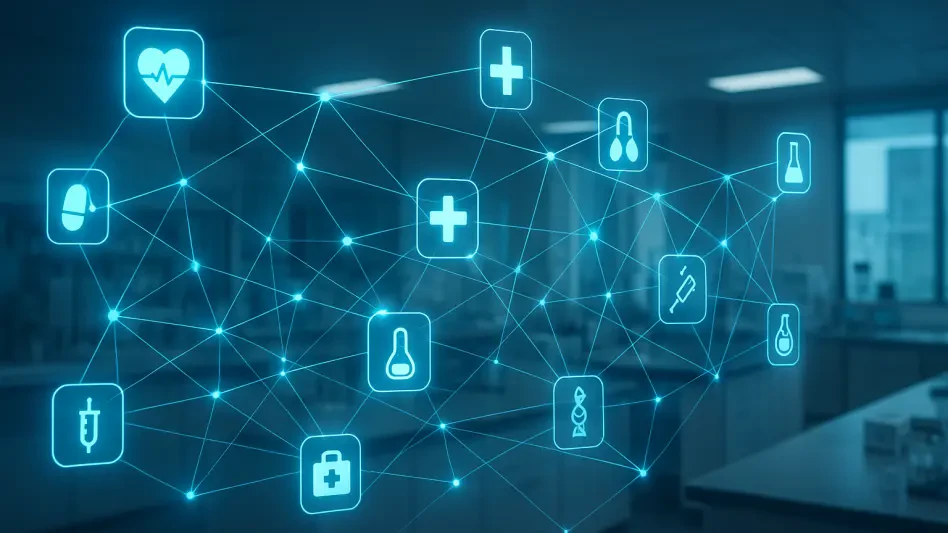
Ontologies serve as a vital bridge by defining the logical relationships between various medical concepts such as symptoms, diagnoses, and medications in a way that computers can actually interpret. Instead of treating medical terms as simple, isolated text strings that a machine might find difficult to differentiate, an ontology creates a digital map where “diseases” and “procedures” are nodes in a complex knowledge graph. This approach ensures that different platforms can exchange information without losing the original clinical context, significantly improving the way data is discovered and retrieved across expansive hospital networks. By using standardized protocols like the Resource Description Framework (RDF) and Web Ontology Language (OWL), healthcare systems can ensure that the meaning of a patient record remains consistent whether it is viewed in a local clinic or a national research laboratory, effectively eliminating the confusion caused by synonyms or regional variations in medical terminology.
The transition to ontology-driven data management has allowed organizations to move beyond traditional relational databases, which often struggle with the fluid and interconnected nature of healthcare information. In these semantic systems, data is no longer trapped in rigid tables but is instead part of a dynamic web of knowledge that can expand as new medical discoveries are made. This flexibility is essential for maintaining the longevity of medical records, as it allows historical data to be remapped to modern standards without the risk of information loss. Moreover, this structural clarity facilitates better collaboration between different specialties, as the ontology provides a shared vocabulary that translates the specific jargon of a cardiologist into terms that are equally understandable to a general practitioner or a pharmacologist. This foundation of clear communication is what ultimately enables the large-scale integration of health data required for population health management and advanced epidemiological studies.
Reasoning: Implementation of Domain-Aware Intelligence
Beyond simple categorization, these semantic models enable machines to perform “reasoning,” which is the sophisticated ability to apply medical logic to existing datasets to uncover hidden insights. For example, a reasoning engine can automatically flag a potential medication error by recognizing that a newly prescribed drug belongs to a specific chemical class a patient is allergic to, even if the exact brand names do not match the entries in the allergy record. This layer of intelligence moves healthcare systems beyond simple storage and toward active, domain-aware decision support that can intervene before a mistake reaches the patient. By encoding clinical guidelines directly into the data layer, ontologies allow electronic health records to function as proactive partners in the care process, identifying risks such as cardiovascular complications or sepsis precursors by analyzing the logical connections between vital signs, lab results, and history.
The power of ontological reasoning is particularly evident when dealing with “fuzzy” or imprecise data, which is a common occurrence in clinical settings where symptoms are not always definitive. Reasoning engines use defined rules to infer new information from what is already known, allowing a system to suggest a probable diagnosis even when some data points are missing or described using non-standard language. This capability is proving indispensable for rare disease research, where the ability to link disparate symptoms across a global database can lead to the identification of a condition that a single physician might never encounter in their career. Furthermore, by automating these logical deductions, healthcare providers can reduce the cognitive load on clinicians, ensuring that they are presented with only the most relevant, high-priority information at the point of care. This shift from passive data to active knowledge is a cornerstone of the modern effort to improve diagnostic accuracy and patient safety.
Categorizing the Applications of Healthcare Analytics
Access: Frameworks for Integration and Democratization
To modernize data infrastructure, experts have identified several key domains where ontologies provide immediate value, starting with integration frameworks that merge heterogeneous databases into a single, comprehensive patient view. By enriching metadata with ontological tags, organizations ensure that their data remains interpretable and useful even as underlying software versions or hardware infrastructures evolve. Tools like the Pathling server or the ATHENA platform have emerged as leaders in this space, providing the necessary architecture to translate between various standards like HL7 FHIR and clinical terminologies. This enrichment process creates a layer of “semantic persistence,” where the value of the data is protected from the rapid obsolescence often seen in the technology sector, allowing researchers to conduct longitudinal studies that span decades of patient history without encountering technical barriers.
Additionally, the adoption of Ontology-Based Data Access (OBDA) has fundamentally changed how medical professionals interact with large-scale data repositories. OBDA empowers clinicians to query complex systems using familiar medical terms, such as “patients with chronic respiratory distress,” rather than requiring them to write technical database code or understand the underlying schema of the storage system. This effectively democratizes data for those on the front lines of care, allowing a doctor to pull relevant statistics or research cohorts without needing a data scientist as an intermediary. By abstracting the technical complexity of the database, OBDA ensures that clinical expertise remains the primary driver of medical inquiry. This accessibility is crucial for fostering a culture of evidence-based medicine, where practitioners can quickly validate their clinical observations against massive, real-world datasets to provide the most current and effective treatments.
Analytics: Processing Unstructured Data and Real-Time Logic
A vast portion of medical knowledge remains trapped in unstructured formats, such as handwritten notes, free-text clinical reports, and transcribed audio files. Semantic annotation tools now utilize machine learning algorithms like MedCAT and SNOBERT to scan this prose and link it to standardized codes, transforming “messy” human language into structured data that is ready for high-level analysis. This process allows hospitals to unlock the insights buried within millions of pages of clinician notes, which often contain the nuanced observations that formal codes miss. By bridging the gap between natural language and structured ontologies, healthcare systems can gain a much more detailed understanding of patient experiences, including social determinants of health and subtle symptom progressions that are frequently excluded from traditional billing records.
When combined with high-powered computing frameworks like Apache Spark and Kafka, these ontologies support real-time monitoring in intensive care units, alerting staff to subtle changes in a patient’s condition by processing complex events as they happen. For instance, a system can be programmed to monitor the stream of data from a cardiac monitor and cross-reference it with a patient’s medication history and recent lab work, triggering an alert only when the combination of factors suggests a specific clinical risk. This real-time semantic processing reduces the “alarm fatigue” that often plagues high-acuity environments by ensuring that notifications are clinically meaningful and context-aware. This capability is essential for managing the high-velocity data generated by the modern “Internet of Medical Things,” where thousands of sensors may be reporting data simultaneously. By providing a logical filter, ontologies ensure that critical interventions occur at the exact moment they are needed most.
Navigating the Future of Knowledge Management
Challenges: Overcoming Technical and Operational Barriers
Despite the clear advantages of these systems, implementing ontology-driven analytics presents significant challenges, particularly regarding the high computational power required for real-time logical reasoning across massive datasets. As the number of logical rules and data points increases, the time required for a reasoning engine to reach a conclusion can grow exponentially, which poses a threat to applications that require instantaneous feedback. Researchers are currently exploring distributed reasoning models that utilize cloud computing to manage these workloads, but the overhead remains a barrier for smaller institutions or those in low-resource settings. Furthermore, the specialized nature of ontology engineering means that there is a persistent shortage of experts who possess both the medical knowledge and the technical skills required to build and maintain these complex digital models.
Operational hurdles also include the ongoing maintenance of ontologies, as medical knowledge is constantly advancing and requires frequent updates to reflect new drug releases or changing disease classifications. Unlike traditional software updates, changing an ontology can have far-reaching effects on how data is interpreted, requiring a rigorous governance process to ensure that updates do not introduce inconsistencies into the historical record. There are also significant privacy and security considerations to address, as making data more interconnected can sometimes inadvertently increase the risk of re-identifying individuals within supposedly anonymous datasets. To mitigate these risks, future implementations will likely need to combine semantic frameworks with advanced encryption and access controls, such as blockchain-based ledger systems, to ensure that the increased “meaning” of the data does not come at the expense of patient confidentiality.
Innovation: The Synergy of Artificial Intelligence and Human Logic
The future of healthcare analytics lies in the marriage of Artificial Intelligence and knowledge graphs, where large language models are now being used to help automate the creation and refinement of complex ontologies. This hybrid approach combines the pattern-recognition capabilities of neural networks with the “explainable” logic of ontologies, turning AI from a mysterious “black box” into a transparent and trustworthy tool for clinical use. By using an ontology to provide a clear, logical path that explains why a machine reached a certain recommendation, developers have made it possible for doctors to verify the AI’s conclusions against established medical standards. This synergy is particularly important for the development of personalized treatment plans, where the AI can identify patterns in genomic data while the ontology ensures that the proposed therapies align with current clinical safety protocols.
This transition toward a “smart data” ecosystem demonstrated that the medical community effectively shifted its primary focus from the mere volume of data storage to the depth of data meaning. By 2026, the implementation of these semantic bridges allowed healthcare providers to move beyond fragmented records and toward a unified understanding of human health that significantly improved diagnostic speed and accuracy. Organizations that prioritized the development of robust ontological frameworks were able to integrate disparate data sources more efficiently, resulting in more effective personalized care and streamlined clinical operations. Moving forward, the continued integration of semantic technologies into standard medical practice will remain essential for any institution seeking to turn the promise of big data into the reality of improved patient outcomes. The focus remained on ensuring that technology served as an intuitive extension of clinical expertise, providing the clarity needed to save lives in an increasingly complex digital world.