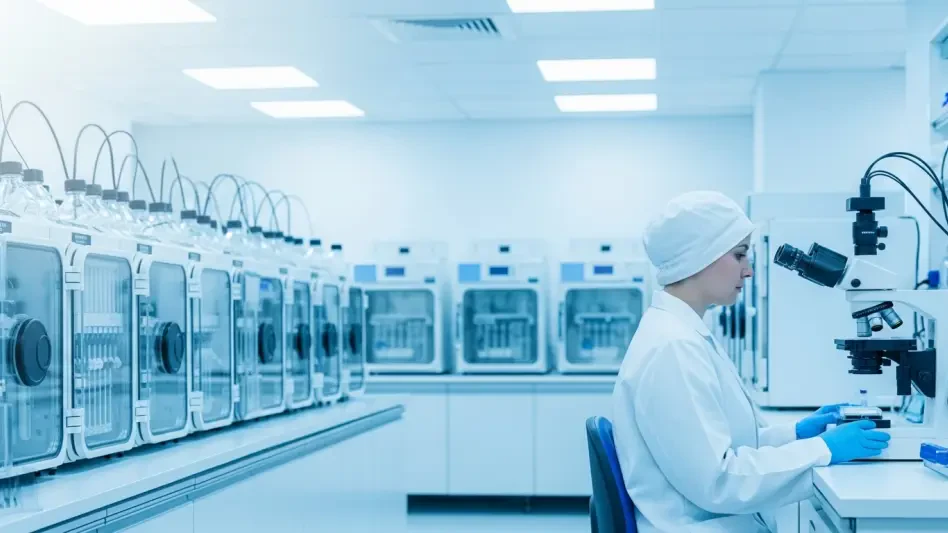

The pharmaceutical industry is currently witnessing a tectonic shift as traditional animal-based testing models are being supplemented, and in some cases replaced, by sophisticated human-centric technologies. The International Society for Stem Cell Research (ISSCR) Consortium on Advanced Stem Cell-Based Models in Drug Discovery and Development has officially submitted a comprehensive set of recommendations to the U.S. Food and Drug Administration (FDA) regarding the integration of New Approach Methodologies (NAMs). This move comes as a direct response to the agency’s recent draft guidance, which seeks to modernize the drug development pipeline by embracing alternatives to conventional in vivo testing. The consortium, comprising a global assembly of academic and industrial experts, emphasizes that stem cell-derived models, such as organoids and induced pluripotent stem cells (iPSCs), offer a more accurate representation of human physiology. By moving toward these advanced systems, the industry aims to increase the success rate of clinical trials and reduce the reliance on animal subjects.
Modernizing Clinical Pathways: The Role of Human Biology
The integration of induced pluripotent stem cell technology provides a unique opportunity to capture the vast genetic diversity of the human population within a controlled laboratory setting. Unlike animal models, which often fail to replicate human-specific drug reactions due to fundamental biological differences, stem cell-derived systems can be engineered to reflect specific disease states or genetic backgrounds. This capability allows researchers to conduct “clinical trials in a dish,” identifying potential safety concerns or efficacy issues long before a drug candidate enters human testing phases. The ISSCR highlights that organoids—miniature, self-organized tissue structures—can simulate the complex architecture of human organs like the heart, liver, or brain. These systems offer a level of predictive power that was previously unattainable, enabling a more granular understanding of how various chemical compounds interact with human tissues at the cellular level during the early stages of discovery.
Building on this biological foundation, the shift toward NAMs represents a departure from the one-size-fits-all approach that has historically characterized pharmaceutical research. Conventional animal testing has frequently led to high attrition rates in clinical trials, as many compounds that appear safe in rodents prove toxic or ineffective in humans. By utilizing human-relevant models, scientists can better identify specific biomarkers and metabolic pathways that are unique to our species. The consortium argues that the widespread adoption of these technologies will not only streamline the development process but also foster a more ethical research environment. As these models become more sophisticated, they provide a robust framework for investigating rare diseases and personalized medicine, where animal models are often entirely inadequate. This evolution ensures that the next generation of therapies is grounded in human biology from the very beginning of the experimental process.
Regulatory Flexibility: Implementing a Fit-for-Purpose Framework
One of the most critical aspects of the recommendations submitted to the FDA involves the adoption of a “fit-for-purpose” approach to model validation and implementation. The ISSCR suggests that the regulatory framework should not demand that every new methodology meet the same exhaustive criteria, but rather that the level of validation should match the specific task at hand. For instance, high-throughput screening tools used for initial toxicity assessments may require different standards than complex multi-organ chips used for definitive safety clearances. This flexibility is essential for maintaining the pace of innovation, as it allows researchers to utilize simpler systems where they are most effective while reserving more resource-intensive models for complex biological questions. By establishing clear tiers of evidence, the FDA can provide a predictable pathway for developers to demonstrate the reliability of their NAMs without stifling the emergence of new technological breakthroughs.
Moreover, the integration of computational biology and artificial intelligence with physical stem cell models creates a powerful hybrid approach known as in silico modeling. These digital systems can analyze the massive datasets generated by stem cell experiments to predict long-term outcomes and systemic interactions that might not be immediately visible in a laboratory setting. The consortium emphasizes that the FDA should remain adaptable to these advancing computational tools, which serve as a vital bridge between in vitro data and clinical reality. As machine learning algorithms become more adept at interpreting biological variability, the synergy between computational and biological models will likely become the gold standard for drug evaluation. This holistic view of drug discovery acknowledges that no single methodology is a panacea; rather, a combination of diverse tools provides the most comprehensive understanding of a drug’s potential impact on the human body.
Collaborative Standards: Building the Future of Drug Safety
To ensure the successful implementation of these advanced models, the consortium proposed that the FDA establish dedicated workshops and specialized guidance to address biological variability. Standardizing the protocols for growing and maintaining iPSC-derived tissues is essential for ensuring that results are reproducible across different laboratories and pharmaceutical companies. Without these standards, the inherent complexity of stem cell systems could lead to inconsistent data, which might undermine regulatory confidence in NAMs. The researchers suggested that creating a centralized repository of validated protocols and benchmark data would accelerate the adoption of these technologies. By fostering a collaborative environment where industry and regulators share insights, the community can collectively solve technical challenges related to tissue maturation and vascularization, which are currently among the primary hurdles in creating fully functional human organ models.
The transition toward these modern methodologies required a fundamental reimagining of how safety and efficacy were demonstrated to regulatory bodies. Stakeholders across the scientific spectrum recognized that moving away from established animal protocols was a necessary step to overcome the stagnation in drug development timelines. The consortium successfully advocated for a regulatory environment that prioritized human-relevant insights, ensuring that new therapies were evaluated through the lens of human biology rather than cross-species extrapolation. As the industry moved forward, the focus shifted toward the continuous refinement of these models, with a clear emphasis on integrating real-world data to validate their predictive accuracy. These efforts paved the way for a more efficient pharmaceutical landscape where innovative technologies directly contributed to the delivery of safer and more effective treatments for patients worldwide. Moving forward, the industry must remain committed to the ongoing validation of these systems to maintain public and regulatory trust.