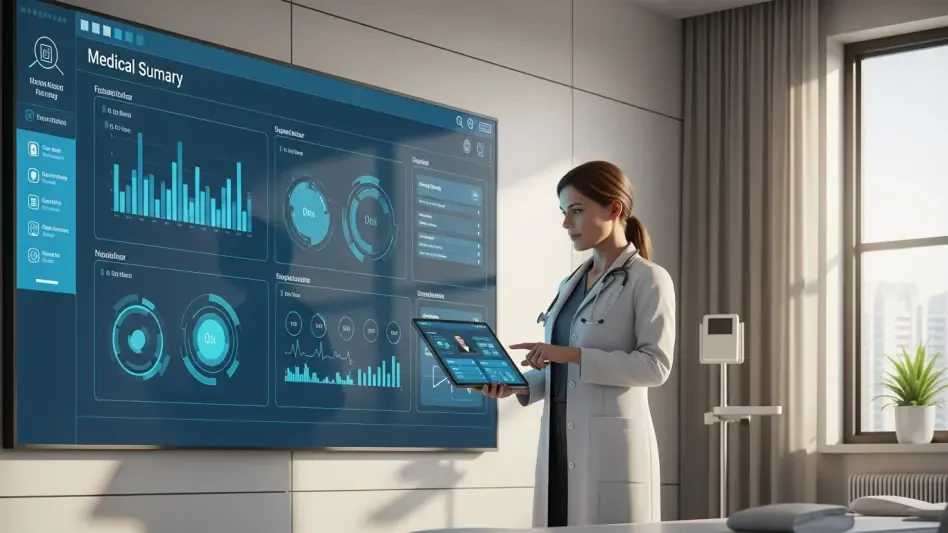

The sudden anxiety triggered by complex medical jargon often drives patients toward unreliable search engines, creating a gap that Hartford HealthCare is now filling with a controlled, clinical alternative. Through a strategic partnership with K Health, the organization launched PatientGPT, a specialized AI model designed to operate exclusively within the secure boundaries of its patient portal. This shift reflects a strategic move away from generic large language models toward highly contextual systems that prioritize medical accuracy over broad utility.
The Emergence of PatientGPT in Modern Healthcare
PatientGPT represents a pivot from general-purpose generative AI to a vertically integrated clinical assistant. Unlike standard chatbots, this system leverages individual medical records to provide answers grounded in a user’s specific health history. By grounding the technology in HIPAA-compliant frameworks, the developers ensured that sensitive data remained within a supervised medical environment rather than being fed into public training sets. This approach addressed the fundamental distrust many providers feel toward unmonitored digital advisors.
The context of this emergence is a healthcare landscape struggling with provider burnout and an influx of digital queries. By integrating the AI directly into the existing infrastructure, Hartford HealthCare positioned itself as a consumer-centric leader. This implementation suggests that the value of AI in medicine is not found in its ability to replace doctors, but in its capacity to organize and present data in a way that makes the human-to-doctor interaction more efficient and informed.
Core Technical Features and Functional Components
Personalized Medical Translation and Data Interpretation
One primary function involves the translation of dense clinical terminology into accessible language. When a patient receives pathology or bloodwork results, the AI synthesizes the data to explain what specific levels mean for that individual. This interpretation reduces the cognitive load on patients and mitigates the risk of misinterpretation that often occurs when users attempt to decode raw medical data without professional guidance.
Clinical Triage and Seamless Access Coordination
Beyond data explanation, the tool functions as a sophisticated entry point for care. It performs automated triage by analyzing reported symptoms against historical records and flagging high-risk indicators. This component allows for immediate escalation to the virtual care platform, effectively shortening the time between the initial query and actual clinical intervention. It streamlines the patient journey by ensuring that users are directed to the appropriate level of care without unnecessary administrative delays.
Current Trends and the Shift Toward Specialized Clinical AI
Roughly 32% of adults currently seek health advice from AI, a statistic that highlights the growing phenomenon of the AI-informed patient. However, general models frequently hallucinate or lack necessary medical nuance. Industry trends indicate a significant shift toward walled garden AI, where healthcare providers maintain oversight. This movement suggests that the future of digital health lies in curated intelligence rather than unrestricted access to general information.
Real-World Applications and Industry Implementation
Implementation across systems like Hartford HealthCare and Reid Health demonstrates how AI can act as a force multiplier for nursing staff and administrative teams. By handling routine questions and appointment scheduling, the software frees human providers to focus on complex cases. Comparable systems, such as Epic’s Emmie, further prove that the integration of AI into electronic health records is becoming the new standard for consumer-centric medicine.
Navigating Challenges and Regulatory Obstacles
Despite its promise, the technology must overcome the persistent hurdle of clinical accuracy. While HIPAA compliance protects privacy, it does not inherently guarantee the medical validity of every generated response. Developers face the constant challenge of refining the underlying algorithms to prevent the propagation of medical misinformation. Furthermore, navigating the evolving landscape of federal AI regulation remains a primary concern for long-term scalability and trust.
The Future Outlook of Generative AI in Patient Portals
Looking forward, these systems will likely evolve from reactive assistants to proactive health monitors. Integration with wearable technology and real-time biometric data could allow AI to alert patients to potential health issues before symptoms even manifest. This transition toward predictive analytics would transform patient portals from static repositories of past events into active participants in preventative wellness, fundamentally changing how individuals manage chronic conditions.
Conclusion: Assessing the Long-Term Impact of PatientGPT
The initial rollout of PatientGPT established a necessary precedent for the responsible deployment of clinical AI. This system demonstrated that bridging the gap between digital convenience and professional medical oversight was not only possible but essential for modern patient engagement. Future iterations will likely focus on deep-learning models that anticipate chronic needs, ensuring that technology remains a supportive tool for clinicians rather than a source of confusion for users. Healthcare systems should prioritize the integration of these tools into standard care workflows to maximize their preventative potential.