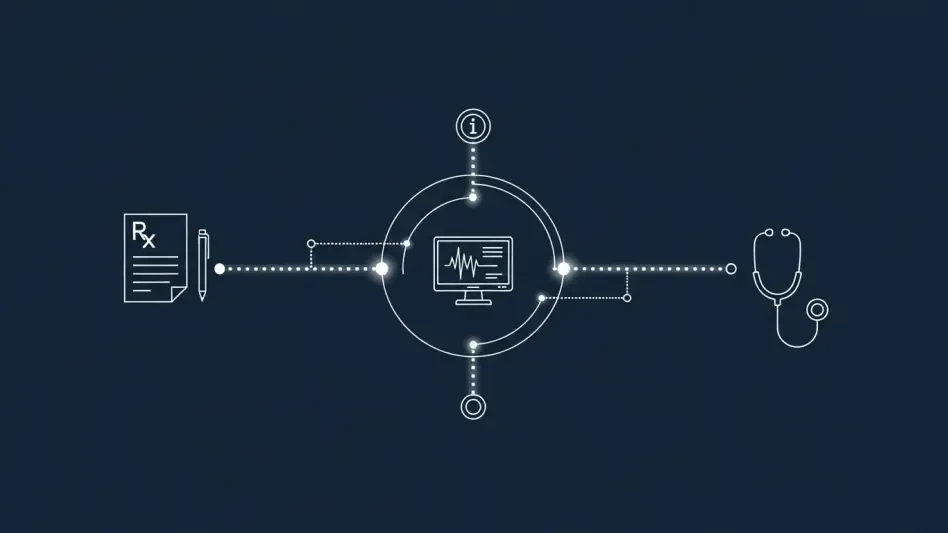

The convergence of clinical technology and digital marketing has reached a definitive turning point as healthcare providers increasingly rely on unified digital ecosystems to manage patient care and therapeutic decisions. In a landscape where the sheer volume of medical data can overwhelm even the most seasoned practitioners, the ability to deliver precise, relevant information at the exact moment of clinical decision-making is no longer just a luxury but a fundamental necessity for modern medicine. OptimizeRx Corp. and DeepIntent have recognized this shift by forging a strategic partnership that integrates a proprietary electronic health record network directly into a programmatic advertising infrastructure. This collaboration represents a departure from traditional, fragmented marketing efforts by allowing life sciences brands to engage with healthcare professionals within the very software tools they use to document visits, review patient histories, and prescribe medications. By bridging the gap between high-level media buying and the physical point of care, these companies are effectively creating a new standard for how pharmaceutical information is disseminated and consumed in the digital age.
This landmark alliance is engineered to streamline the complex process of reaching specialized clinicians who are often shielded by administrative barriers and busy schedules. Historically, the pharmaceutical industry has struggled with a disconnect between broad digital advertising campaigns and the specialized clinical environment where treatment plans are actually formed. The integration of OptimizeRx’s authenticated EHR network into DeepIntent’s demand-side platform provides a singular, cohesive route for marketers to ensure their messaging is both seen and utilized when it matters most. Rather than forcing doctors to seek out information across disparate journals or websites, this system brings the data to them, embedded within their native clinical workflow. This evolution not only enhances the efficiency of marketing spend for life sciences companies but also supports a more informed medical community, ultimately fostering an environment where the latest therapeutic innovations are more readily accessible to those responsible for patient health outcomes.
Technical Integration: Merging Programmatic Power with Clinical Data
The mechanical foundation of this partnership rests on the seamless connection between OptimizeRx’s verified inventory and the automated buying capabilities of DeepIntent’s specialized healthcare demand-side platform. This technical bridge allows advertisers to treat EHR space with the same sophistication and speed as traditional digital media, utilizing real-time bidding and programmatic logic to place messages in front of the right providers. For the first time, the “walled garden” of the electronic health record is being opened to the efficiency of the programmatic ecosystem, allowing for a level of scale and precision that was previously unattainable through manual insertion orders or direct-to-publisher deals. The system is designed to go fully live in the third quarter of this year, a timeline that purposefully intersects with the critical planning phases for next year’s pharmaceutical marketing budgets. This schedule ensures that agencies and brand managers can incorporate these new capabilities into their long-term strategies, moving away from experimental pilots and toward a standard, scalable component of their omnichannel outreach.
By leveraging existing programmatic frameworks, the integration removes many of the technical hurdles that have historically prevented smaller or mid-sized life sciences brands from entering the EHR space. There is no longer a need for custom, one-off integrations for every different clinical software provider; instead, DeepIntent acts as the centralized hub for managing and optimizing these high-value interactions. This democratization of access means that a wider range of therapeutic categories can now compete for the attention of specialists, providing a richer diversity of information to the medical community. Furthermore, the automation provided by the DSP allows for rapid campaign adjustments based on real-time performance data, ensuring that if a specific clinical message is resonating more effectively with oncologists or cardiologists, the budget can be reallocated instantly to maximize impact. This level of agility is a significant upgrade from the static nature of traditional medical advertising, reflecting a broader trend toward data-driven responsiveness in the healthcare technology sector.
Redefining Workflows: The Role of Artificial Intelligence and Relevance
The shift toward placing information directly within the EHR recognizes that the clinical workflow is the most influential environment for physician decision-making, far outweighing the impact of general web browsing or medical news consumption. To ensure that these digital touchpoints remain helpful rather than disruptive, the partnership utilizes sophisticated AI-driven tools such as the Dynamic Audience Activation Platform and Micro-Neighborhood® Targeting. These technologies analyze the immediate clinical context—without compromising patient privacy—to determine which pieces of therapeutic information are most relevant to the provider’s current task. For instance, if a physician is reviewing treatments for a specific chronic condition, the system can surface the latest clinical trial data or co-pay assistance information for a related therapy. This hyper-relevance transforms the advertisement from a generic banner into a useful clinical resource, aligning the interests of the pharmaceutical brand with the immediate needs of the healthcare provider and their patient.
This strategic placement also serves as a robust solution to the growing problem of signal loss caused by the phasing out of third-party cookies and the tightening of digital privacy regulations. While traditional digital advertising often relies on probabilistic modeling—essentially guessing who a user is based on their behavior—this EHR-integrated approach uses deterministic data. Because healthcare providers are logged into secure, authenticated systems, the platform knows exactly who is seeing the information, ensuring that high-value marketing dollars are never wasted on non-target audiences or automated bots. This deterministic approach provides a level of certainty and transparency that is becoming increasingly rare in the open-web environment. By focusing on the “micro-neighborhood” of the clinical encounter, OptimizeRx and DeepIntent are building a future-proof marketing channel that prioritizes data integrity and contextual relevance over invasive tracking methods, setting a higher bar for how the industry handles professional medical communications.
Strategic Benefits: Enhancing Precision and Omnichannel Consistency
The most immediate advantage for pharmaceutical brands and their agencies is the ability to maintain omnichannel consistency across the entire professional journey of a healthcare provider. In the past, a doctor might see a digital ad for a new medication while reading an industry publication, but that momentum would be lost as soon as they entered the clinical environment to see patients. With this new integration, the narrative remains unbroken; the same therapeutic message follows the provider into the EHR, reinforcing the clinical education and brand awareness established earlier in the day. This continuity is essential for building trust and ensuring that a therapy remains top-of-mind when the moment of prescription arrives. By synchronizing these different touchpoints through a single programmatic interface, marketers can orchestrate complex, multi-stage campaigns that guide a provider from initial awareness to deep clinical understanding, all within a privacy-safe and professional framework.
Beyond simple message repetition, the partnership offers a level of verification that is foundational to healthcare marketing. Since the EHR network is composed entirely of authenticated medical professionals who must log in with secure credentials, the risk of fraud is virtually non-existent. This security allows life sciences companies to invest with confidence, knowing that every impression represents a genuine interaction with a licensed practitioner. Furthermore, the ability to scale these interactions across a vast network of thousands of clinical sites means that a brand can achieve massive reach without sacrificing the specificity of its targeting. Whether a company is launching a rare disease treatment aimed at a handful of specialists or a primary care medication intended for tens of thousands of doctors, the programmatic infrastructure provides the necessary flexibility to adjust the scope and intensity of the campaign on the fly. This combination of security, reach, and precision makes the point-of-care environment an indispensable part of a modern healthcare marketing mix.
Market Dynamics: Financial Resilience and Institutional Confidence
Navigating the financial complexities of the healthcare technology sector requires a blend of innovation and fiscal discipline, a balance that is reflected in current market sentiment. While recent quarterly reports showed a revenue dip of approximately 9.5% for the early part of this year, many industry observers interpret this as a temporary realignment as the company transitions toward its advanced programmatic and AI-driven platforms. The reported $19.8 million in revenue occurred during a period of significant investment in the very infrastructure that makes the DeepIntent partnership possible. This “pivot to programmatic” is a long-term play aimed at capturing a larger share of the shifting pharmaceutical marketing budget, which is moving away from traditional sales reps and toward digital-first engagement strategies. The slight contraction in immediate revenue is often viewed by institutional analysts as a necessary step in evolving a business model to meet the high-tech demands of the next decade.
Investor behavior provides further insight into the perceived long-term value of these strategic shifts. Despite some churn among growth-focused funds that prioritize short-term gains, massive institutional players like Goldman Sachs have substantially increased their positions, signaling a strong belief in the underlying technology and its market potential. This influx of high-conviction capital suggests that the sophisticated side of the market views the current valuation as an attractive entry point, especially as the company solidifies its status as a critical infrastructure provider for the pharmaceutical industry. Analyst ratings remain generally positive, with median price targets suggesting a significant upside as the programmatic integration begins to contribute to the bottom line in the latter half of the year. The market appears to be betting on the fact that an “authenticated EHR network” is an increasingly rare and valuable asset in a world where data privacy and deterministic targeting are becoming the primary drivers of digital advertising value.
Operational Reality: Managing Risks in a Competitive Environment
While the potential for growth is substantial, the path forward is not without its operational challenges and competitive pressures. The success of this integration relies heavily on the timely and flawless execution of the launch scheduled for later this year. Any technical delays or integration glitches could undermine the confidence of pharmaceutical clients who are notoriously risk-averse when it comes to clinical environments. Furthermore, because a significant portion of revenue is concentrated among a select group of large pharmaceutical customers, any major shift in their individual marketing budgets could have a disproportionate impact on financial outcomes. Maintaining these high-level relationships requires a constant demonstration of value, specifically through the “measurable point of care engagement” that the partnership promises. Proving that an EHR-based interaction actually leads to improved clinical awareness and prescription lift is the ultimate metric by which this alliance will be judged.
The competitive landscape for healthcare-focused demand-side platforms is also intensifying, with several players vying for the same pharmaceutical dollars. To maintain their leadership position, OptimizeRx and DeepIntent must continue to innovate beyond simple ad placement, incorporating deeper data analytics and more sophisticated AI-driven insights. There is also the persistent shadow of cybersecurity; since these systems are integrated into the sensitive environment of electronic health records, the stakes for data protection are incredibly high. A single security breach could have devastating legal and reputational consequences for both the technology providers and the healthcare facilities that use their software. Consequently, a massive portion of the operational focus must remain on maintaining a “privacy-safe” framework that adheres to the strictest HIPAA and global data standards. Balancing the need for high-tech marketing tools with the absolute necessity of clinical security is a continuous challenge that defines the modern healthcare IT industry.
Future Considerations: A New Standard for Clinical Information
The collaboration between OptimizeRx and DeepIntent serves as a blueprint for the next phase of professional medical communication, where the focus shifts from volume to the quality and context of every interaction. By treating the electronic health record as a dynamic communication hub rather than a static filing cabinet, these companies are facilitating a more fluid exchange of information between the life sciences industry and the medical professionals who utilize their products. This evolution is particularly important as medicine becomes more personalized and specialized, requiring doctors to stay updated on a constantly shifting landscape of genomic therapies and complex treatment protocols. The ability to push critical clinical updates and therapeutic data directly into the workflow ensures that the “information gap”—the delay between a new medical discovery and its implementation in clinical practice—is narrowed as much as possible, benefiting the entire healthcare ecosystem.
Moving forward, stakeholders in the pharmaceutical and healthcare technology sectors should prioritize the adoption of deterministic, privacy-safe platforms that offer clear measurement of clinical impact. Marketers are encouraged to move beyond traditional digital metrics like clicks and impressions, focusing instead on how their digital presence influences the clinical decision-making process within the EHR. Future investments should be directed toward AI-driven tools that can better predict the information needs of specific provider segments, ensuring that every touchpoint adds value to the patient-provider encounter. As the industry moves closer to the full integration of these programmatic tools, the standard for success will increasingly be defined by the ability to support better patient outcomes through more informed medical care. The ultimate takeaway from this partnership is that when medical information is delivered with precision and integrity, it ceases to be mere marketing and becomes an essential component of the modern clinical toolkit. Managers and directors should view this shift not as a tactical change in media buying, but as a fundamental strategic transition toward a more integrated and effective healthcare delivery system.